



A Frozen Palace: Unveiling the Treasures of the Hermitage
The State Hermitage Museum in Saint Petersburg isn’t merely a repository of art; it's an immersive journey through time, a testament to Russia’s imperial ambitions and its enduring artistic legacy. Nestled within the opulent Winter Palace – once the very heart of Tsarist power – the museum unfolds like a meticulously crafted narrative, revealing layers of history, culture, and breathtaking beauty. Founded by Catherine the Great in 1764 with a single painting as its nucleus, it has blossomed into one of the world’s largest and most comprehensive museums, housing over three million objects spanning millennia and continents. More than just a collection, the Hermitage is an architectural marvel, a series of interconnected historic buildings – including the Winter Palace itself, the Small Hermitage, the Old Hermitage, the New Hermitage, and the General Staff Building – each contributing uniquely to its grand story.
From Tsarist Dreams to Artistic Legacy
Catherine’s initial acquisition, a modest collection of Western European paintings, laid the foundation for what would become an unparalleled artistic treasure. This early focus on European art reflected her enlightened ideals and desire to expose Russia to the best of continental culture. The Winter Palace's origins trace back to Peter the Great’s vision for a grand, western-style capital city. Initially conceived as a residence, its transformation into the museum’s central hall speaks volumes about Russia’s evolving relationship with Europe and its embrace of artistic innovation. The Hermitage's story is inextricably linked to Russian history, adapting and reflecting the changing tastes and ambitions of successive rulers – a layered narrative palpable as you wander through its galleries. From Napoleon’s invasion to the Soviet era, the museum has endured, safeguarding Russia’s artistic heritage for generations.
Renaissance Reveries and Dutch Delights: Cornerstones of Artistic Brilliance
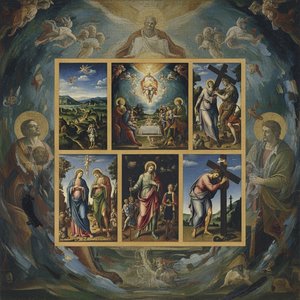
Stepping into the Renaissance galleries is akin to entering a world reborn – a period defined by a renewed interest in classical antiquity and an embrace of human potential. Immediately captivating is Nicolas Poussin’s The Holy Family with St. Elizabeth and John the Baptist , a serene depiction of familial piety and spiritual contemplation. Notice how Poussin masterfully blends technical precision with humanist ideals; observe the subtle ripple of drapery folds mirroring Saint George's grace as he confronts the dragon—a potent symbol of triumph over evil. The painting’s balance and clarity reflect the Renaissance’s fascination with proportion and order, while its subject matter speaks to the era’s burgeoning interest in virtue and heroism. Scholars have analyzed Poussin’s use of perspective and chiaroscuro – dramatic lighting – demonstrating a profound understanding of artistic principles that would influence generations of artists to come. Alongside Poussin, explore works by Raphael, Titian, and Veronese, each offering a unique window into the Renaissance spirit. These artists skillfully employed techniques like sfumato—a hazy blending of colors—to create atmospheric depth and evoke emotion.
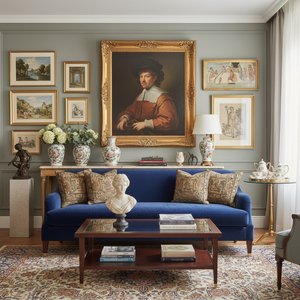
Transitioning into the Dutch Golden Age collection is an exercise in sensory delight. The masterful use of light and shadow – chiaroscuro – dominates this section, transforming ordinary scenes into moments of profound emotional resonance. Rembrandt’s The Return of the Prodigal Son stands as a cornerstone of this artistic achievement, its dramatic composition conveying tenderness and forgiveness through the father’s expressive face. Beyond Rembrandt’s monumental works, canvases by Vermeer, Frans Hals, and Jan Steen reveal the remarkable skill with which these artists captured scenes from daily existence. Vermeer's Girl with a Pearl Earring is particularly arresting – a quiet moment of contemplation rendered with exquisite detail; the subject’s gaze directed outwards, conveying both vulnerability and intelligence. The meticulous layering of paint – a technique known as glazing – contributes to the luminous quality of Vermeer’s paintings, highlighting his unparalleled ability to capture fleeting expressions and subtle nuances of emotion. Consider also the vibrant portraits by Hals, brimming with life and character. These artists prioritized capturing psychological realism, striving to portray their subjects with remarkable accuracy and sensitivity.
A Global Tapestry: Beyond Europe's Shores
The Hermitage’s story extends far beyond the Renaissance and Dutch Golden Age, revealing a truly global collection. Ancient artifacts—shimmering gold artifacts and intricately crafted jade sculptures recovered from Scythian burial mounds—offer a tangible connection to the vibrant trade networks of the Silk Road, demonstrating that artistic expression transcends temporal boundaries and reveals the sophistication of nomadic cultures. Medieval Christian art radiates spiritual power, including Byzantine icons brimming with symbolism – their vibrant colors and stylized figures conveying profound theological narratives. The museum’s curators have painstakingly reconstructed these artifacts, allowing for an immersive journey through human history, from the grandeur of imperial Rome to the solemn beauty of Orthodox faith. Recent expeditions to Siberia have unearthed remarkable discoveries – including mammoth ivory carvings and exquisitely decorated shamanic masks – enriching the Hermitage's understanding of Eurasian artistic traditions. Explore collections showcasing ancient Egyptian treasures, Greek sculptures, and Asian ceramics, each telling a unique story of human ingenuity and cultural exchange.
A Living Legacy: Exhibitions and Future Horizons
The Hermitage isn’t a static monument; it’s a living institution constantly evolving with new discoveries and exhibitions. While its permanent collection remains breathtaking in scope – encompassing over three million objects—temporary displays offer fresh perspectives on familiar works and introduce visitors to lesser-known artists and cultures. Don’t miss opportunities to engage with interactive exhibits designed for all ages, offering deeper insights into the artworks and their historical context. Visiting the Hermitage is not simply about observing masterpieces; it's about engaging with a legacy—a testament to human creativity, intellectual inquiry, and the enduring power of art to inspire and transform. The museum’s commitment to preservation and research ensures that this extraordinary collection will continue to captivate and educate generations to come. The Hermitage also maintains a strong focus on digital engagement, offering virtual tours and online resources for visitors worldwide.