Money-Back Guarantee · 100 days Free Worldwide Delivery
646,446artworks 53,409artists 5,406museums 32languages

The Realist shortlist

100 Famous Realist Painters: The Complete List

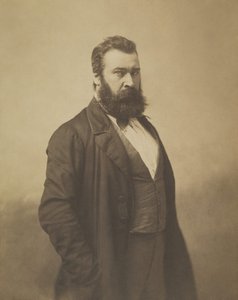
Gustave Courbet (1819–1877) is the most famous Realist painter, best known for The Stone Breakers and The Painter's Studio. Then Jean-François Millet, Gerhard Richter, Winslow Homer and Edward Hopper. The list covers 100 painters born between 1767 and 1959 in 28 countries, from Jacques Laurent Agasse to Peter Doig.

Method. Scope: artists filed under Realist in our catalogue. Order: our artist fame ranking. Excluded: artists born after 1955 without a Wikidata identifier. Wikipedia figure: languages with an article, out of our 32.

  1. The Stone Breakers by Gustave Courbet1Gustave Courbet
  2. The Gleaners by Jean-François Millet2Jean-François Millet
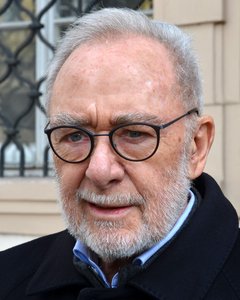
  3. Motorboat by Gerhard Richter3Gerhard Richter

Key data

Realist: key data

  • 100Artists
  • 1767–1959Years of birth
  • 28Countries of birth
  • 8Women
  • 5Living artists
  • 20,627Works in our catalogue
Cities with most births
Moscow (5), Paris (4), Saint Petersburg (2), Lyon (2)
Museums holding the most key works
Tretyakov Gallery (12), Metropolitan Museum of Art (8), Musée d'Orsay (7), Art Institute of Chicago (4)

Ranked list

100 Realist Painters, ranked with key works

1/ 100

Gustave Courbet

French b. Ornans Realism Wikipedia 31/32
Gustave Courbet

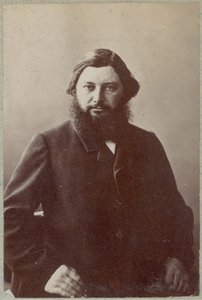
Courbet turned away from the polished finish of academic conventions and the dramatic ideals of Romanticism. In 1849, he finished The Stone Breakers, a depiction of manual labor that was later destroyed during World War II.

Location His canvases are scattered across several major collections, inviting a close look at the textures of his paint.

Key works · Top 100 works

2/ 100

Jean-François Millet

French b. Gréville-Hague Realism, Barbizon school Wikipedia 30/32

Jean-François Millet

In 1837, he moved to Paris to enroll at the École des Beaux-Arts. Similarly, The Angelus (1850-1861) captures a peasant couple pausing for prayer at sunset.

Location Paris remains the primary destination for his work.

Key works · Top 100 works

4/ 100

Winslow Homer

American b. Boston American Realism Wikipedia 24/32

Winslow Homer

He spent time studying at the National Academy of Design until 1863, taking lessons from Frédéric Rondel. He produced Sharpshooter on Picket Duty in 1862 and Home, Sweet Home in 1863, works that captured the reality of the conflict through his sketches and paintings.

Location Tracing the physical presence of his work requires visiting several major institutions across the United States.

Key works · Top 100 works

5/ 100

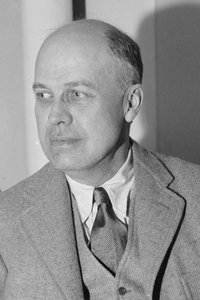
Edward Hopper

American b. Upper Nyack American realism

Edward Hopper

Edward Hopper was born in Upper Nyack, United States of America. He studied at the New York School of Art under William Merritt Chase and Robert Henri. In House by the Railroad (1925), a simple composition reveals a sense of mystery and isolation.

Key works · Top 100 works

6/ 100

William-Adolphe Bouguereau

French b. La Rochelle Academic realism Wikipedia 29/32

William-Adolphe Bouguereau

Working primarily in oil, Bouguereau constructs scenes through academic realism, focusing heavily on the female human body. His ability to render light and form is equally evident in The Nymphaeum, which he exhibited in 1878, and in Song of the Angels, a work originally titled Vierge aux Anges.

Location The physical presence of his canvases remains scattered across major international institutions.

Key works · Top 100 works

7/ 100

Diego Rivera

Mexican b. Guanajuato Mexican Muralism, Social Realism Wikipedia 31/32

Diego Rivera

Diego Rivera emerged from a family of modest means in Guanajuato, Mexico, born on December 8, 1886. Specifically, the Detroit Industry: East Wall in the Detroit Institute of Arts functions as a massive fresco that captures the rhythmic, mechanical pulse of labor.

Location Here, the Detroit Industry Murals occupy a central place, capturing the mechanical pulse of labor and the grit of the industrial era.

Key works · Top 100 works

8/ 100

Ilya Repin

Ukrainian-born Russian b. Chuhuiv Realism Wikipedia 32/32

Ilya Repin

During his time in France and Italy, he encountered the burgeoning Impressionist movement, and the influence of French plein-air techniques became evident in his later work. Between 1880 and 1883, he painted Religious Procession in Kursk Province, a nuanced study of faith and social hierarchy.

Location The physical presence of Repin's oeuvre is scattered across several major institutions, reflecting the breadth of his influence.

Trained by Ivan Kramskoi #27 · Trained Valentin Serov #36, Boris Kustodiev #52

Key works · Top 100 works

9/ 100

Honoré Daumier

French b. Marseille Realism, Satire Wikipedia 29/32

Honoré Daumier

He masterfully employed loose brushwork and dramatic lighting to convey emotion and atmosphere, foreshadowing some of the techniques later embraced by the Impressionists.

Key works · Top 100 works

10/ 100

Carl Larsson

Swedish b. Storkyrkoförsamlingen Arts and Crafts movement Wikipedia 28/32

Carl Larsson

His style often blended elements of Art Nouveau with National Romanticism, using flowing lines and organic forms to frame the people within them. These murals follow a specific sequence; while the lower level handles the earlier history, the upper staircase features his fresco Gustav Vasa Entering Stockholm.

Key works · Top 100 works

11/ 100

Ivan Shishkin

Russian b. Yelabuga Realism, Peredvizhniki Wikipedia 30/32

Ivan Shishkin

In 1861, he visited Munich, Germany, to observe the works of established artists. His painting Staubbach Falls in the Lauterbrunnen Valley is held in a museum’s permanent exhibition, reflecting the influence of the Swiss landscapes he encountered during his years abroad.

Location To experience the quiet presence of Shishkin’s forests, one can visit several significant collections across Russia.

Key works · Top 100 works

12/ 100

Lucian Freud

British b. Berlin Realism, Figurative art Wikipedia 23/32

Lucian Freud

Works like Girl with a Kitten (1947) demonstrate this early development, while later pieces such as Benefits Supervisor Sleeping (1995) exemplify his mature style—an unflinching gaze upon the human condition.

Key works · Top 100 works

13/ 100

Andrew Wyeth

American b. Chadds Ford Township Regionalism, Realism Wikipedia 23/32

Andrew Wyeth

Egg Tempera and Watercolor: Wyeth primarily used egg tempera for his larger works, a medium known for its luminosity and detail. Christina’s World (1948): Arguably his most famous work, " Christina's World " depicts a woman crawling through a field towards a farmhouse.

Trained by N.C. Wyeth #99

Key works · Top 100 works

16/ 100

Adolph von Menzel

German b. Wrocław Realism Wikipedia 24/32

Adolph von Menzel

His work resonated with French artists as well; Edgar Degas, famously, deeply admired Menzel’s skill, even copying his works and declaring him “the greatest living master.” This mutual respect highlights a shared commitment to realism and observation, despite differing national contexts.

Key works · Top 100 works

18/ 100

Thomas Eakins

American b. Philadelphia Realism Wikipedia 24/32

Thomas Eakins

In 1866, he left Philadelphia for Paris to further his studies. In 1871, he produced Max Schmitt in a Single Scull, a work that captures the rhythmic isolation of a rower.

Location The physical presence of Eakins's vision remains scattered across several major institutions, primarily concentrated in the American Northeast.

Trained by Léon Bonnat #49

Key works · Top 100 works

19/ 100

Henri Fantin-Latour

French b. Grenoble Realism and Symbolism Wikipedia 25/32

Henri Fantin-Latour

He drew inspiration from the austere compositions of 17th-century Dutch flower paintings and the flattened perspectives found in Japanese prints. He produced striking portraits of composers, including Richard Wagner and Hector Berlioz, attempting to capture their presence on canvas.

Location His presence is felt in the quiet halls of the Musée d'Orsay in Paris, where his canvases reside among the great shifts of nineteenth-century art.

Key works · Top 100 works

22/ 100

Antonio López García

Spanish b. Tomelloso Realism, Hyperrealism Wikipedia 14/32

Antonio López García

Influences: His work demonstrates clear influences from the Tuscan Renaissance, as seen in sculptures like "The Apparition" (1963), and echoes of masters such as Tiepolo, Chardin, Dürer, and Degas are evident in his paintings.

Key works · Top 100 works

23/ 100

Raja Ravi Varma

Indian b. Kilimanoor Academic & Indian fusion Wikipedia 22/32

Raja Ravi Varma

From an early age, Ravi Varma displayed a remarkable aptitude for art, nurtured by his uncle Raja Raja Varma, who initiated him into the world of drawing and painting, primarily within the Tanjore School tradition.

Key works · Top 100 works

25/ 100

Viktor Vasnetsov

b. Lopyal Wikipedia 29/32

Viktor Vasnetsov

His travels to Western Europe exposed him to various artistic styles, including Symbolism, which further shaped his aesthetic vision. Notable works include: A Knight at the Crossroads, Bogatyrs (Three Warriors), Alyonushka, Ivan Tsarevich Riding the Grey Wolf, and his designs for St.

Key works · Top 100 works

26/ 100

Akseli Gallen-Kallela

Finnish b. Pori National Romanticism Wikipedia 26/32

Akseli Gallen-Kallela

He explored symbolism in works like Symposium (1894), a haunting depiction of Finnish artists engaged in intellectual discourse, subtly hinting at anxieties about national identity and cultural preservation.

Key works · Top 100 works

28/ 100

Vasily Vereshchagin

Russian b. Cherepovets Peredvizhniki Wikipedia 28/32

Vasily Vereshchagin

He possessed a rare ability to balance the monumental with the intimate, rendering the architectural grandeur of sites like the Shah-i-Zinda Mausoleum or the Sher-Dor Madrassah with a vibrant, luminous palette.

Key works · Top 100 works

30/ 100

George Bellows

American b. Columbus Ashcan School, Realism Wikipedia 17/32

George Bellows

Born in Columbus, Ohio, on August 12 or 19, 1882, his journey from athletic promise to artistic renown is a testament to the power of passion and unwavering dedication. Bellows's work is held in major museum collections across the United States, including The Museum of Modern Art (New York), the National Gallery of Art (Washington D.C.), the Smithsonian American Art Museum, and the Whitney Museum of American Art.

Key works · Top 100 works

31/ 100

Kiki Smith

German-American b. Nuremberg Feminist Art, Sculpture Wikipedia 17/32

Kiki Smith

The personal tragedies of losing both her father in 1980 and her sister Beatrice to AIDS in 1988 served as catalysts for an even deeper investigation into mortality, the fragility of existence, and the social implications of illness and loss. "Standing" (1998), a monumental sculpture of a woman perched atop a eucalyptus tree, speaks to humanity's complex relationship with nature, while “Homespun Tales” (2005), an acclaimed installation at the Venice Biennale, showcased her skill in creating immersive environments that engage multiple senses.

Key works · Top 100 works

32/ 100

Arkhip Kuindzhi

Russian/Ukrainian/Greek b. Mariupol uyezd Realism, Impressionism Wikipedia 27/32

Arkhip Kuindzhi

It was with paintings such as "Deserted Village" (1874) and “The Chumak Road” (1875) that he began to address social themes, aligning himself with the realist-minded Society for Traveling Art Exhibitions.

Key works · Top 100 works

33/ 100

Candido Portinari

Brazilian b. Brodowski Neo-Realism Wikipedia 19/32

Candido Portinari

guerra e paz (war and peace) panels, donated to the united nations headquarters in 1956, exemplify portinari's monumental works. his prolific output includes over 5,000 canvases, ranging from small sketches to large-scale pieces.

Key works · Top 100 works

34/ 100

Vasily Perov

Russian b. Tobolsk Critical Realism Wikipedia 28/32

Vasily Perov

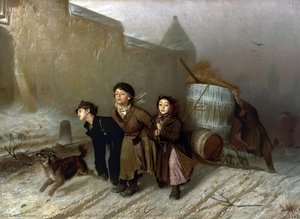
Works like “The Last Journey,” depicting a peasant funeral procession, and "Troika: Apprentice Workmen Carrying Water" are poignant examples of his ability to evoke profound emotional responses through realistic portrayals of everyday life.

Key works · Top 100 works

35/ 100

Isaac Levitan

Russian b. Kybartai Mood landscape Wikipedia 25/32

Isaac Levitan

His technical process was rooted in meticulous Realism, yet he infused his oil on canvas works with a distinct, expressive energy. The Vladimirka, or The Vladimir Highway, offers a more somber view of the land, depicting the route used by those sent to the penal colonies in Siberia.

Key works · Top 100 works

36/ 100

Valentin Serov

Russian b. Saint Petersburg Impressionism, Art Nouveau Wikipedia 27/32

Valentin Serov

His portrait of Maxim Gorky (1904) exemplifies this shift, presenting a powerful and unconventional depiction of the writer as a man of the people. He absorbed influences from the Old Masters during visits to European museums, studying Rembrandt, Velázquez, and Veronese, learning their techniques for rendering light, shadow, and texture.

Trained by Ilya Repin #8

Key works · Top 100 works

37/ 100

James Tissot

French b. Nantes Impressionism, Realism, Japonisme Wikipedia 26/32

James Tissot

Around 1854, he moved to Paris to begin his formal training at the École des Beaux-Arts. This spiritual encounter redirected his focus away from the fashionable socialites of London and toward the sacred narratives of the New Testament.

Location Though his later years were consumed by a profound devotion to religious subjects, it is his depictions of Victorian life that remain his most significant contribution to the art of the nineteenth century.

Trained by Hippolyte Flandrin #84

Key works · Top 100 works

39/ 100

Peder Severin Krøyer

Danish b. Stavanger Realism, Impressionism Wikipedia 24/32

Peder Severin Krøyer

Born in 1851 in Stavanger, Norway, Krøyer’s early life was marked by an unusual upbringing; raised not by his biological mother but by her sister and brother-in-law, the Danish zoologist Henrik Nikolai Krøyer, he found himself transplanted to Copenhagen and immersed in a world of scientific inquiry alongside artistic cultivation. Krøyer became central to this community, forging close friendships with artists like Michael and Anna Ancher, and writer Holger Drachmann.

Trained by Léon Bonnat #49

Key works · Top 100 works

40/ 100

Constantin Meunier

Belgian b. Etterbeek Social Realism Wikipedia 16/32

Constantin Meunier

Paintings such as “Melting Steel at the Factory at Seraing” (1882) and “Returning from the Pit” (1884) are not merely depictions of labor; they are powerful statements about human endurance, resilience, and the often-brutal realities of industrial life.

Key works · Top 100 works

41/ 100

Carl Bloch

Danish b. Copenhagen Realism & Romanticism Wikipedia 20/32

Carl Bloch

In Rome, he found personal happiness as well, marrying Alma Trepka in 1868; their marriage was a source of joy until her untimely death in 1886, an event that cast a long shadow over his later years.

Key works · Top 100 works

42/ 100

Vasily Surikov

Russian b. Krasnoyarsk Realism Wikipedia 26/32

Vasily Surikov

Born in 1848 in Krasnoyarsk, Siberia, Surikov's early life was marked by hardship and familial struggles—a formative experience that instilled within him an unwavering dedication to portraying the realities of rural Russian society with unflutched honesty. Recognizing Surikov’s talent, his father secured him admission to the St Petersburg Academy of Arts, where he honed his skills under the guidance of masters like Konstantin Dmitrievich Makovsky and Ivan Alekseyevich Kramskoy.

Key works · Top 100 works

43/ 100

Albert Edelfelt

Finnish b. Kiala manor Realism Wikipedia 25/32

Albert Edelfelt

In 1874, at nineteen, Edelfelt moved to Paris. His ability to observe the world led to his selection as the Commissioner of Finnish participation in the Paris Exposition Universelle in 1900.

Location To see his brushwork in person, one might travel to Helsinki.

Key works · Top 100 works

44/ 100

Jean-Louis Ernest Meissonier

French b. Lyon Academic art Wikipedia 23/32

Jean-Louis Ernest Meissonier

John Ruskin, the influential English art critic, famously examined Meissonier’s paintings under a magnifying glass, marveling at the artist's “manual dexterity and eye for fascinating minutiae.”

Trained Édouard Detaille #85

Key works · Top 100 works

45/ 100

Jules Bastien-Lepage

French b. Damvillers Naturalism Wikipedia 22/32

Jules Bastien-Lepage

The outbreak of the Franco-Prussian War in 1870 interrupted his studies, leading him to serve as a volunteer soldier. His portraiture gained considerable acclaim, notably Portrait of my Grandfather (1874), which garnered early recognition, and a striking portrait of the celebrated actress Sarah Bernhardt in 1879 – a commission that brought him further prominence.

Key works · Top 100 works

46/ 100

Nikolai Ge

Russian b. Voronezh Realism, Symbolism Wikipedia 20/32

Nikolai Ge

Initially destined for a career in science, studying physics and mathematics at Kiev University and Saint Petersburg University, Ge dramatically shifted course in 1850 to pursue painting at the Imperial Academy of Arts in Saint Petersburg. Academy Years: Ge studied under master painter Pyotr Basin at the Imperial Academy of Arts, receiving a gold medal in 1857 for "The Witch of Endor Invoking the Spirit of the Prophet Samuel.".

Key works · Top 100 works

47/ 100

Émile Friant

French b. Dieuze Realism Wikipedia 20/32

Émile Friant

Émile Friant, born in the small commune of Dieuze in 1863, emerged as a pivotal figure bridging the gap between 19th-century realism and the burgeoning artistic movements of the early 20th century.

Key works · Top 100 works

48/ 100

George Caleb Bingham

American b. Utrecht Luminism, Realism Wikipedia 22/32

George Caleb Bingham

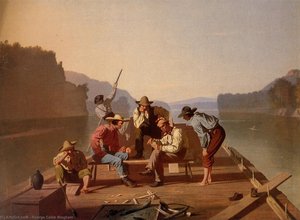
George Caleb Bingham, born in 1811 amidst the rolling landscapes of Virginia, wasn’t destined for a life steeped in artistic convention. This is strikingly evident in works like Order at the Border (1850), where the golden hues of the setting sun illuminate a tense negotiation between settlers and Native Americans, imbuing the scene with both beauty and underlying tension.

Key works · Top 100 works

50/ 100

Constant Troyon

French b. Sèvres Barbizon School, Naturalism Wikipedia 20/32

Constant Troyon

Inspired by Paulus Potter’s "Young Bull" and masterpieces by Cuyp and Rembrandt, he transitioned to animal painting, discovering his true calling. Most of his renowned works date from 1850 to 1864, with earlier pieces considered less significant as they predate his Dutch-inspired style.

Key works · Top 100 works

51/ 100

Albert Anker

Swiss b. Ins Realism Wikipedia 20/32

Albert Anker

He continued his formal training alongside Auguste Bachelin under the tutelage of Louis Wallinger from 1845 to 1848, laying a solid foundation in draftsmanship and observation. Even his charcoal study " Old Farmer at the Table (22 April 1907) ” demonstrates his mastery of line and form, conveying a wealth of character with minimal means.

Key works · Top 100 works

52/ 100

Boris Kustodiev

Russian b. Astrakhan Realism, Art Nouveau Wikipedia 24/32

Boris Kustodiev

He later found himself in Italy, Austria, and Germany, absorbing the diverse atmospheres of Europe. His 1916 painting of Maslenitsa portrays the joy of the Pancake Week festival, filled with the spirit of a communal celebration.

Location In the city of Saint Petersburg, the Brodsky House Museum preserves his presence, offering a glimpse into the intimate atmosphere he once inhabited.

Key works · Top 100 works

55/ 100

Vasily Polenov

Russian b. Saint Petersburg Peredvizhniki, Lyrical Realism Wikipedia 22/32

Vasily Polenov

His father, Dmitri Polenov, was a celebrated archaeologist and bibliographer whose groundbreaking expeditions to Greece exposed the young Vasily to influential artists like Karl Briullov.

Key works · Top 100 works

58/ 100

Alexey Venetsianov

Russian b. Moscow Romanticism, Realism Wikipedia 18/32

Alexey Venetsianov

Influence of Borovikovsky: A crucial period in his development involved apprenticeship under Vladimir Borovikovsky, a leading Russian portraitist of the time. Notable Paintings: Venetsianov’s oeuvre includes numerous significant works such as "Portrait of a Peasant Girl," "The Reaper on a Threshing Floor," "A Peasant Girl with Cornflowers," “Spring, on Ploughed Land,” “Summer, Reaping”, “Zakharka,” “ Girl in a Checkered Shawl,” “ Girl with a Calf,” “Fortune-telling,” “Farmer's Child with Milk,” and “ Wet-Nurse with a Child.”.

Key works · Top 100 works

59/ 100

Eero Järnefelt

Finnish b. Vyborg ['Naturalism', 'Realism'] Wikipedia 17/32

Eero Järnefelt

His professional life was as distinguished as his creative output; he served as a drawing instructor and later a professor at the University of Helsinki, and held the prestigious position of chairman of the Finnish Academy of Fine Arts.

Key works · Top 100 works

61/ 100

Konstantin Makovsky

Russian b. Moscow Realism, Academic art Wikipedia 22/32

Konstantin Makovsky

The Russian Bride’s Attire (1889), also known as Beneath the Crown, stands as a prime example—a lavishly detailed portrayal of pre-wedding rituals, brimming with symbolism and vibrant color.

Key works · Top 100 works

62/ 100

Cass Gilbert

American b. Zanesville Beaux-Arts Wikipedia 17/32

Cass Gilbert

Born in Troy, New York, his formative years were steeped in a deep appreciation for classical tradition and meticulous craftsmanship. Through his formal training at Rensselaer Polytechnic Institute, Gilbert developed a philosophy that would become his hallmark: the seamless synthesis of Beaux-Arts principles with the cutting-edge engineering techniques of a burgeoning nation.

Key works · Top 100 works

64/ 100

Alexei Savrasov

Russian b. Moscow Lyric Landscape Painting Wikipedia 21/32

Alexei Savrasov

In the vast, sweeping expanse of nineteenth-century Russian art, few names evoke the quiet, melancholic beauty of the natural world as poignantly as Alexei Kondratyevich Savrasov. Born in Moscow in 1830, Savrasov did not merely paint landscapes; he captured the very breath of the Russian earth.

Key works · Top 100 works

67/ 100

Philip de László

b. Pest Wikipedia 18/32

Philip de László

De László’s early work demonstrated a keen eye for detail and a developing mastery of realism.

Key works · Top 100 works

68/ 100

Nikolaos Gyzis

Greek b. Tinos Munich School, Impressionism Wikipedia 20/32

Nikolaos Gyzis

However, it was a scholarship awarded by the Evangelistria Foundation of Tinos in 1865 that truly propelled his artistic journey, enabling him to pursue advanced studies at the prestigious Academy of Fine Arts in Munich – a city that would become both his adopted home and the crucible for his mature style. However, it was perhaps After the Destruction of Psara (circa 1896-1898) that revealed the full depth of his artistic and emotional range.

Key works · Top 100 works

69/ 100

László Mednyánszky

Hungarian-Slovak b. Beckov Impressionism, Realism Wikipedia 14/32

László Mednyánszky

While echoes of Impressionism resonate in his handling of light and atmosphere, and a certain realism grounds his depictions of the tangible world, he remained largely independent, forging his own path. The River Poprad at Strážky: A quintessential example of his landscape painting, capturing the serene beauty and tranquility of his homeland.

Key works · Top 100 works

70/ 100

Jozef Israëls

Dutch b. Groningen Hague School, Realism Wikipedia 16/32

Jozef Israëls

A pivotal period followed with studies at the École des Beaux-Arts in Paris (1845-1847), immersing himself in the artistic currents of the time and learning from masters like James Pradier, Horace Vernet, and Paul Delaroche. Paintings like Zandvoort Fisherman (Amsterdam Gallery) and The Silent House – which garnered a gold medal at the Brussels Salon in 1858 – exemplify his ability to imbue everyday scenes with profound emotional resonance.

Key works · Top 100 works

71/ 100

Peder Mørk Mønsted

Danish b. Grenaa Realism Wikipedia 14/32

Peder Mørk Mønsted

Born on December 10, 1859, in the pastoral surroundings of Balle Mølle near Grenå, Denmark, Mønsted’s formative years were shaped by a sense of familial prosperity and a deep-rooted connection to the Danish countryside. His artistic journey began in earnest at the Aarhus Art School in 1875, where he honed his foundational skills under the guidance of Andries Fritz.

Trained by Peder Severin Krøyer #39, William-Adolphe Bouguereau #6

Key works · Top 100 works

72/ 100

Jean-Jacques Henner

French b. Bernwiller Academic realism Wikipedia 16/32

Jean-Jacques Henner

Other notable works such as "Byblis turned into a Spring" (1867) demonstrate his ability to weave evocative narratives through painting, while “The Magdalene” (1878) offers a poignant depiction of religious devotion.

Key works · Top 100 works

74/ 100

L. S. Lowry

British b. Stretford Industrial Painting Wikipedia 13/32

L. S. Lowry

Laurence Stephen Lowry, born in the heart of Stretford, Cheshire, in 1887, remains one of Britain’s most beloved and distinctive voices in twentieth-century art. While his name is now synonymous with the gritty, evocative landscapes of Northern England, his journey to international acclaim was a slow, poignant ascent.

Key works · Top 100 works

76/ 100

Nicolas François Octave Tassaert

WahooArt b. Paris 19th Century Art

Nicolas François Octave Tassaert

However, unlike many of his contemporaries who remained firmly rooted in this aesthetic, Lutkin demonstrated a growing fascination with the industrial world around him, particularly the ironworks and factories that were beginning to proliferate across the British landscape.

Key works · Top 100 works

77/ 100

John Fraser

British Realistic Landscape Painting

John Fraser

John Arthur Fraser began his days in London, England, born on January 9th, 1838. His father, a tailor from Portsoy, Scotland, carried the political weight of the Chartist movement into their home, while his maternal grandparents had settled in Stanstead, Lower Canada, years earlier. His paintings of the Rockies, such as Fishing Camp, the Rockies, captured the heavy presence of mountains like Mt.

Key works · Top 100 works

83/ 100

Lionel Walden

American b. Norwich Impressionism, Realism, Seascapes

Lionel Walden

Born in Norwich, Connecticut, his early life took him through the landscapes of Minnesota, where his family had moved following his father's appointment as a rector. Walden became a celebrated figure in the salons of Paris, earning medals and eventually being inducted into the French Legion of Honor.

Key works · Top 100 works

88/ 100

Pascal Dagnan-Bouveret

French b. Paris Naturalism Wikipedia 14/32

Pascal Dagnan-Bouveret

Family Background: Dagnan was raised by his grandfather after his father emigrated to Brazil. Major Works: Several paintings stand out as representative of his style and themes: " Woman in Breton Costume Seated in a Meadow " (Metropolitan Museum of Art, New York) - exemplifies his focus on Breton subjects.

Key works · Top 100 works

91/ 100

Carl Vilhelm Holsoe

Danish Golden Age

Carl Vilhelm Holsoe

Born in the historic city of Aarhus in 1863, Carl Vilhelm Holsoe was a child of architectural lineage, the son of the respected architect N.P.C. His journey through the Royal Danish Academy of Fine Arts and the Kunstnernes Frie Studieskoler—studying under luminaries such as Peder Severin Krøyer —provided him with more than just technical prowess; it instilled a profound sensitivity to how light interacts with the boundaries of a room.

Key works · Top 100 works

92/ 100

Samuel Walters

British b. London Victorian Landscape/Biblical

Samuel Walters

Born into a family deeply rooted in shipbuilding and artistry—his father, Miles Walters, was himself a respected marine artist—Walters’ artistic journey began within this rich tradition, ultimately establishing him as one of the most enduring figures of the Liverpool School of Marine Art. The artist's work was exhibited at the Royal Academy from 1842 to 1861, solidifying his reputation within the established art world.

Key works · Top 100 works

94/ 100

Fritz von Uhde

German b. Wolkenburg Impressionism Wikipedia 15/32

Fritz von Uhde

His style lay between Realism and Impressionism, marking him as one of the first artists to champion plein-air painting in Germany—a bold departure from the studio tradition dominant at the time.

Trained by Mihály Munkácsy #66

Key works · Top 100 works

96/ 100

Jacques Laurent Agasse

Swiss b. Geneva Romanticism Wikipedia 16/32

Jacques Laurent Agasse

Born in Geneva amidst the burgeoning Enlightenment, Agasse’s artistic journey began with formal training at the École des Beaux-Arts de Genève, establishing him firmly within the classical tradition. His work garnered considerable acclaim during his lifetime and continues to inspire admiration for its technical brilliance and artistic integrity.

Key works · Top 100 works

99/ 100

N.C. Wyeth

American b. Needham Realism, Illustration Wikipedia 15/32

N.C. Wyeth

Newell Convers Wyeth, born October 22, 1882, in Needham, Massachusetts, emerged as a pivotal figure in the Golden Age of American illustration. This early support proved crucial, leading him to formal training at Mechanics Arts School and later, Massachusetts Normal Art School, where he was advised to embrace the path of illustration.

Trained Andrew Wyeth #13

Key works · Top 100 works

Best-known works

Famous Realist paintings by artist

  1. The Stone Breakers by Gustave Courbet

    The Stone Breakers

    Gustave Courbet

    1849 · Staatliche Kunstsammlungen Dresden

  2. The Gleaners by Jean-François Millet

    The Gleaners

    Jean-François Millet

    1857 · Musée d'Orsay, Paris

  3. Motorboat by Gerhard Richter

    Motorboat

    Gerhard Richter

    1965

  4. The Fog Warning by Winslow Homer

    The Fog Warning

    Winslow Homer

    1885 · Museum of Fine Arts, Boston

  5. Nighthawks, The Art Institute of Chicago, Chica by Edward Hopper

    Nighthawks, The Art Institute of Chicago, Chica

    Edward Hopper

    1942 · Art Institute of Chicago

  6. The Birth of Venus by William-Adolphe Bouguereau

    The Birth of Venus

    William-Adolphe Bouguereau

    Musée d'Orsay, Paris

  7. Creation by Diego Rivera

    Creation

    Diego Rivera

    1923

Chronology

Realist chronology

  1. 1834
  2. 1849
  3. 1861
  4. 1871
  5. 1873
  6. 1878
  7. 1881
  8. 1886
  9. 1895
  10. 1897
  11. 1905
  12. 1926
  13. 1947
  14. 1965

Statistics

Counts by country, period and museum

Index

Full list of 100 famous Realist painters

  1. 1Gustave CourbetGustave CourbetFrench · 1819–1877
  2. 2Jean-François MilletJean-François MilletFrench · 1814–1875
  3. 3Gerhard RichterGerhard RichterGerman · born 1932
  4. 4Winslow HomerWinslow HomerAmerican · 1836–1910
  5. 5Edward HopperEdward HopperAmerican · 1882–1967
  6. 6William-Adolphe BouguereauWilliam-Adolphe BouguereauFrench · 1825–1905
  7. 7Diego RiveraDiego RiveraMexican · 1886–1957
  8. 8Ilya RepinIlya RepinUkrainian-born Russian · 1844–1930
  9. 9Honoré DaumierHonoré DaumierFrench · 1808–1879
  10. 10Carl LarssonCarl LarssonSwedish · 1853–1919
  11. 11Ivan ShishkinIvan ShishkinRussian · 1831–1898
  12. 12Lucian FreudLucian FreudBritish · 1922–2011
  13. 13Andrew WyethAndrew WyethAmerican · 1917–2009
  14. 14David Alfaro SiqueirosDavid Alfaro SiqueirosMexican · 1896–1974
  15. 15Sigmar PolkeSigmar PolkeGerman · 1941–2010
  16. 16Adolph von MenzelAdolph von MenzelGerman · 1815–1905
  17. 17Paula RegoPaula RegoPortuguese · 1935–2022
  18. 18Thomas EakinsThomas EakinsAmerican · 1844–1916
  19. 19Henri Fantin-LatourHenri Fantin-LatourFrench · 1836–1904
  20. 20Rosa BonheurRosa BonheurFrench · 1822–1899
  21. 21José Clemente OrozcoJosé Clemente OrozcoMexican · 1883–1949
  22. 22Antonio López GarcíaAntonio López GarcíaSpanish · born 1936
  23. 23Raja Ravi VarmaRaja Ravi VarmaIndian · 1848–1906
  24. 24Peter DoigPeter DoigScottish · born 1959
  25. 25Viktor VasnetsovViktor Vasnetsov1848–1926
  26. 26Akseli Gallen-KallelaAkseli Gallen-KallelaFinnish · 1865–1931
  27. 27Ivan KramskoiIvan KramskoiRussian · 1837–1887
  28. 28Vasily VereshchaginVasily VereshchaginRussian · 1842–1904
  29. 29Marlene DumasMarlene DumasSouth African, Dutch · born 1953
  30. 30George BellowsGeorge BellowsAmerican · 1882–1925
  31. 31Kiki SmithKiki SmithGerman-American · born 1954
  32. 32Arkhip KuindzhiArkhip KuindzhiRussian/Ukrainian/Greek · 1841–1910
  33. 33Candido PortinariCandido PortinariBrazilian · 1903–1962
  34. 34Vasily PerovVasily PerovRussian · 1833–1882
  35. 35Isaac LevitanIsaac LevitanRussian · 1860–1900
  36. 36Valentin SerovValentin SerovRussian · 1865–1911
  37. 37James TissotJames TissotFrench · 1836–1902
  38. 38Alice NeelAlice NeelAmerican · 1900–1984
  39. 39Peder Severin KrøyerPeder Severin KrøyerDanish · 1851–1909
  40. 40Constantin MeunierConstantin MeunierBelgian · 1831–1905
  41. 41Carl BlochCarl BlochDanish · 1834–1890
  42. 42Vasily SurikovVasily SurikovRussian · 1848–1916
  43. 43Albert EdelfeltAlbert EdelfeltFinnish · 1854–1905
  44. 44Jean-Louis Ernest MeissonierJean-Louis Ernest MeissonierFrench · 1815–1891
  45. 45Jules Bastien-LepageJules Bastien-LepageFrench · 1848–1884
  46. 46Nikolai GeNikolai GeRussian · 1831–1894
  47. 47Émile FriantÉmile FriantFrench · 1863–1932
  48. 48George Caleb BinghamGeorge Caleb BinghamAmerican · 1811–1879
  49. 49Léon BonnatLéon Bonnat1833–1922
  50. 50Constant TroyonConstant TroyonFrench · 1810–1865
  51. 51Albert AnkerAlbert AnkerSwiss · 1831–1910
  52. 52Boris KustodievBoris KustodievRussian · 1878–1927
  53. 53Jules BretonJules BretonFrench · 1827–1906
  54. 54Michael AncherMichael AncherDanish · 1849–1927
  55. 55Vasily PolenovVasily PolenovRussian · 1844–1927
  56. 56William SalterWilliam SalterBritish · 1804–1875
  57. 57Franz DefreggerFranz DefreggerAustrian · 1835–1921
  58. 58Alexey VenetsianovAlexey VenetsianovRussian · 1780–1847
  59. 59Eero JärnefeltEero JärnefeltFinnish · 1863–1937
  60. 60Nikolai YaroshenkoNikolai YaroshenkoRussian/Ukrainian · 1846–1898
  61. 61Konstantin MakovskyKonstantin MakovskyRussian · 1839–1915
  62. 62Cass GilbertCass GilbertAmerican · 1859–1934
  63. 63Franz von LenbachFranz von LenbachGerman · 1836–1904
  64. 64Alexei SavrasovAlexei SavrasovRussian · 1830–1897
  65. 65Walker EvansWalker EvansAmerican · 1903–1975
  66. 66Mihály MunkácsyMihály MunkácsyHungarian · 1844–1900
  67. 67Philip de LászlóPhilip de László1869–1937
  68. 68Nikolaos GyzisNikolaos GyzisGreek · 1842–1901
  69. 69László MednyánszkyLászló MednyánszkyHungarian-Slovak · 1852–1919
  70. 70Jozef IsraëlsJozef IsraëlsDutch · 1824–1911
  71. 71Peder Mørk MønstedPeder Mørk MønstedDanish · 1859–1941
  72. 72Jean-Jacques HennerJean-Jacques HennerFrench · 1829–1905
  73. 73Elin Danielson-GambogiElin Danielson-GambogiFinnish · 1861–1919
  74. 74L. S. LowryL. S. LowryBritish · 1887–1976
  75. 75Józef ChełmońskiJózef ChełmońskiPolish · 1849–1914
  76. 76Nicolas François Octave TassaertNicolas François Octave TassaertWahooArt · 1800–1874
  77. 77John FraserJohn FraserBritish · 1838–1898
  78. 78Uroš PredićUroš PredićSerbian · 1857–1953
  79. 79Jean-François RaffaelliJean-François Raffaelli1850–1924
  80. 80Bertha WegmannBertha WegmannDanish/Swiss · 1847–1926
  81. 81Georgios JakobidesGeorgios JakobidesGreek · 1853–1932
  82. 82Vladimir MakovskyVladimir MakovskyRussian · 1846–1920
  83. 83Lionel WaldenLionel WaldenAmerican · 1861–1933
  84. 84Hippolyte FlandrinHippolyte FlandrinFrench · 1809–1864
  85. 85Édouard DetailleÉdouard DetailleFrench · 1848–1912
  86. 86Pavel FilonovPavel FilonovRussian · 1883–1941
  87. 87Hendrik Willem MesdagHendrik Willem MesdagDutch · 1831–1915
  88. 88Pascal Dagnan-BouveretPascal Dagnan-BouveretFrench · 1852–1929
  89. 89Alfred Émile Léopold StevensAlfred Émile Léopold Stevens1823–1906
  90. 90Herman HerzogHerman HerzogGerman/American · 1832–1932
  91. 91Carl Vilhelm HolsoeCarl Vilhelm HolsoeDanish · 1863–1935
  92. 92Samuel WaltersSamuel WaltersBritish · 1811–1882
  93. 93Ignacio ZuloagaIgnacio ZuloagaSpanish · 1870–1945
  94. 94Fritz von UhdeFritz von UhdeGerman · 1848–1911
  95. 95Gwen JohnGwen JohnWelsh · 1876–1939
  96. 96Jacques Laurent AgasseJacques Laurent AgasseSwiss · 1767–1849
  97. 97Luke FildesLuke FildesBritish · 1844–1927
  98. 98George HarveyGeorge HarveyScottish · 1806–1876
  99. 99N.C. WyethN.C. WyethAmerican · 1882–1945
  100. 100Francis Davis MilletFrancis Davis MilletAmerican · 1848–1912

FAQ

Realist: quick answers

Guides

AllPaintingsStore.com guides

Other lists

Famous artists by movement

By period

Famous artists by period

Famous paintings

Famous paintings by movement

Related lists

Related rankings