Money-Back Guarantee · 100 days Free Worldwide Delivery
612,383artworks 52,886artists 5,406museums 32languages

Rococo painters at a glance

100 Famous Rococo Painters: The Complete List

Jean-Antoine Watteau (1684–1721) is the most famous Rococo painter, best known for The Country Dance and Pilgrimage to Cythera. Then Élisabeth Louise Vigée Le Brun, Canaletto, Giovanni Battista Tiepolo and François Boucher. The list covers 100 painters born between 1645 and 1818 in 13 countries, from François de Troy to Edouard Honoré Ave.

Method. Scope: artists filed under Rococo in our catalogue. Order: our artist fame ranking. Excluded: artists born after 1955 without a Wikidata identifier. Wikipedia figure: languages with an article, out of our 32.

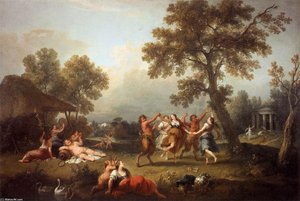
  1. The Country Dance by Jean-Antoine Watteau1Jean-Antoine Watteau
  2. Queen Marie-Antoinette great court dress, a rose in hand by Élisabeth Louise Vigée Le Brun2Élisabeth Louise Vigée Le Brun
  3. The Stonemason's Yard by Canaletto3Canaletto

Key data

Rococo: key data

  • 100Artists
  • 1645–1818Years of birth
  • 13Countries of birth
  • 6Women
  • 1Living artists
  • 10,753Works in our catalogue
Cities with most births
Paris (19), Venice (13), Valenciennes (3), Montpellier (3)
Museums holding the most key works
The Louvre (15), Hermitage Museum (14), Metropolitan Museum of Art (9), National Gallery of Art (7)

Ranked list

100 Rococo Painters, ranked with key works

1/ 100

Jean-Antoine Watteau

French b. Valenciennes Rococo Wikipedia 31/32
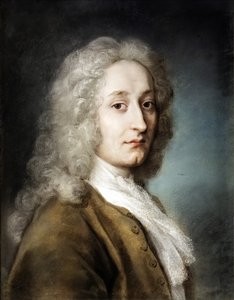
Jean-Antoine Watteau

Watteau possessed a hand that seemed to dance across the surface, leaving behind a characteristic sketchlike technique that breathed life into his compositions. Even in his more grounded scenes, such as The Country Dance, which dates from about 1718 to 1721, there remains a subtle, underlying sense of longing that colors the pastoral landscape.

Key works · Top 100 works · Jean-Antoine Watteau reproductions

2/ 100

Élisabeth Louise Vigée Le Brun

French b. Paris Rococo and Neoclassical Wikipedia 30/32

Élisabeth Louise Vigée Le Brun

Louise Élisabeth Vigée Le Brun enters a city defined by the strict hierarchies of the Ancien Régime. Even as she moves through different social circles, her ability to render personality remains constant, as seen in the 1791 portrait of Hyacinthe Gabrielle Roland.

Location Vigée Le Brun remains a pioneer for women in the arts, having navigated a professional landscape almost exclusively reserved for men.

Key works · Top 100 works · Élisabeth Louise Vigée Le Brun reproductions

3/ 100

Canaletto

Italian b. Venice Vedute, topographical style Wikipedia 30/32

Canaletto

His first known signed and dated work, an Architectural Capriccio from 1723, appeared in a private collection in Milan.

Location His presence remains felt in the collections of major institutions across Europe and beyond.

Trained Bernardo Bellotto #10

Key works · Top 100 works · Canaletto reproductions

4/ 100

Giovanni Battista Tiepolo

Italian b. Venice Rococo and Baroque Wikipedia 30/32

Giovanni Battista Tiepolo

He looked to the dramatic qualities of Tintoretto and the works of Sebastiano Ricci, Giovanni Battista Piazzetta, and Federico Bencovich. The Last Supper, painted in 1745, is held in The Louvre, Paris.

Location To find his hand, one often looks to the very spaces he was commissioned to transform.

Key works · Top 100 works · Giovanni Battista Tiepolo reproductions

5/ 100

François Boucher

French b. Paris Rococo Wikipedia 30/32

François Boucher

He arrived in Rome in 1728 to study at the French Academy, a period that would fundamentally shape his artistic sensibilities. Around 1740, he completed The Birth of Venus, a canvas that captured the goddess emerging from the sea foam.

Location In Paris, the Louvre holds several of his canvases, preserving the spirit of the courtly life he so carefully rendered.

Trained by François Lemoyne #27 · Trained Jean-Honoré Fragonard #6

Key works · Top 100 works · François Boucher reproductions

6/ 100

Jean-Honoré Fragonard

French b. Grasse Rococo Wikipedia 28/32

Jean-Honoré Fragonard

The brush moves with a speed that borders on the frantic. The Progress of Love: The Lover Crowned was painted in 1771, followed by The Progress of Love: The Meeting in 1773.

Location The physical traces of Fragonard’s brushwork remain scattered across major global institutions.

Trained by Jean-Baptiste-Siméon Chardin #7, François Boucher #5

Key works · Top 100 works · Jean-Honoré Fragonard reproductions

7/ 100

Jean-Baptiste-Siméon Chardin

French b. Paris Naturalism Wikipedia 27/32

Jean-Baptiste-Siméon Chardin

The height of his professional standing arrived in 1757 when the King granted him lodgings within the Louvre.

Location His presence is felt strongly in Paris, where the Musée du Louvre holds a significant portion of his output.

Trained Jean-Honoré Fragonard #6

Key works · Top 100 works · Jean-Baptiste-Siméon Chardin reproductions

8/ 100

Thomas Gainsborough

British b. Sudbury Rococo, Romanticism Wikipedia 29/32

Thomas Gainsborough

He would place his subjects within the wide, open air of the English countryside, allowing the atmosphere of the sky and the texture of the trees to inform the character of the person depicted. The Blue Boy, an oil painting on canvas, is thought to be a portrait of Jonathan Buttall, yet it has achieved a presence that transcends its original purpose.

Location To walk through the rooms of Gainsborough’s House in Sudbury is to step into the very environment that nurtured his early vision.

Key works · Top 100 works · Thomas Gainsborough reproductions

9/ 100

Jean-Baptiste Greuze

French b. Tournus Rococo, Genre painting Wikipedia 22/32

Jean-Baptiste Greuze

La Jeune Fille qui pleure son oiseau mort (c. 1765): Demonstrates Greuze’s mastery of emotional expression and poignant storytelling.

Trained by Charles-Joseph Natoire #32

Key works · Top 100 works · Jean-Baptiste Greuze reproductions

10/ 100

Bernardo Bellotto

Italian b. Venice Veduta, urban landscape, printmaker Wikipedia 27/32

Bernardo Bellotto

Rio dei Mendicanti with the Scuola di San Marco (detail) (1738). In 1738, he painted the Rio dei Mendicanti with the Scuola di San Marco (detail), a work that shows his early ability to handle the intricate details of Venetian architecture.

Location In Dresden, the Gemäldegalerie holds a significant portion of his output, including views of the city that captured its architectural life before the ravages of war.

Trained by Canaletto #3

Key works · Top 100 works · Bernardo Bellotto reproductions

12/ 100

Pietro Longhi

Italian b. Venice Venetian painting, Rococo Wikipedia 18/32

Pietro Longhi

He even served as Director of the Academy of Drawing and Carving from 1763, further solidifying his position within the Venetian art world.

Key works · Top 100 works · Pietro Longhi reproductions

13/ 100

Giovanni Domenico Tiepolo

Italian b. Venice Rococo Wikipedia 18/32

Giovanni Domenico Tiepolo

In the luminous heart of eighteenth-century Venice, a period defined by the decadent splendor of the Rococo, Giandomenico Tiepolo emerged as a master of both grand spectacle and intimate human drama. As the son of the legendary Giovanni Battista Tiepolo, Giandomenico did not merely inherit a name; he inherited a visual language of light, movement, and theatricality.

Key works · Top 100 works · Giovanni Domenico Tiepolo reproductions

14/ 100

Joseph Marie Vien

Spanish b. Montpellier Still-life painting Wikipedia 15/32

Joseph Marie Vien

Born into a family of Kyoto grocers, Jakuchū’s artistic journey began under the tutelage of Ōoka Shunboku, a renowned Kano school artist known for his exquisite bird and flower paintings.

Trained by Charles-Joseph Natoire #32

Key works · Top 100 works · Joseph Marie Vien reproductions

15/ 100

Giovanni Battista Piazzetta

Italian b. Venice Rococo Wikipedia 16/32

Giovanni Battista Piazzetta

Giovanni Battista Piazzetta, born in Venice on February 13th, either in 1682 or 1683 – records from the period are somewhat ambiguous – emerged into a city steeped in artistic tradition yet undergoing subtle shifts in taste. However, limiting him solely to religious subjects would be a disservice.

Trained Johann Heinrich Tischbein #51

Key works · Top 100 works · Giovanni Battista Piazzetta reproductions

17/ 100

Joseph Vernet

French b. Avignon Landscape, Seascape Wikipedia 26/32

Joseph Vernet

Claude-Joseph Vernet, born in Bordeaux in 1714, wasn’t initially destined for the grand landscapes and dramatic seascapes that would define his legacy. Vernet’s formal training began under his father, Antoine Vernet, a decorative painter, and Nicolas- Bernard Lépicié, providing him with a solid academic foundation before he ventured towards the artistic heart of Europe: Rome.

Key works · Top 100 works · Joseph Vernet reproductions

18/ 100

Rosalba Carriera

Italian b. Venice Rococo Wikipedia 23/32

Rosalba Carriera

She quickly attracted a prestigious clientele, including Maximilian II of Bavaria, Frederick IV of Denmark, and perhaps most notably, Augustus the Strong, King of Poland and Elector of Saxony, who amassed an impressive collection of her pastel works.

Trained Gustaf Lundberg #54

Key works · Top 100 works · Rosalba Carriera reproductions

19/ 100

Jean-Marc Nattier

French b. Paris Rococo Wikipedia 22/32

Jean-Marc Nattier

Further guidance came from his uncle, Jean Jouvenet, a respected history painter who broadened his understanding of composition and narrative.

Trained Louis Tocqué #71

Key works · Top 100 works · Jean-Marc Nattier reproductions

20/ 100

Maurice Quentin de La Tour

French b. Saint-Quentin Rococo Wikipedia 23/32

Maurice Quentin de La Tour

Around 1724, he moved to Paris, where he began his artistic career. Portraits of Louis XV - Several portraits of the French King, solidifying his position within the court.

Key works · Top 100 works · Maurice Quentin de La Tour reproductions

21/ 100

Alexander Roslin

Swedish b. Malmö Sankt Petri församling Rococo Wikipedia 21/32

Alexander Roslin

Born in Malmö, Sweden, in 1718, Alexander Roslin emerged as one of the most celebrated Rococo portraitists of his era. An invitation to work for Frederick, Margrave of Brandenburg-Kulmbach in Bayreuth led him to Italy, where he immersed himself in the study of Renaissance and Baroque masters. A European Grand Tour followed between 1774-1778, taking him back to Stockholm, Vienna, and St.

Key works · Top 100 works · Alexander Roslin reproductions

22/ 100

Jean-Baptiste Oudry

b. Paris Wikipedia 17/32

Jean-Baptiste Oudry

Initially focused on portraiture, Oudry gradually expanded his repertoire to include still lifes, particularly of fruits and animals, as well as religious subjects. The Pastoral Amusements (Les Amusements Champêtres): A series of tapestries designed for the Royal Beauvais Tapestry Manufactory, showcasing idyllic scenes of rural life and hunting.

Key works · Top 100 works · Jean-Baptiste Oudry reproductions

23/ 100

Martin van Meytens

Swedish b. Stockholm Baroque portraiture Wikipedia 14/32

Martin van Meytens

While his subjects were often symbols of state power, Meytens sought to imbende them with a psychological depth that transcended mere likeness. Imperial Documentation: The portrait of Emperor Francis I (1750) exemplifies his skill in capturing the gravity and grandeur required for the Holy Roman Emperor.

Key works · Top 100 works · Martin van Meytens reproductions

24/ 100

Jean-Étienne Liotard

Swiss b. Geneva Wikipedia 20/32

Jean-Étienne Liotard

Liotard’s approach to art was rooted in a rigorous commitment to naturalism. The year 1744 proved significant for his output, marked by the creation of The Chocolate Girl and a notable Self-Portrait.

Location The distribution of Liotard’s output across Europe and beyond allows for a varied study of his technical precision.

Key works · Top 100 works · Jean-Étienne Liotard reproductions

25/ 100

Louis Michel van Loo

French b. Toulon Rococo Wikipedia 17/32

Louis Michel van Loo

Van Loo’s work played a crucial role in shaping the visual image of European royalty during the 18th century.

Trained by Jean-Baptiste van Loo #57

Key works · Top 100 works · Louis Michel van Loo reproductions

26/ 100

Johann Zoffany

b. Frankfurt Wikipedia 15/32

Johann Zoffany

He was also popular with Austrian imperial family and created a baron of the Holy Roman Empire in 1776 by Empress Maria Theresa. Dr William Hunter Teaching Anatomy at the Royal Academy (1779): A fascinating portrayal of medical education and scientific inquiry.

Key works · Top 100 works · Johann Zoffany reproductions

27/ 100

François Lemoyne

French b. Paris Rococo Wikipedia 14/32

François Lemoyne

Portraiture: His portrait of Head of King Louis XV, reveals a subtle understanding of character and a mastery of charcoal and pastel techniques.

Trained Charles-Joseph Natoire #32, François Boucher #5

Key works · Top 100 works · François Lemoyne reproductions

28/ 100

François de Troy

French b. Toulouse Rococo, Baroque Wikipedia 12/32

François de Troy

While adept at traditional portraiture, Jean-François de Troy is perhaps best remembered for his innovative tableaux de mode – “pictures of fashion.” These weren't simply portraits; they were vibrant snapshots of contemporary life, capturing the leisure activities, social customs, and opulent surroundings of the French upper class.

Key works · Top 100 works · François de Troy reproductions

29/ 100

Jean-Baptiste Pater

French b. Valenciennes Rococo Pastel Palette Wikipedia 13/32

Jean-Baptiste Pater

Jean-Baptiste Pater's contribution to French Rococo art is undeniable. Frederick the Great: Pater gained considerable renown through his portrait commissions for Frederick II, King of Prussia—specifically “Le Sultan au Harem” and “Le Sultan au Jardin.” These portraits exemplify Pater's skill in portraying regal dignity and capturing the psychological complexities of his subjects, cementing his reputation as a royal artist.

Trained by Jean-Antoine Watteau #1

Key works · Top 100 works · Jean-Baptiste Pater reproductions

30/ 100

Charles-André van Loo

French b. Nice Rococo painting Wikipedia 16/32

Charles-André van Loo

Significant Works: Venus and Amor (Kunsthalle Bremen) - Demonstrates mastery of the Rococo style. Mademoiselle Clairon as Medea (small version) - A captivating Rococo portrait of 1760.

Trained by Jean-Baptiste van Loo #57 · Trained Johann Heinrich Tischbein #51

Key works · Top 100 works · Charles-André van Loo reproductions

31/ 100

Jacopo Amigoni

Italian b. Naples Late Baroque & Rococo Wikipedia 21/32

Jacopo Amigoni

While influenced by the Baroque traditions of artists like Giuseppe Nogari, Amigoni developed a distinctly Rococo sensibility, characterized by its elegance, grace, and emphasis on decorative detail. He mentored several promising young artists, including Charles Joseph Flipart, Michelangelo Morlaiter, and Pietro Antonio Novelli, ensuring the continuation of his artistic lineage.

Key works · Top 100 works · Jacopo Amigoni reproductions

32/ 100

Charles-Joseph Natoire

French b. Nîmes Rococo Wikipedia 15/32

Charles-Joseph Natoire

Charles-Joseph Natoire (1700–1777) stands as a pivotal figure in the artistic landscape of late Baroque and early Rococo France, embodying the refined sensibilities of his era. This foundation was further polished through instruction from François Lemoyne, arguably the foremost painter of Louis XV's court.

Trained by François Lemoyne #27 · Trained Joseph Marie Vien #14, Jean Baptiste Perronneau #69

Key works · Top 100 works · Charles-Joseph Natoire reproductions

33/ 100

Jan Frans van Bloemen

Flemish b. Antwerp Italianate landscape Wikipedia 14/32

Jan Frans van Bloemen

His most fruitful collaboration was arguably with Placido Costanzi, whom he considered the finest collaborator on paintings depicting scenes from “ The Flight to Egypt.”

Key works · Top 100 works · Jan Frans van Bloemen reproductions

34/ 100

Adélaïde Labille-Guiard

French b. Paris Rococo to Neoclassicism Wikipedia 20/32

Adélaïde Labille-Guiard

Adélaïde Labille-Guiard (1749–1803) stands as a remarkable figure in the history of French art, not merely for her exquisite portraits but also for her courageous challenge to the restrictive conventions that governed women’s roles within the artistic world. Other notable works include portraits of prominent figures such as Madame Adélaïde and Victoire, the elder sisters of Louis XVI, and numerous studies of drapery, reflecting her technical expertise and keen eye for detail.

Trained by Maurice Quentin de La Tour #20

Key works · Top 100 works · Adélaïde Labille-Guiard reproductions

35/ 100

Francesco Zuccarelli

Italian b. Pitigliano Rococo, Baroque Wikipedia 15/32

Francesco Zuccarelli

Apprenticeship: Zuccarelli began his artistic journey as an apprentice to Giovanni Maria Morandi and Pietro Nelli in Rome, focusing initially on portraiture. Engravings & Frescoes: From 1728-1731, he dedicated himself largely to engraving the deteriorating frescoes of Giovanni da San Giovanni and Andrea del Sarto, demonstrating a keen eye for detail and classical influences.

Key works · Top 100 works · Francesco Zuccarelli reproductions

36/ 100

Dmitry Levitzky

Ukrainian-Russian b. Kyiv Classical Portraiture Wikipedia 16/32

Dmitry Levitzky

His father, Grigory Kirillovich Levitsky-Nos, was not merely a priest but also an accomplished engraver and painter, serving as young Dmitry’s initial guide into the world of visual expression.

Trained Vladimir Borovikovsky #46

Key works · Top 100 works · Dmitry Levitzky reproductions

37/ 100

Franz Anton Maulbertsch

German/Austrian b. Langenargen Rococo, Baroque Wikipedia 16/32

Franz Anton Maulbertsch

However, Maulbertsch's artistic horizons expanded significantly through exposure to Venetian masters like Giovanni Battista Pittoni and Piazzetta. He adorned churches across Central Europe with stunning frescoes, including those in Bicske and Kalocsa, and within Vienna’s revered Michaelerkirche and Piaristenkirche Maria Treu.

Key works · Top 100 works · Franz Anton Maulbertsch reproductions

38/ 100

Jean-Baptiste Pigalle

French b. Tournus Baroque & Neoclassical

Jean-Baptiste Pigalle

Born in Tournus, France, in 1714, Jean-Baptiste Pigalle emerged as a pivotal figure in the transition between the exuberant drama of the Baroque and the emerging clarity of Neoclassicism. He honed his skills in Lyon before moving to Paris, immersing himself in the study of live models at the Royal Academy – though his early efforts weren’t universally acclaimed, hinting at the independent spirit that would define his trajectory.

Key works · Top 100 works · Jean-Baptiste Pigalle reproductions

40/ 100

Louis Jean François Lagrenée

French b. Paris Rococo, Neoclassical

Louis Jean François Lagrenée

It is impossible to discuss Louis-Jean-François Lagrenée without acknowledging the parallel career of his younger brother, Jean-Jacques Lagrenée.

Key works · Top 100 works · Louis Jean François Lagrenée reproductions

41/ 100

Giambattista Pittoni

b. Venice Late Baroque, Rococo Wikipedia 19/32

Giambattista Pittoni

In the vibrant, water-bound splendor of eighteenth-century Venice, few artists captured the theatrical essence of the late Baroque and Rococo periods as fluently as Giambattista Pittoni. His early training was deeply personal, conducted under the guidance of his uncle, Francesco Pittoni, a painter of the Venetian Baroque.

Trained by Antonio Balestra #73

Key works · Top 100 works · Giambattista Pittoni reproductions

42/ 100

Gaspar van Wittel

Dutch b. Amersfoort Veduta painting Wikipedia 14/32

Gaspar van Wittel

His early works show influence from Dutch masters like Jan van der Heyden, but he quickly developed a unique style tailored to the Roman landscape.

Key works · Top 100 works · Gaspar van Wittel reproductions

44/ 100

Fyodor Stepanovich Rokotov

Russian b. Moscow Psychological Portrait

Fyodor Stepanovich Rokotov

In the grand, sweeping tapestry of eighteenth-century Russian art, where many painters sought to capture the sheer opulence of the Romanov era through gilded frames and theatrical grandeur, Fyodor Stepanovich Rokotov emerged as a singular, introspective voice.

Key works · Top 100 works · Fyodor Stepanovich Rokotov reproductions

45/ 100

François Hubert Drouais

b. Paris Rococo Wikipedia 12/32

François Hubert Drouais

In the luminous and opulent atmosphere of mid-eighteenth-century France, few artists captured the essence of aristocratic grace as intimately as François Hubert Drouais. A leading portrait painter during the latter years of Louis XV's reign, Drouais possessed a singular ability to translate the refinement and charm of the French court onto canvas.

Key works · Top 100 works · François Hubert Drouais reproductions

46/ 100

Vladimir Borovikovsky

b. Myrhorod Wikipedia 14/32

Vladimir Borovikovsky

Artistic Movement: His work bridges the Rococo and Romanticism movements, exhibiting elements of both styles. Key Portraits: Some of his most celebrated works include portraits of Catherine II, Count Razumovsky, Dmitry Levitzky, Morteza Qoli Khan Qajar, and the iconic portrait of M.I.

Trained by Dmitry Levitzky #36

Key works · Top 100 works · Vladimir Borovikovsky reproductions

47/ 100

Antoine Pesne

French b. Paris Rococo Wikipedia 13/32

Antoine Pesne

While Frederick William I, the soldier king, prioritized military matters over artistic pursuits, he nonetheless recognized Pesne's talent and appointed him director of the Berlin Academy of Arts – a position that allowed Pesne to shape the next generation of Prussian artists.

Key works · Top 100 works · Antoine Pesne reproductions

48/ 100

Allan Ramsay

b. Edinburgh Wikipedia 12/32

Allan Ramsay

Ramsay’s artistic development took a significant turn with his travels to Rome and Naples, where he spent three years (1736-1738) working under the tutelage of Francesco Solimena and Imperiali (Francesco Fernandi). Mary Degg, Lady Robert Manners (Scottish National Gallery, Edinburgh): An elegant portrait demonstrating Ramsay's skill in capturing aristocratic beauty.

Key works · Top 100 works · Allan Ramsay reproductions

50/ 100

Corrado Giaquinto

Italian b. Molfetta Rococo Wikipedia 11/32

Corrado Giaquinto

A true master of the Rococo era, Giaquinto possessed a rare ability to bridge the heavy, dramatic shadows of the Neapolitan Baroque with the airy, pastel elegance that would define the mid-century aesthetic. Born in Molfetta, Italy, in 1703, his journey from a provincial apprentice to one of the most sought-after painters in Europe is a testament to a talent that could harmonize the monumental with the delicate.

Key works · Top 100 works · Corrado Giaquinto reproductions

51/ 100

Johann Heinrich Tischbein

German b. Haina Rococo Wikipedia 10/32

Johann Heinrich Tischbein

Cultural Synthesis: The integration of German discipline, French grace, and Italian dramatic chiaroscuro into a singular, cohesive style.

Trained by Charles-André van Loo #30, Giovanni Battista Piazzetta #15

Key works · Top 100 works · Johann Heinrich Tischbein reproductions

52/ 100

Christian Wilhelm Ernst Dietrich

German b. Weimar Imitation of Dutch & Italian masters Wikipedia 11/32

Christian Wilhelm Ernst Dietrich

Born in Weimar in 1712, Dietrich did not seek to shatter the existing artistic paradigms with a revolutionary new vision; instead, he sought to master the echoes of the past. Raised in an environment steeped in the traditions of German art patronage, his early life was shaped by the meticulous craftsmanship of his father, Johann Georg, a miniature painter to the court of Saxe-Weimar-Eisenach.

Key works · Top 100 works · Christian Wilhelm Ernst Dietrich reproductions

53/ 100

Charles Amédée Philippe Van Loo

French b. Rivoli Rococo, Portraiture Wikipedia 13/32

Charles Amédée Philippe Van Loo

He skillfully blended these influences to create a distinctive Rococo style characterized by its elegance, grace, and theatricality. The Camera Obscura (1764): This captivating painting, now housed in the Louvre, exemplifies Vanloo’s mastery of light and shadow.

Trained by Jean-Baptiste van Loo #57

Key works · Top 100 works · Charles Amédée Philippe Van Loo reproductions

54/ 100

Gustaf Lundberg

Swedish b. Stockholm City Rococo Pastelist Wikipedia 14/32

Gustaf Lundberg

His portfolio serves as a visual chronicle of the 18th-century elite, featuring breathtaking depictions of Louis XV and his queen, Maria Leszczyńska.

Trained by Rosalba Carriera #18

Key works · Top 100 works · Gustaf Lundberg reproductions

56/ 100

Jacob de Wit

Dutch b. Amsterdam Rococo Painting Wikipedia 10/32

Jacob de Wit

In the golden age of Dutch Rococo, few names evoke the architectural splendor of the eighteenth century quite like Jacob de Wit. Born in Amsterdam in 1695, De Wit emerged not merely as a painter, but as a visionary decorator who transformed the very bones of historic buildings.

Key works · Top 100 works · Jacob de Wit reproductions

57/ 100

Jean-Baptiste van Loo

French b. Aix-en-Provence Baroque, Rococo Wikipedia 15/32

Jean-Baptiste van Loo

A pivotal moment arrived with the patronage of Prince Emmanuel Philibert of Carignano, who recognized van Loo’s burgeoning talent and sponsored his journey to Rome. Following Rome, van Loo’s artistic path led him to Turin, where he painted portraits of Charles Emmanuel II, Duke of Savoy, and members of his court, further solidifying his reputation among European nobility.

Trained Charles-André van Loo #30

Key works · Top 100 works · Jean-Baptiste van Loo reproductions

58/ 100

John Wollaston

English Rococo Painting

John Wollaston

Settling initially in New York City, Wollaston began a nomadic period of intense creativity, traveling along the Atlantic seaboard to bring the latest London fashions to American patrons.

Key works · Top 100 works · John Wollaston reproductions

59/ 100

Carl Gustaf Pilo

Swedish b. Runtuna Rococo Wikipedia 12/32

Carl Gustaf Pilo

Born in 1711 on the farm Göksäter near Nyköping, Sweden, Pilo emerged from humble beginnings as the son of Olof Pilo, a skilled decorative painter. His early training, likely influenced by his father's work at Drottningholm and Stockholm Palace, provided him with a foundational mastery of craftsmanship that would later allow him to navigate the sophisticated circles of European royalty.

Key works · Top 100 works · Carl Gustaf Pilo reproductions

60/ 100

Anna Dorothea Therbusch

German b. Berlin Rococo Wikipedia 13/32

Anna Dorothea Therbusch

Anna Dorothea Therbusch (1721-1782) stands as a remarkable figure in the annals of Rococo art history —a woman artist who defied societal expectations and achieved considerable renown during the Enlightenment.

Key works · Top 100 works · Anna Dorothea Therbusch reproductions

61/ 100

Johann Georg Platzer

Austrian b. Eppan an der Weinstraße Rococo Wikipedia 8/32

Johann Georg Platzer

Johann Georg Platzer, born in the idyllic Tyrolean village of Eppan in 1704, emerged as a pivotal figure within Austrian Rococo painting. Coming from a family deeply rooted in artistic tradition—his uncle, Jakob Christoff Platzer, served as a court painter—the young Johann Georg was immersed in a world where brushstrokes and pigments were not merely tools but conduits to beauty and status.

Key works · Top 100 works · Johann Georg Platzer reproductions

63/ 100

Michele Marieschi

Italian b. Venice Vedute Venice Wikipedia 9/32

Michele Marieschi

Scholars often point to the influence of masters such as Gaspare Diziani and the legendary Canaletto, whose works provided a blueprint for capturing the grandeur of urban environments.

Key works · Top 100 works · Michele Marieschi reproductions

65/ 100

Royal-Polish And Electoral-Saxon Porcelain Manufactory

German b. Meissen Hard-paste porcelain

Royal-Polish And Electoral-Saxon Porcelain Manufactory

The royal-polish and electoral-saxon porcelain manufactory, established in 1710 by Ehrenfried Walther von Tschirnhaus and Johann Friedrich Böttger, stands as a monumental achievement in European ceramics history—a testament to scientific innovation and artistic brilliance that continues to captivate collectors and connoisseurs worldwide.

Key works · Top 100 works

66/ 100

Gerard van Spaendonck

b. Tilburg Wikipedia 12/32

Gerard van Spaendonck

Fleurs Dessinees d'apres Nature (Flowers Drawn from Life): Published between 1799 and 1801, this series of twenty-four engraved plates served as a valuable resource for students of floral painting.

Key works · Top 100 works · Gerard van Spaendonck reproductions

67/ 100

Joseph Highmore

British b. London Rococo Wikipedia 10/32

Joseph Highmore

Joseph Highmore, born in London in 1692, emerged as a pivotal figure within the evolving landscape of 18th-century English art. Initially influenced by the grand Baroque tradition exemplified by Kneller, Highmore’s style would gradually embrace the more delicate aesthetics of the Rococo period, a shift reflective of broader cultural currents sweeping across Europe.

Key works · Top 100 works · Joseph Highmore reproductions

68/ 100

Jean Jacques Caffiéri

French b. Paris Rococo

Jean Jacques Caffiéri

The Wallace Collection houses Caffiéri’s masterpiece—the Royal Commode delivered by Antoine-Robert Gaudreau in 1739 for Louis XV’s bedchamber at Versailles—a stunning example of Rococo design and craftsmanship.

Key works · Top 100 works · Jean Jacques Caffiéri reproductions

69/ 100

Jean Baptiste Perronneau

French b. Paris Rococo Wikipedia 12/32

Jean Baptiste Perronneau

De La Tour was widely considered the master of French pastel portraiture, and his influence on Perronneau was profound.

Trained by Charles-Joseph Natoire #32

Key works · Top 100 works · Jean Baptiste Perronneau reproductions

70/ 100

Francis Hayman

English b. Exeter Rococo, Portraiture Wikipedia 10/32

Francis Hayman

As he transitioned from a scenic painter to an independent artist in St Martin's Lane, Hayman brought with him a storyteller’s soul, capable of transforming a static canvas into a window onto a theatrical moment.

Key works · Top 100 works · Francis Hayman reproductions

71/ 100

Louis Tocqué

French b. Paris Portrait painting Wikipedia 11/32

Louis Tocqué

Tocqué's initial training was deeply rooted in Nattier’s style – a blend of realism, elegance, and a subtle theatricality—but he quickly developed his own distinctive voice, influenced by the more dynamic compositions of Hyacinthe Rigaud and the refined sensibilities of Nicolas de Largillière.

Trained by Jean-Marc Nattier #19

Key works · Top 100 works · Louis Tocqué reproductions

72/ 100

Donato Creti

Italian b. Cremona Rococo, Neoclassicism Wikipedia 8/32

Donato Creti

Early influences were readily apparent: the dynamic frescoes of the Carracci brothers resonated deeply, while a potential sojourn to Venice exposed him to the vibrant colorism and theatricality of Venetian masters like Veronese.

Key works · Top 100 works · Donato Creti reproductions

73/ 100

Antonio Balestra

b. Verona Wikipedia 11/32

Antonio Balestra

He then traveled to Bologna and subsequently Rome, working in the workshop of the renowned Carlo Maratta. Religious Commissions: He received numerous commissions for religious paintings, including works for churches such as I Gesuiti and San Zaccaria in Venice, and Sant'Ignazio in Bologna.

Trained Giambattista Pittoni #41

Key works · Top 100 works · Antonio Balestra reproductions

74/ 100

Gaspare Traversi

Italian b. Naples Rococo Wikipedia 11/32

Gaspare Traversi

Notable Commissions & Collaborations: Traversi secured prestigious commissions throughout Italy, notably in Parma where he collaborated with Giovanni Lorenzo Berti on a monumental portrait depicting Saint Margaret of Cortona.

Key works · Top 100 works · Gaspare Traversi reproductions

75/ 100

Georg Desmarées

Swedish-German b. Stockholm City Rococo, Portraiture Wikipedia 9/32

Georg Desmarées

His early works, heavily influenced by his uncle Meytens and the French masters, exhibited a meticulous attention to detail and a restrained elegance. Other notable works include portraits of members of the Elector’s family, such as The Countess Holstein (Lenbachhaus, Munich) and The Princess Portia (Staatsgalerie, Stuttgart).

Key works · Top 100 works · Georg Desmarées reproductions

76/ 100

Jean-Baptiste Pillement

French b. Lyon Rococo & Neoclassical Wikipedia 8/32

Jean-Baptiste Pillement

His stylistic evolution was deeply shaped by the explorations of artists such as Nicolas Pocock and Gaspar Pérégrine Rigaud.

Key works · Top 100 works · Jean-Baptiste Pillement reproductions

77/ 100

Cornelis Troost

Dutch b. Amsterdam Rococo genre scenes Wikipedia 8/32

Cornelis Troost

Born in the heart of the Dutch Republic on October 8, 1696, in Amsterdam, Troost’s journey from aspiring actor to celebrated painter reveals a fascinating confluence of artistic passions and personal transformation.

Key works · Top 100 works · Cornelis Troost reproductions

78/ 100

Jacques De Lajoue

French b. Paris Neoclassical Painting Wikipedia 8/32

Jacques De Lajoue

In pieces such as " Fantaisie architecturale," the viewer is invited to wander through spaces where neoclassical elegance meets the untamed beauty of nature.

Key works · Top 100 works · Jacques De Lajoue reproductions

79/ 100

Richard Cosway

British b. Tiverton Regency portrait miniatures Wikipedia 10/32

Richard Cosway

Richard Cosway, born in the quiet Devon town of Tiverton in 1742, ascended to become one of the most celebrated portrait miniaturists of his age. Even before establishing his own business by 1760, Cosway had secured recognition from the Society of Arts, foreshadowing the acclaim he would soon garner within London’s vibrant artistic circles.

Key works · Top 100 works · Richard Cosway reproductions

80/ 100

Philippe Mercier

French b. Berlin Rococo Wikipedia 7/32

Philippe Mercier

Mercier’s artistic style is quintessentially Rococo – characterized by its lightness, elegance, and playful use of color.

Key works · Top 100 works · Philippe Mercier reproductions

81/ 100

Per Krafft the Elder

Swedish b. Arboga Rococo Wikipedia 7/32

Per Krafft the Elder

Ultimately, the work of Per the Elder Krafft remains a vital touchstone for understanding the cultural heartbeat of eighteenth-century Sweden.

Key works · Top 100 works · Per Krafft the Elder reproductions

83/ 100

Alessandro Longhi

b. Venice Wikipedia 10/32

Alessandro Longhi

Longhi specialized in portraiture, particularly depictions of Venetian nobles and prominent figures. Portrait of Carlo Lodoli (1760): This Baroque-style portrait showcases Venetian realism and attention to detail, depicting a monk engaged in study.

Key works · Top 100 works · Alessandro Longhi reproductions

86/ 100

Louis de Silvestre

French b. Sceaux Baroque, Rococo Wikipedia 7/32

Louis de Silvestre

Silvestre’s tenure as director of the Royal Academy of Arts in Dresden marked a new phase in his career.

Key works · Top 100 works · Louis de Silvestre reproductions

87/ 100

Luis Paret Y Alcázar

Spanish b. Madrid Rococo Wikipedia 8/32

Luis Paret Y Alcázar

His life, spanning from his birth in Madrid in 1746 to his passing in 1799, was a journey through the heart of Spanish cultural evolution.

Key works · Top 100 works · Luis Paret Y Alcázar reproductions

89/ 100

Giuseppe Nogari

Italian b. Venice Rococo Wikipedia 8/32

Giuseppe Nogari

Born in 1699, Nogari emerged during a transformative era when the heavy, dramatic shadows of the Baroque were beginning to yield to the light, airy grace of the Rococo. This lineage, combined with the delicate pastel sensibilities of Rosalba Carriera and the sophisticated elegance of Jacopo Amigoni, allowed him to weave together a style that was simultaneously much more grounded than the typical Rococo flourish and yet exquisitely refined.

Key works · Top 100 works · Giuseppe Nogari reproductions

90/ 100

Jean Ranc

French b. Montpellier Baroque/Neoclassical Wikipedia 8/32

Jean Ranc

He secured commissions from prominent figures of Parisian society, including François Verdier and Carlos III de España, demonstrating his ability to adapt to diverse artistic tastes.

Key works · Top 100 works · Jean Ranc reproductions

91/ 100

Nathaniel Hone the Elder

Irish b. Dublin Barbizon landscapes & Rococo portraiture Wikipedia 4/32

Nathaniel Hone the Elder

“ Portrait of a Gentleman ” (circa 1770): Hone’s depiction of a gentleman exemplifies Neoclassical ideals through its restrained composition and idealized portrayal. He skillfully blended illusionistic techniques with tonal gradations, creating images that resonate with emotional depth. ‘ The Honourable Mrs Curzon’ (1778): This miniature showcases Hone's exceptional skill in capturing the subtleties of facial expression and posture—a hallmark of Rococo portraiture.

Key works · Top 100 works · Nathaniel Hone the Elder reproductions

92/ 100

Jean Raoux

French b. Montpellier Symbolist Art Wikipedia 7/32

Jean Raoux

Jean Raoux, born in Montpellier, France in 1677, emerged as a captivating figure within the French artistic landscape of the early 18th century. L'indiscrète (1728): A captivating depiction of a young woman caught in a private moment, revealing a sense of curiosity and vulnerability.

Key works · Top 100 works · Jean Raoux reproductions

93/ 100

Edouard Honoré Ave

French b. Paris Neoclassical/Romantic

Edouard Honoré Ave

The historical significance of Édouard Honoré Ave lies in his ability to preserve and evolve the decorative traditions of France during a century of rapid change.

Key works · Top 100 works · Edouard Honoré Ave reproductions

94/ 100

Francesco Zugno

Italian b. Venice Rococo Wikipedia 6/32

Francesco Zugno

Within the luminous and often overwhelming splendor of eighteenth-century Venice, the name Francesco Zugno emerges as a vital, if somewhat enigmatic, thread in the tapestry of the Rococo era. His early years were shaped by the prestigious traditions of his ancestors, including the fifteenth-century painter Giambattista Zugno, and he received formal training at the Academy of Painting and Sculpture of Venice.

Key works · Top 100 works · Francesco Zugno reproductions

95/ 100

Joseph Boze

French b. Martigues Portraiture Wikipedia 7/32

Joseph Boze

Among his most celebrated commissions were portraits of Jean-Paul Marat—a revolutionary icon—and Charles Eugène Gabriel de la Croix, Marquis de Castries—a military leader who played a crucial role in restoring the monarchy.

Trained by Maurice Quentin de La Tour #20

Key works · Top 100 works · Joseph Boze reproductions

96/ 100

Louis Joseph Watteau

French b. Valenciennes Fêtes galantes Wikipedia 6/32

Louis Joseph Watteau

Recognizing his son's prodigious talent early on, Jean secured him an apprenticeship with Antoine Goujon, a sculptor renowned for his monumental works at Versailles—a connection that would prove invaluable to Watteau’s artistic development.

Key works · Top 100 works · Louis Joseph Watteau reproductions

97/ 100

Jacobus Buys

Dutch b. Amsterdam Rococo Wikipedia 5/32

Jacobus Buys

The influence of earlier Dutch masters is subtly present in Buys's work, particularly in his meticulous attention to detail and the use of light and shadow reminiscent of the Golden Age painters.

Key works · Top 100 works · Jacobus Buys reproductions

98/ 100

Jeremiah Theus

Swiss b. Chur Rococo Wikipedia 5/32

Jeremiah Theus

Michael’s Episcopal Church (1756), a testament to his craftsmanship and artistic vision; the weather vane for Charleston’s City Hall; and contributions towards the construction of St.

Key works · Top 100 works · Jeremiah Theus reproductions

99/ 100

Vigilius Eriksen

Danish b. Copenhagen Rococo Wikipedia 7/32

Vigilius Eriksen

Born in Copenhagen, Denmark, he began his artistic journey under the guidance of the portrait painter Johann Salomon Wahl. Although he achieved significant recognition, his path was not without its hurdles; notably, despite winning a gold medal at the Royal Danish Academy of Fine Arts in 1755, he was denied formal entry into the institution itself.

Key works · Top 100 works · Vigilius Eriksen reproductions

100/ 100

Georg David Matthieu

German b. Berlin Rococo Wikipedia 6/32

Georg David Matthieu

He dies in 1778, leaving behind a body of work that remains housed in the collections of the Staatliches Museum Schwerin, the Gemäldegalerie Berlin, and The Metropolitan Museum of Art.

Key works · Top 100 works · Georg David Matthieu reproductions

Best-known works

Famous Rococo paintings by artist

  1. The Country Dance by Jean-Antoine Watteau

    The Country Dance

    Jean-Antoine Watteau

  2. Queen Marie-Antoinette great court dress, a rose in hand by Élisabeth Louise Vigée Le Brun

    Queen Marie-Antoinette great court dress, a rose in hand

    Élisabeth Louise Vigée Le Brun

  3. The Stonemason's Yard by Canaletto

    The Stonemason's Yard

    Canaletto

    1726 · National Gallery, London

  4. The Adoration of the Magi by Giovanni Battista Tiepolo

    The Adoration of the Magi

    Giovanni Battista Tiepolo

    1750 · Metropolitan Museum of Art, new york

  5. The Triumph of Venus by François Boucher

    The Triumph of Venus

    François Boucher

  6. The Bolt by Jean-Honoré Fragonard

    The Bolt

    Jean-Honoré Fragonard

    1777 · The Louvre, Paris

  7. The Ray by Jean-Baptiste-Siméon Chardin

    The Ray

    Jean-Baptiste-Siméon Chardin

    1728

Chronology

Rococo chronology

  1. 1714
  2. 1720
  3. 1724
  4. 1725
  5. 1726
  6. 1728
  7. 1729
  8. 1740
  9. 1741
  10. 1743
  11. 1744
  12. 1745
  13. 1745
  14. 1748

Statistics

Counts by country, period and museum

Index

Full list of 100 famous Rococo painters

  1. 1Jean-Antoine WatteauJean-Antoine WatteauFrench · 1684–1721
  2. 2Élisabeth Louise Vigée Le BrunÉlisabeth Louise Vigée Le BrunFrench · 1755–1842
  3. 3CanalettoCanalettoItalian · 1697–1768
  4. 4Giovanni Battista TiepoloGiovanni Battista TiepoloItalian · 1696–1770
  5. 5François BoucherFrançois BoucherFrench · 1703–1770
  6. 6Jean-Honoré FragonardJean-Honoré FragonardFrench · 1732–1806
  7. 7Jean-Baptiste-Siméon ChardinJean-Baptiste-Siméon ChardinFrench · 1699–1779
  8. 8Thomas GainsboroughThomas GainsboroughBritish · 1727–1788
  9. 9Jean-Baptiste GreuzeJean-Baptiste GreuzeFrench · 1725–1805
  10. 10Bernardo BellottoBernardo BellottoItalian · 1722–1780
  11. 11Francesco GuardiFrancesco GuardiItalian · 1712–1793
  12. 12Pietro LonghiPietro LonghiItalian · 1701–1785
  13. 13Giovanni Domenico TiepoloGiovanni Domenico TiepoloItalian · 1727–1804
  14. 14Joseph Marie VienJoseph Marie VienSpanish · 1716–1809
  15. 15Giovanni Battista PiazzettaGiovanni Battista PiazzettaItalian · 1683–1754
  16. 16Nicolas LancretNicolas LancretFrench · 1689–1743
  17. 17Joseph VernetJoseph VernetFrench · 1714–1789
  18. 18Rosalba CarrieraRosalba CarrieraItalian · 1675–1757
  19. 19Jean-Marc NattierJean-Marc NattierFrench · 1685–1766
  20. 20Maurice Quentin de La TourMaurice Quentin de La TourFrench · 1704–1788
  21. 21Alexander RoslinAlexander RoslinSwedish · 1718–1793
  22. 22Jean-Baptiste OudryJean-Baptiste Oudry1686–1755
  23. 23Martin van MeytensMartin van MeytensSwedish · 1695–1770
  24. 24Jean-Étienne LiotardJean-Étienne LiotardSwiss · 1702–1789
  25. 25Louis Michel van LooLouis Michel van LooFrench · 1707–1771
  26. 26Johann ZoffanyJohann Zoffany1733–1810
  27. 27François LemoyneFrançois LemoyneFrench · 1688–1737
  28. 28François de TroyFrançois de TroyFrench · 1645–1730
  29. 29Jean-Baptiste PaterJean-Baptiste PaterFrench · 1695–1736
  30. 30Charles-André van LooCharles-André van LooFrench · 1705–1765
  31. 31Jacopo AmigoniJacopo AmigoniItalian · 1682–1752
  32. 32Charles-Joseph NatoireCharles-Joseph NatoireFrench · 1700–1777
  33. 33Jan Frans van BloemenJan Frans van BloemenFlemish · 1662–1749
  34. 34Adélaïde Labille-GuiardAdélaïde Labille-GuiardFrench · 1749–1803
  35. 35Francesco ZuccarelliFrancesco ZuccarelliItalian · 1702–1788
  36. 36Dmitry LevitzkyDmitry LevitzkyUkrainian-Russian · 1735–1822
  37. 37Franz Anton MaulbertschFranz Anton MaulbertschGerman/Austrian · 1724–1796
  38. 38Jean-Baptiste PigalleJean-Baptiste PigalleFrench · 1725–1805
  39. 39Anne Vallayer-CosterAnne Vallayer-CosterFrench · 1744–1818
  40. 40Louis Jean François LagrenéeLouis Jean François LagrenéeFrench · 1756–1827
  41. 41Giambattista PittoniGiambattista Pittoni1687–1767
  42. 42Gaspar van WittelGaspar van WittelDutch · 1653–1736
  43. 43Charles Antoine CoypelCharles Antoine CoypelFrench · 1694–1752
  44. 44Fyodor Stepanovich RokotovFyodor Stepanovich RokotovRussian · 1730–1808
  45. 45François Hubert DrouaisFrançois Hubert Drouais1727–1775
  46. 46Vladimir BorovikovskyVladimir Borovikovsky1757–1825
  47. 47Antoine PesneAntoine PesneFrench · 1683–1757
  48. 48Allan RamsayAllan Ramsay1713–1784
  49. 49Elisabeth-Louise Vigée-LebrunElisabeth-Louise Vigée-Lebrun
  50. 50Corrado GiaquintoCorrado GiaquintoItalian · 1703–1766
  51. 51Johann Heinrich TischbeinJohann Heinrich TischbeinGerman · 1722–1789
  52. 52Christian Wilhelm Ernst DietrichChristian Wilhelm Ernst DietrichGerman · 1712–1774
  53. 53Charles Amédée Philippe Van LooCharles Amédée Philippe Van LooFrench · 1719–1795
  54. 54Gustaf LundbergGustaf LundbergSwedish · 1695–1786
  55. 55Louis-Jean-François LagrenéeLouis-Jean-François LagrenéeEnglish · 1725–1805
  56. 56Jacob de WitJacob de WitDutch · 1695–1754
  57. 57Jean-Baptiste van LooJean-Baptiste van LooFrench · 1684–1745
  58. 58John WollastonJohn WollastonEnglish · 1742–1775
  59. 59Carl Gustaf PiloCarl Gustaf PiloSwedish · 1711–1793
  60. 60Anna Dorothea TherbuschAnna Dorothea TherbuschGerman · 1721–1782
  61. 61Johann Georg PlatzerJohann Georg PlatzerAustrian · 1704–1761
  62. 62Nathaniel HoneNathaniel HoneDutch · 1718–1784
  63. 63Michele MarieschiMichele MarieschiItalian · 1710–1743
  64. 64Antonio CorradiniAntonio CorradiniItalian · 1668–1752
  65. 65Royal-Polish And Electoral-Saxon Porcelain ManufactoryRoyal-Polish And Electoral-Saxon Porcelain ManufactoryGerman · born 1710
  66. 66Gerard van SpaendonckGerard van Spaendonck1746–1822
  67. 67Joseph HighmoreJoseph HighmoreBritish · 1692–1780
  68. 68Jean Jacques CaffiériJean Jacques CaffiériFrench · 1678–1755
  69. 69Jean Baptiste PerronneauJean Baptiste PerronneauFrench · 1715–1783
  70. 70Francis HaymanFrancis HaymanEnglish · 1708–1776
  71. 71Louis TocquéLouis TocquéFrench · 1696–1772
  72. 72Donato CretiDonato CretiItalian · 1671–1749
  73. 73Antonio BalestraAntonio Balestra1666–1740
  74. 74Gaspare TraversiGaspare TraversiItalian · 1722–1770
  75. 75Georg DesmaréesGeorg DesmaréesSwedish-German · 1697–1776
  76. 76Jean-Baptiste PillementJean-Baptiste PillementFrench · 1728–1808
  77. 77Cornelis TroostCornelis TroostDutch · 1696–1750
  78. 78Jacques De LajoueJacques De LajoueFrench · 1686–1761
  79. 79Richard CoswayRichard CoswayBritish · 1742–1821
  80. 80Philippe MercierPhilippe MercierFrench · 1689–1760
  81. 81Per Krafft the ElderPer Krafft the ElderSwedish · 1724–1793
  82. 82Johann Georg PinzelJohann Georg PinzelUkrainian, Czech · 1715–1761
  83. 83Alessandro LonghiAlessandro Longhi1733–1813
  84. 84Giuseppe BonitoGiuseppe BonitoItalian · 1707–1789
  85. 85Christophe HuetChristophe HuetFrench · 1700–1759
  86. 86Louis de SilvestreLouis de SilvestreFrench · 1675–1760
  87. 87Luis Paret Y AlcázarLuis Paret Y AlcázarSpanish · 1746–1799
  88. 88Johann Salomon WahlJohann Salomon WahlGerman, Danish · 1689–1765
  89. 89Giuseppe NogariGiuseppe NogariItalian · 1699–1766
  90. 90Jean RancJean RancFrench · 1674–1735
  91. 91Nathaniel Hone the ElderNathaniel Hone the ElderIrish · 1718–1784
  92. 92Jean RaouxJean RaouxFrench · 1677–1734
  93. 93Edouard Honoré AveEdouard Honoré AveFrench · 1818–1890
  94. 94Francesco ZugnoFrancesco ZugnoItalian · 1708–1787
  95. 95Joseph BozeJoseph BozeFrench · 1745–1826
  96. 96Louis Joseph WatteauLouis Joseph WatteauFrench · 1731–1798
  97. 97Jacobus BuysJacobus BuysDutch · 1724–1801
  98. 98Jeremiah TheusJeremiah TheusSwiss · 1716–1774
  99. 99Vigilius EriksenVigilius EriksenDanish · 1722–1782
  100. 100Georg David MatthieuGeorg David MatthieuGerman · 1737–1778

FAQ

Rococo: quick answers

Guides

AllPaintingsStore.com guides

Other lists

Famous artists by movement

By period

Famous artists by period

Famous paintings

Famous paintings by movement

Related lists

Related rankings