Allan Ramsay: A Life of Elegance and Artistry
Early Life and Training
Born in Edinburgh, Scotland on October 13, 1713, Allan Ramsay emerged as a prominent Scottish portrait-painter whose work captured the elegance and refinement of his era. His artistic journey began at the age of twenty when he travelled to London for studies under the Swedish painter Hans Hysing, followed by instruction at the St. Martin's Lane Academy. This foundational training provided him with a solid base in technique and composition.
Italian Influences & Artistic Development
Ramsay’s artistic development took a significant turn with his travels to Rome and Naples, where he spent three years (1736-1738) working under the tutelage of Francesco Solimena and Imperiali (Francesco Fernandi). These Italian masters profoundly influenced his style, fostering a greater understanding of classical principles and enhancing his skills in capturing likeness and character. He absorbed the prevailing Rococo aesthetic while also developing an appreciation for Neoclassical ideals.
A Flourishing Career & Notable Works
Upon returning to Britain in 1738, Ramsay quickly established a successful career as a portraitist. His ability to portray his subjects with both accuracy and grace soon garnered him a distinguished clientele. Some of his most notable works include:
- Queen Charlotte (1744-1818) with her two eldest sons (Royal Collection, London): A regal depiction showcasing the Queen’s maternal presence.
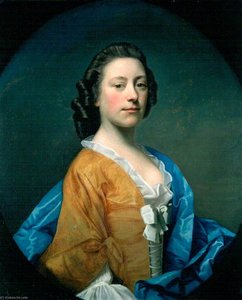
- Mary Degg, Lady Robert Manners (Scottish National Gallery, Edinburgh): An elegant portrait demonstrating Ramsay's skill in capturing aristocratic beauty.
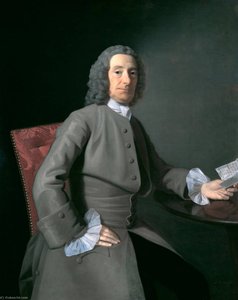
- Head of Duncan Forbes of Culloden: This early work brought him to the attention of the Duke of Argyll and was later featured on Royal Bank of Scotland banknotes.
Royal Appointment & Peak Achievement
A pivotal moment in Ramsay’s career arrived in 1761 with his appointment as Principal Painter in Ordinary to George III. This prestigious position cemented his status among the art elite and ensured a steady stream of commissions from the royal family and high society. He became *the* portraitist of the Georgian era.
Later Life & Legacy
Ramsay’s later life saw a shift towards literary pursuits, reflecting his broad intellectual interests. However, personal tragedies – an accidental dislocation of his right arm and the passing of his second wife in 1782 – impacted his health and productivity. He died in 1784.
Despite these challenges, Ramsay left behind a lasting legacy as one of Scotland’s most celebrated portrait painters. As Samuel Johnson noted, “I love Ramsay. You will not find a man in whose conversation there is more instruction, more information, and more elegance, than in Ramsay's.” His works continue to be admired for their technical skill, refined aesthetic, and insightful portrayals of 18th-century society.
Historical Significance
Allan Ramsay’s contribution extends beyond his artistic talent. He played a crucial role in shaping the visual culture of Scotland during a period of significant social and political change. His portraits provide valuable insights into the lives, fashions, and values of the Scottish nobility and gentry. His works can be found at locations such as Ayr Town Hall, and the Scottish National Portrait Gallery.