Money-Back Guarantee · 100 days Free Worldwide Delivery
646,446artworks 53,409artists 5,406museums 32languages

The Modern shortlist

Famous Modern Painters — Top 99 List

Pablo Picasso (1881–1973) is the most famous Modern painter, best known for Guernica and La Vie (Life). Then Andy Warhol, Frida Kahlo, Salvador Dalí and Piet Mondrian. The list covers 99 painters born between 1870 and 1945 in 26 countries, from Maurice Denis to Anselm Kiefer.

Method. Scope: artists filed under Modern in our catalogue. Order: our artist fame ranking. Excluded: artists born after 1955 without a Wikidata identifier. Wikipedia figure: languages with an article, out of our 32.

  1. Guernica by Pablo Picasso1Pablo Picasso
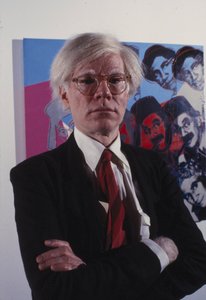
  2. Marilyn Diptych by Andy Warhol2Andy Warhol
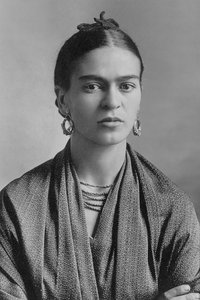
  3. Self portrait with Thorn Necklace and Hummingbird by Frida Kahlo3Frida Kahlo

Key data

Modern: key data

  • 99Artists
  • 1870–1945Years of birth
  • 26Countries of birth
  • 17Women
  • 3Living artists
  • 29,146Works in our catalogue
Cities with most births
Paris (4), New York City (3), Dresden (2), Manhattan (2)

Ranked list

99 Modern Painters, ranked with key works

1/ 99

Pablo Picasso

Spanish b. Málaga Cubism, Surrealism Wikipedia 32/32
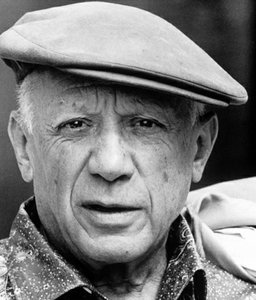
Pablo Picasso

In 1937, the news of the bombing of Guernica reached him, a devastating attack on a town in the Basque Country. This massive, fifty-foot structure, which he suggested represented the head of his Afghan Hound, Kabul, transformed the urban landscape of Daley Plaza.

Location To walk through the halls of the Musée Picasso in Paris is to enter a sanctuary where the artist's restless spirit remains palpable.

Key works · Top 100 works

2/ 99

Andy Warhol

American b. Pittsburgh Pop Art Wikipedia 32/32

Andy Warhol

He frequently used a Polaroid Big Shot to capture his subjects, a practice that informed his visual language of immediacy and repetition.

Location The Andy Warhol Museum in Pittsburgh holds the most significant concentration of his work, standing as the largest museum in the United States dedicated to a single artist.

Key works · Top 100 works

3/ 99

Frida Kahlo

Mexican b. Coyoacán Surrealism, Mexican folk art, Realism Wikipedia 32/32

Frida Kahlo

She does not merely paint her surroundings; she constructs a symbolic reality to process her existence. 1931: Frida y Diego Rivera. 1937: Fulang-Chang and I. 1938: Self Portrait. In Henry Ford Hospital (1932), the scene is raw and clinical, depicting her miscarriage through a floating arrangement of a fetus, a flower, a pelvis, and a snail, all tethered by veins.

Key works · Top 100 works

4/ 99

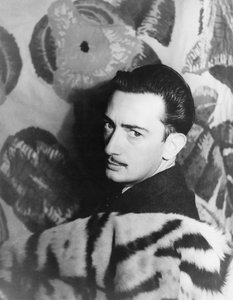
Salvador Dalí

Spanish b. Figueres Surrealism Wikipedia 32/32

Salvador Dalí

By 1929, he had joined the Surrealist group, a move that signaled a shift toward the irrational. Geopoliticus Child Watching the Birth of the New Man.

Location To find his traces, one can travel to Figueres, Spain, where the Dalí Theatre-Museum sits.

Key works · Top 100 works

6/ 99

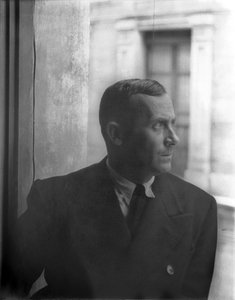
Joan Miró

Spanish b. Barcelona ['Surrealism', 'Fauvism', 'Expressionism'] Wikipedia 32/32

Joan Miró

He views conventional painting as a tool for bourgeois society, an approach he seeks to dismantle through a restless, iconoclastic practice. In 1925, The Birth of the World emerges, signaling a move into a more fluid, primordial space.

Location The most concentrated encounter with his creative output occurs on the Montjuïc hill in Barcelona, Spain.

Key works · Top 100 works

7/ 99

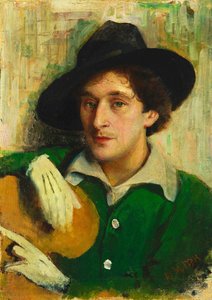
Marc Chagall

Russian-French b. Liozna Expressionism, Cubism, Fauvism, Surrealism Wikipedia 32/32

Marc Chagall

In works like The Lovers (1929), the sense of weightlessness and the use of intense color create a space where the physical laws of the world no longer apply.

Location The legacy of his vision remains anchored in several key institutions across the globe.

Key works · Top 100 works

8/ 99

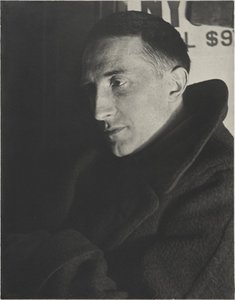
Marcel Duchamp

French American b. Blainville-Crevon ['Cubism', 'Dadaism', 'Conceptual Art'] Wikipedia 31/32

Marcel Duchamp

By 1909, he was already showing his work at the Salon des Indépendants and the Salon d’Automne, seeking a place among the creators of his era. He continued this subversion with the Bottle Rack in 1914, and later, in 1919, he took a postcard of the Mona Lisa and defaced it with a mustache and goatee, calling the work L.H.O.O.Q.

Location To follow the traces of his restless intellect, one might travel to the Philadelphia Museum of Art.

Key works · Top 100 works

9/ 99

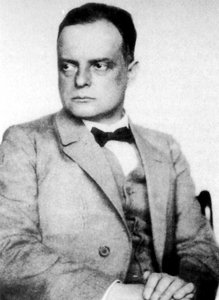
Paul Klee

German and Swiss b. Münchenbuchsee Expressionism, Cubism, Surrealism Wikipedia 31/32

Paul Klee

Klee was a natural draftsman who possessed a deep, almost scientific understanding of color theory. In 1915, he painted Woman Knitting, a piece that captures a sense of quiet, rhythmic movement.

Location To find the traces of his prolific output, one might travel to Bern, Switzerland.

Key works · Top 100 works

10/ 99

Jackson Pollock

American b. Cody Abstract Expressionism Wikipedia 31/32

Jackson Pollock

By 1947, a profound shift had taken hold in the way he approached the canvas. This approach is evident in Number 1, 1949, a work that captures a raw outpouring of energy, and in Lavender Mist, Number 1, 1950, which remains a significant piece of his output.

Location In New York City, the Museum of Modern Art holds several of his canvases, allowing viewers to stand before the sprawling, uncentered compositions that defined his era.

Key works · Top 100 works

11/ 99

Kazimir Malevich

b. Kyiv Wikipedia 31/32

Kazimir Malevich

By 1912, his presence in the art scene was firmly established through his involvement with the Donkey's Tail collective in Moscow. In 1912–1913, the cubo-futurist painting The Knifegrinder captured a sense of fragmented movement, a precursor to the total dissolution of form.

Location The physical presence of his radical geometry can be found in several major institutions across the globe.

Key works · Top 100 works

12/ 99

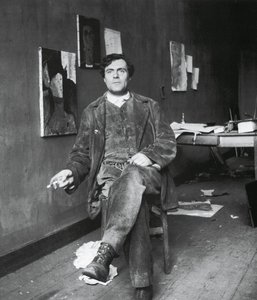
Amedeo Modigliani

Italian b. Livorno Expressionism Wikipedia 32/32

Amedeo Modigliani

In 1907, he also attended the Paul Gauguin retrospective at the Salon d'Automne, an event that left a mark on his developing vision.

Location In the United States, the Metropolitan Museum of Art in New York holds significant pieces, including a portrait of Jeanne Hebuterne from 1918.

Key works · Top 100 works

13/ 99

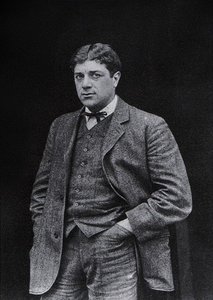
Georges Braque

French b. Argenteuil ['Fauvism', 'Cubism', 'Analytical Cubism', 'Synthetic Cubism'] Wikipedia 31/32

Georges Braque

Clarinet and Bottle of Rum on the Mantlepiece (1912). The Musician, created in 1918, reflects a period of personal transition, while his much later 1955 painting, Two Birds, shows a continued interest in the fundamental properties of his chosen subjects.

Key works · Top 100 works

14/ 99

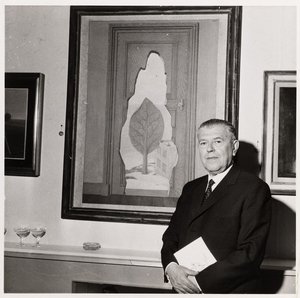
René Magritte

Belgian b. Lessines Surrealism Wikipedia 32/32

René Magritte

The 1914 painting The Song of Love left a lasting impression on him, introducing a sense of dreamlike tension that resonated deeply. His exploration of concealment reached a poignant peak in the 1928 series The Lovers.

Location The preservation of his visual puzzles is distributed across several major institutions, ensuring his presence remains felt in both Europe and the Americas.

Key works · Top 100 works

16/ 99

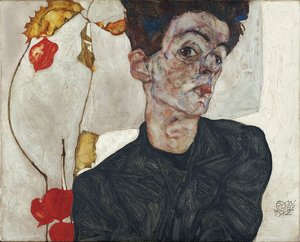
Egon Schiele

Austrian b. Tulln an der Donau Austrian Expressionism Wikipedia 32/32

Egon Schiele

Portrait of the Art Critic, Arthur Roessler, 1910. In 1915, he paints Portrait of Edith Schiele, capturing his wife in a way that reflects his specific expressive language.

Location The weight of Schiele’s output is felt most heavily in Vienna.

Key works · Top 100 works

18/ 99

Francis Bacon

Irish b. Dublin Expressionism, Cubism, Surrealism Wikipedia 30/32

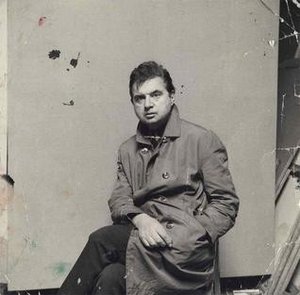
Francis Bacon

Three Studies for Figures at the Base of a Crucifixion (1944). In 1945, he exhibited Three Studies for Figures at the Base of a Crucifixion, a work that helped establish his reputation.

Key works · Top 100 works

20/ 99

Willem de Kooning

Dutch-American b. Rotterdam Abstract Expressionism Wikipedia 30/32

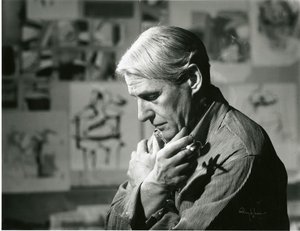
Willem de Kooning

From his teenage years until 1924, he attends these classes in Rotterdam, balancing the demands of work with the study of formal art. Around 1938, he produces Two Standing Men, a work that captures a sense of the figure before the total dismantling of form takes hold.

Trained Robert Rauschenberg #57

Key works · Top 100 works

23/ 99

Georgia O'Keeffe

American b. Sun Prairie American modernism Wikipedia 31/32

Georgia O'Keeffe

Between 1905 and 1906, she attended the School of the Art Institute of Chicago. In 1931, she produced Cow's Skull: Red, White, and Blue, placing a skeletal form against a backdrop of color.

Location To see her paintings in person, one can travel to Santa Fe, New Mexico, where The Georgia O'Keeffe Museum holds a significant portion of her output.

Key works · Top 100 works

25/ 99

Edward Hopper

American b. Upper Nyack American realism

Edward Hopper

Edward Hopper was born in Upper Nyack, United States of America. He studied at the New York School of Art under William Merritt Chase and Robert Henri. In House by the Railroad (1925), a simple composition reveals a sense of mystery and isolation.

Key works · Top 100 works

26/ 99

Franz Marc

German b. Kreuzstraße German Expressionism Wikipedia 31/32

Franz Marc

His time in France, specifically during visits to Paris in 1903 and 1907, acted as a catalyst for this departure. In 1911, he produced The Large Blue Horses, a work that established his preference for non-naturalistic color.

Location The Franz Marc Museum in Kochel am See, Germany, functions as a primary site for his legacy, housing over 150 of his works.

Key works · Top 100 works

27/ 99

Diego Rivera

Mexican b. Guanajuato Mexican Muralism, Social Realism Wikipedia 31/32

Diego Rivera

Diego Rivera emerged from a family of modest means in Guanajuato, Mexico, born on December 8, 1886. Specifically, the Detroit Industry: East Wall in the Detroit Institute of Arts functions as a massive fresco that captures the rhythmic, mechanical pulse of labor.

Location Here, the Detroit Industry Murals occupy a central place, capturing the mechanical pulse of labor and the grit of the industrial era.

Key works · Top 100 works

28/ 99

Fernand Léger

French b. Argentan ['Cubism', 'Tubism', "Section d'Or", 'Purism', 'Dadaism', 'Constructivism'] Wikipedia 27/32

Fernand Léger

This led to the development of a personal form of Cubism that critics identified as "Tubism." In this style, the world was reimagined through tubular, conical, and cubed forms, creating a sense of volume that felt both solid and dynamic.

Location To encounter the physical presence of his vision, one might travel to the south of France, specifically to Biot in the Alpes-Maritimes.

Key works · Top 100 works

29/ 99

Giorgio de Chirico

Italian b. Volos Metaphysical art Wikipedia 29/32

Giorgio de Chirico

De Chirico’s approach to painting was a way of looking past the surface of the everyday to find a hidden, unsettling poetry. By 1913, his presence in the art world was felt in London, where The Uncertainty of the Poet was exhibited at the Tate Gallery.

Key works · Top 100 works

30/ 99

Umberto Boccioni

b. Reggio Calabria Wikipedia 28/32

Umberto Boccioni

By attending the Scuola Libera del Nudo and the Accademia di Belle Arti di Roma, Boccioni moved beyond the private studio setting into the heart of Italian artistic institutions. His 1909 work, Riot in the Gallery, remains a critical point of transition; it clings to pointillist techniques while adopting a dynamic composition that signals the arrival of Futurist energy.

Key works · Top 100 works

31/ 99

Oskar Kokoschka

Austrian, Czech, British b. Pöchlarn Expressionism, Viennese Avant-Garde Wikipedia 29/32

Oskar Kokoschka

He developed a nervously animated style, using bold lines and imagery that drew inspiration from Medieval compositions. In his early years, this manifested in works like The Dreaming Boys, painted about 1908, which showed a departure from the polished realism of his contemporaries.

Key works · Top 100 works

33/ 99

Ernst Ludwig Kirchner

German b. Aschaffenburg German Expressionism Wikipedia 32/32

Ernst Ludwig Kirchner

This transient existence saw the family living in Frankfurt/Main from 1886, following a period spent in Perlen near Lucerne, Switzerland, between 1887 and 1889. This piece, along with his 1919 oil painting Der Maler, Selbstporträt, reveals a man confronting his own vulnerability through a piercing, intense gaze.

Location The physical presence of Kirchner’s vision is scattered across several major institutions, reflecting the international reach of his influence.

Key works · Top 100 works

34/ 99

Juan Gris

Spanish b. Madrid Cubism, Synthetic Cubism, Analytical Cubism Wikipedia 31/32

Juan Gris

In many of his works, he moves away from the chaotic, shattering abstraction seen in earlier Cubism, opting instead for a more organized and legible structure. By June 1915, the composition Still Life before an Open Window, Place Ravignan was finished.

Location Tracing the physical presence of his work requires a trip through several major collections.

Key works · Top 100 works

35/ 99

Arshile Gorky

Armenian-American b. Dilkaya Abstract Expressionism, Surrealism Wikipedia 24/32

Arshile Gorky

His practice was not confined to the classroom; he spent much of his time at the Museums of Fine Arts, Boston, studying the old masters. This tendency to pull from the past is evident in the Nighttime, Enigma, and Nostalgia series, created between 1930 and 1934.

Location To see the physical traces of his hand, one might travel to Washington, D.C.

Key works · Top 100 works

38/ 99

Robert Delaunay

French b. Paris Orphism, Cubism Wikipedia 27/32

Robert Delaunay

Simultaneous Contrasts: Sun and Moon, exemplifies this approach, showcasing Delaunay’s masterful manipulation of color to convey a sense of energy and movement. Windows Open Simultaneously, 1st Part, 3rd Motif (1912).

Trained Lyonel Feininger #87

Key works · Top 100 works

39/ 99

Fernando Botero

Colombian b. Medellín Boterismo Wikipedia 28/32

Fernando Botero

It was in Spain that he began to study at the Academia de San Fernando. The Death of Pablo Escobar (1999/2006) and his various series addressing the abuses in Abu Ghraib show a willingness to use his signature style to confront difficult truths.

Location His presence is felt in the quiet corners of Bogotá, specifically within the La Candelaria neighborhood.

Key works · Top 100 works

40/ 99

Otto Dix

German b. Untermhaus ['Neue Sachlichkeit', 'Dadaism', 'Expressionism'] Wikipedia 28/32

Otto Dix

Dix enters an apprenticeship under the painter Carl Senff, a period of study that lasts until 1910. Portrait of the Journalist Sylvia Von Harden, painted in 1926, captures the specific character of the era.

Location The physical presence of Dix’s vision remains scattered across major international institutions.

Key works · Top 100 works

44/ 99

Max Beckmann

German b. Leipzig Expressionism, New Objectivity Wikipedia 27/32

Max Beckmann

As he matured, Beckmann found himself drawn to the Old Masters.

Location Finding the physical traces of Beckmann's life requires traveling through the cities that shaped his exile and his later years.

Key works · Top 100 works

45/ 99

Norman Rockwell

American b. New York City Wikipedia 27/32

Norman Rockwell

Parallel to his work for the magazine, Rockwell maintained a deep, sixty-four-year relationship with the Boy Scouts of America. Even his more commercial or specialized commissions carried a sense of narrative weight, such as The Watchmaker of Switzerland in 1948 and April Fool Girl with Shopkeeper in 1948.

Key works · Top 100 works

47/ 99

Victor Vasarely

Hungarian-French b. Pécs Op Art, Kinetic Art, Geometric Abstraction Wikipedia 27/32

Victor Vasarely

In works like Torony-Nagy, the intersection of crisp white lines with deep blues and emerald greens creates a rhythmic optical vibration. In 1937, the creation of Zebra marked a shift toward what many consider the earliest examples of Op Art.

Location Tracing the physical presence of his work requires traveling across several locations in France and Hungary.

Key works · Top 100 works

49/ 99

Anselm Kiefer

German b. Donaueschingen Neo-Expressionism Wikipedia 23/32

Anselm Kiefer

Anselm Kiefer stands as one of the most profound and distinctive voices within Neo-Expressionism, an artistic movement that emerged in the late 1970s and early 1980s as a powerful reaction against the austerity of Minimalism and Conceptual Art. Born in Donaueschingen, Germany, in 1945, Kiefer’s very existence is inextricably linked to the aftermath of World War II.

Trained by Joseph Beuys #60

Key works · Top 100 works

50/ 99

Niki de Saint Phalle

French-American b. Neuilly-sur-Seine Nouveau Réalisme, Surrealism Wikipedia 26/32

Niki de Saint Phalle

Educated in both France and the United States – including a period in New York City – Saint Phalle demonstrated early on a refusal to conform, famously painting the fig leaves of sculptures red at her convent school, a gesture hinting at the iconoclasm that would define her career.

Key works · Top 100 works

54/ 99

Lucian Freud

British b. Berlin Realism, Figurative art Wikipedia 23/32

Lucian Freud

Works like Girl with a Kitten (1947) demonstrate this early development, while later pieces such as Benefits Supervisor Sleeping (1995) exemplify his mature style—an unflinching gaze upon the human condition.

Key works · Top 100 works

56/ 99

Man Ray

American b. Philadelphia Dada, Surrealism

Man Ray

Born in 1890 in Philadelphia to Russian Jewish immigrant parents, his journey from aspiring painter to pioneering photographer and filmmaker embodies the radical artistic ferment of the early 20th century. Early influences included the European avant-garde showcased at Alfred Stieglitz's 291 gallery, and the gritty realism of the Ashcan School – a blend that would subtly inform his later work.

Key works · Top 100 works

58/ 99

Balthus

French-Polish b. Paris Classical, Figurative Wikipedia 20/32

Balthus

Born in Paris on February 29, 1908, into a family steeped in intellectual and artistic circles, his life was marked by an early immersion in culture and a deliberate rejection of prevailing artistic trends. Later works, such as Girl at a Window (1957) – famously featured in François Truffaut's film Domicile Conjugal – showcase his ability to capture fleeting moments of introspection and vulnerability.

Key works · Top 100 works

60/ 99

Joseph Beuys

German b. Krefeld Fluxus, Performance Art Wikipedia 28/32

Joseph Beuys

From a childhood marked by relocation and early exposure to both natural sciences and the burgeoning darkness of Nazism—an event crystallized by rescuing Carl Linnaeus’s Systema Naturae from a book burning—Beuys developed a sensitivity to the fragility of existence and the power of symbolic action.

Trained Anselm Kiefer #49

Key works · Top 100 works

65/ 99

Remedios Varo

Spanish-Mexican b. Anglès Para-Surrealism Wikipedia 19/32

Remedios Varo

In the quiet corners of her studio, Remedios Varo worked with a meticulousness that mirrored the technical drawings of her father, a hydraulic engineer. Her upbringing in Anglès, Spain, provided a foundation of duality. She moved through the world with a curious eye, absorbing the landscapes of her frequent relocations and the formal training she received at the Real Academia de Bellas Artes de San Fernando in Madrid.

Key works · Top 100 works

66/ 99

Theo van Doesburg

Dutch b. Utrecht De Stijl, Neoplasticism Wikipedia 27/32

Theo van Doesburg

He was a prolific writer, poet, and critic, using his pen to articulate the theoretical underpinnings of De Stijl and challenge conventional notions of art. Study for Simultaneous Compositions XXII (1922): A quintessential example of Neoplasticism, showcasing the movement’s signature geometric forms and limited color palette.

Key works · Top 100 works

67/ 99

Andrew Wyeth

American b. Chadds Ford Township Regionalism, Realism Wikipedia 23/32

Andrew Wyeth

Egg Tempera and Watercolor: Wyeth primarily used egg tempera for his larger works, a medium known for its luminosity and detail. Christina’s World (1948): Arguably his most famous work, " Christina's World " depicts a woman crawling through a field towards a farmhouse.

Key works · Top 100 works

69/ 99

Georges Rouault

French b. 19th arrondissement of Paris Expressionism, Fauvism Wikipedia 23/32

Georges Rouault

Georges Rouault, born in Paris in 1871 amidst the turmoil of the Commune, lived a life deeply etched by hardship and spiritual seeking. He simultaneously pursued formal training at the École des Beaux-Arts, where he became a devoted pupil of Gustave Moreau, whose Symbolist leanings further nurtured Rouault's inclination towards emotionally charged subject matter.

Key works · Top 100 works

70/ 99

László Moholy-Nagy

Hungarian b. Bácsborsód Constructivism, Bauhaus Wikipedia 29/32

László Moholy-Nagy

Joining the Bauhaus: In 1923, Moholy-Nagy joined the Bauhaus school in Weimar, Germany, initially co-teaching the preliminary course with Josef Albers and eventually replacing Johannes Itten as head of the metal workshop.

Key works · Top 100 works

71/ 99

Aubrey Beardsley

British b. Brighton Art Nouveau, Decadent art Wikipedia 27/32

Aubrey Beardsley

beardsley's black ink drawings were influenced by japanese woodcuts, depicting the grotesque, the decadent, and the erotic. his work is characterized by elaborate composition, refined lines, and exploration of themes such as sexual identity. beardsley's contribution to the development of art nouveau was significant, despite his tragically short life. salome, a play by oscar wilde, for which beardsley provided illustrations the yellow book, a magazine co-founded by beardsley, showcasing his art nouveau style /en/art/list/ a book of fifty drawings, a collection of beardsley's works, featuring his unique blend of the grotesque and the erotic

Key works · Top 100 works

73/ 99

Maurice Denis

French b. Granville Nabis, Symbolism Wikipedia 26/32

Maurice Denis

Initially inspired by the vibrant colors and flattened forms of Gauguin and Japanese prints, he later turned towards the more structured compositions of Paul Cézanne, seeking a new form of classicism rooted in modern sensibilities.

Trained Tamara de Lempicka #41

Key works · Top 100 works

82/ 99

Helen Frankenthaler

American b. Manhattan Abstract Expressionism, Color Field Wikipedia 19/32

Helen Frankenthaler

While celebrated for her pioneering work with stain painting, Helen Frankenthaler was an artist of relentless experimentation.

Key works · Top 100 works

85/ 99

Dorothea Tanning

American b. Galesburg Surrealism Wikipedia 20/32

Dorothea Tanning

Dorothea Margaret Tanning, born August 25, 1910, in Galesburg, Illinois, emerged from a lineage of Swedish immigrants, inheriting a quiet fortitude that would subtly underpin her boldly imaginative art. A brief stint at Knox College in 1928-30 gave way to the allure of Chicago and then, in 1935, the vibrant energy of New York City.

Key works · Top 100 works

87/ 99

Lyonel Feininger

German-American b. New York City Expressionism, Cubism Wikipedia 23/32

Lyonel Feininger

Notable Works: Some of his significant works include " Werder I " (watercolor), " Gaberndorf II " (paper), and " Boats " (cubism, oil on canvas). Early Marine Paintings: During summer vacations on the island of Usedom (1909-1918), Feininger created numerous marine paintings depicting the Baltic Sea, showcasing his evolving style.
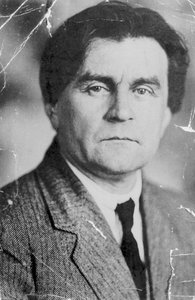
Trained by Robert Delaunay #38

Key works · Top 100 works

88/ 99

Amrita Sher-Gil

Hungarian-Indian b. Budapest Modern Indian art, Avant-garde Wikipedia 20/32

Amrita Sher-Gil

Amrita Sher-Gil’s style is instantly recognizable for its bold use of color, simplified forms, and expressive figures. Young Girls (1932): A pivotal early work that brought her international recognition.

Key works · Top 100 works

90/ 99

Barnett Newman

American b. New York City Abstract Expressionism Wikipedia 23/32

Barnett Newman

Barnett Newman, born in 1905 in New York City to Jewish immigrant parents from Poland, emerged as a pivotal figure in the landscape of American art. Initially studying at the Art Students League and later at the City College of New York, Newman absorbed the influences of his time – the burgeoning Cubism of Picasso and the vibrant color palettes of Matisse were early touchstones.

Key works · Top 100 works

91/ 99

Aleksandr Rodchenko

b. Saint Petersburg

Aleksandr Rodchenko

He initially experimented with painting, exploring various styles before finding his unique voice. Graphic Design & Posters: Rodchenko designed impactful posters, including his famous poster for the Lengiz publishing house featuring a young woman with a cupped hand – a symbol of Soviet propaganda and modern design.

Key works · Top 100 works

94/ 99

František Kupka

Czech b. Opočno ['Realism', 'Symbolism', 'Orphism', 'Cubism', 'Abstraction'] Wikipedia 24/32

František Kupka

By 1906, he had settled in Puteaux, a suburb of Paris. His 1911 work, Disks of Newton, Study for Fugue in Two Colors, shows an interest in the intersection of scientific observation and musical rhythm.

Location To see his canvases in person, one might travel to New York City.

Key works · Top 100 works

95/ 99

Paula Modersohn-Becker

German b. Dresden Expressionism Wikipedia 24/32

Paula Modersohn-Becker

Born Minna Hermine Paula Becker on February 8, 1876, in Dresden, Germany, her life was tragically short – she passed away November 30, 1907, in Worpswede – yet within those three decades, she forged a path of remarkable artistic innovation and personal courage.

Key works · Top 100 works

96/ 99

Kurt Schwitters

b. Hanover Wikipedia 25/32

Kurt Schwitters

The term “Merz” itself came from a fragment of text (“Commerz und Privatbank”) cut from an advertisement and incorporated into one of his early works, Das Merzbild (1918-19). Assemblage & Installation Art: Schwitters pioneered these forms, blurring the boundaries between painting, sculpture, and architecture.

Key works · Top 100 works

Best-known works

Famous Modern paintings by artist

  1. Guernica by Pablo Picasso

    Guernica

    Pablo Picasso

    1937 · Museo Nacional Centro de Arte Reina Sofía, Madrid

  2. Marilyn Diptych by Andy Warhol

    Marilyn Diptych

    Andy Warhol

    1962

  3. Self portrait with Thorn Necklace and Hummingbird by Frida Kahlo

    Self portrait with Thorn Necklace and Hummingbird

    Frida Kahlo

  4. Rainy Taxi (Mannequin Rotting in a Taxi-Cab) by Salvador Dalí

    Rainy Taxi (Mannequin Rotting in a Taxi-Cab)

    Salvador Dalí

    1938

  5. Broadway Boogie Woogie by Piet Mondrian

    Broadway Boogie Woogie

    Piet Mondrian

    1943 · MOMA - Museum of Modern Art, New York City

  6. The Farm by Joan Miró

    The Farm

    Joan Miró

    1922

  7. I and the Village by Marc Chagall

    I and the Village

    Marc Chagall

    1911 · MOMA - Museum of Modern Art, New York City

  8. L.H.O.O.Q, Mona Lisa with moustache by Marcel Duchamp

    L.H.O.O.Q, Mona Lisa with moustache

    Marcel Duchamp

    1919

Chronology

Modern chronology

  1. 1908
  2. 1911
  3. 1911
  4. 1914
  5. 1915
  6. 1915
  7. 1919
  8. 1922
  9. 1931
  10. 1936
  11. 1938
  12. 1943
  13. 1944
  14. 1949

Statistics

Counts by country, period and museum

Index

Full list of 99 famous Modern painters

  1. 1Pablo PicassoPablo PicassoSpanish · 1881–1973
  2. 2Andy WarholAndy WarholAmerican · 1928–1987
  3. 3Frida KahloFrida KahloMexican · 1907–1954
  4. 4Salvador DalíSalvador DalíSpanish · 1904–1989
  5. 5Piet MondrianPiet Mondrian1872–1944
  6. 6Joan MiróJoan MiróSpanish · 1893–1983
  7. 7Marc ChagallMarc ChagallRussian-French · 1887–1985
  8. 8Marcel DuchampMarcel DuchampFrench American · 1887–1968
  9. 9Paul KleePaul KleeGerman and Swiss · 1879–1940
  10. 10Jackson PollockJackson PollockAmerican · 1912–1956
  11. 11Kazimir MalevichKazimir Malevich1879–1935
  12. 12Amedeo ModiglianiAmedeo ModiglianiItalian · 1884–1920
  13. 13Georges BraqueGeorges BraqueFrench · 1882–1963
  14. 14René MagritteRené MagritteBelgian · 1898–1967
  15. 15David HockneyDavid HockneyBritish · 1937–2026
  16. 16Egon SchieleEgon SchieleAustrian · 1890–1918
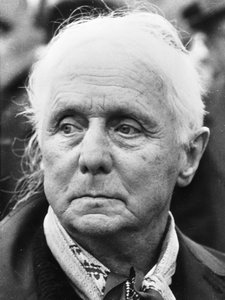
  17. 17Max ErnstMax ErnstGerman · 1891–1976
  18. 18Francis BaconFrancis BaconIrish · 1909–1992
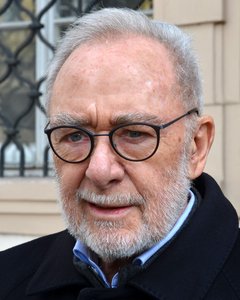
  19. 19Gerhard RichterGerhard RichterGerman · born 1932
  20. 20Willem de KooningWillem de KooningDutch-American · 1904–1997
  21. 21Jasper JohnsJasper JohnsAmerican · born 1930
  22. 22Roy LichtensteinRoy LichtensteinAmerican · 1923–1997
  23. 23Georgia O'KeeffeGeorgia O'KeeffeAmerican · 1887–1986
  24. 24Mark RothkoMark RothkoAmerican · 1903–1970
  25. 25Edward HopperEdward HopperAmerican · 1882–1967
  26. 26Franz MarcFranz MarcGerman · 1880–1916
  27. 27Diego RiveraDiego RiveraMexican · 1886–1957
  28. 28Fernand LégerFernand LégerFrench · 1881–1955
  29. 29Giorgio de ChiricoGiorgio de ChiricoItalian · 1888–1978
  30. 30Umberto BoccioniUmberto Boccioni1882–1916
  31. 31Oskar KokoschkaOskar KokoschkaAustrian, Czech, British · 1886–1980
  32. 32Yayoi KusamaYayoi KusamaJapanese · 1929–2026
  33. 33Ernst Ludwig KirchnerErnst Ludwig KirchnerGerman · 1880–1938
  34. 34Juan GrisJuan GrisSpanish · 1887–1927
  35. 35Arshile GorkyArshile GorkyArmenian-American · 1904–1948
  36. 36Jean DubuffetJean DubuffetFrench · 1901–1985
  37. 37André DerainAndré DerainFrench · 1880–1954
  38. 38Robert DelaunayRobert DelaunayFrench · 1885–1941
  39. 39Fernando BoteroFernando BoteroColombian · 1932–2023
  40. 40Otto DixOtto DixGerman · 1891–1969
  41. 41Tamara de LempickaTamara de LempickaPolish · 1898–1980
  42. 42Maurice de VlaminckMaurice de VlaminckFrench · 1876–1958
  43. 43Chaim SoutineChaim SoutineFrench · 1893–1943
  44. 44Max BeckmannMax BeckmannGerman · 1884–1950
  45. 45Norman RockwellNorman RockwellAmerican · 1894–1978
  46. 46Raoul DufyRaoul DufyFrench · 1877–1953
  47. 47Victor VasarelyVictor VasarelyHungarian-French · 1906–1997
  48. 48Friedensreich HundertwasserFriedensreich HundertwasserAustrian · 1928–2000
  49. 49Anselm KieferAnselm KieferGerman · born 1945
  50. 50Niki de Saint PhalleNiki de Saint PhalleFrench-American · 1930–2002
  51. 51H.R. GigerH.R. GigerSwiss · 1940–2014
  52. 52Louise BourgeoisLouise BourgeoisFrench-American · 1911–2010
  53. 53Zdzisław BeksińskiZdzisław BeksińskiPolish · 1929–2005
  54. 54Lucian FreudLucian FreudBritish · 1922–2011
  55. 55Henry MooreHenry MooreBritish · 1898–1986
  56. 56Man RayMan RayAmerican · 1890–1976
  57. 57Robert RauschenbergRobert RauschenbergAmerican · 1925–2008
  58. 58BalthusBalthusFrench-Polish · 1908–2001
  59. 59Alberto GiacomettiAlberto GiacomettiSwiss · 1901–1966
  60. 60Joseph BeuysJoseph BeuysGerman · 1921–1986
  61. 61George GroszGeorge GroszGerman · 1893–1959
  62. 62Jean ArpJean ArpGerman-French · 1886–1966
  63. 63Francis PicabiaFrancis PicabiaFrench · 1879–1953
  64. 64Claes OldenburgClaes OldenburgSwedish-American · 1929–2022
  65. 65Remedios VaroRemedios VaroSpanish-Mexican · 1908–1963
  66. 66Theo van DoesburgTheo van DoesburgDutch · 1883–1931
  67. 67Andrew WyethAndrew WyethAmerican · 1917–2009
  68. 68Vladimir TatlinVladimir TatlinUkrainian/Russian · 1885–1953
  69. 69Georges RouaultGeorges RouaultFrench · 1871–1958
  70. 70László Moholy-NagyLászló Moholy-NagyHungarian · 1895–1946
  71. 71Aubrey BeardsleyAubrey BeardsleyBritish · 1872–1898
  72. 72Alexander CalderAlexander CalderScottish-American · 1898–1976
  73. 73Maurice DenisMaurice DenisFrench · 1870–1943
  74. 74Frank StellaFrank StellaAmerican · 1936–2024
  75. 75Leonora CarringtonLeonora CarringtonBritish-Mexican · 1917–2011
  76. 76Maria PrymachenkoMaria PrymachenkoUkrainian · 1908–1997
  77. 77David Alfaro SiqueirosDavid Alfaro SiqueirosMexican · 1896–1974
  78. 78Sonia DelaunaySonia DelaunayFrench · 1885–1979
  79. 79Sigmar PolkeSigmar PolkeGerman · 1941–2010
  80. 80Giacomo BallaGiacomo BallaItalian · 1871–1958
  81. 81Richard HamiltonRichard HamiltonBritish · 1922–2011
  82. 82Helen FrankenthalerHelen FrankenthalerAmerican · 1928–2011
  83. 83Natalia GoncharovaNatalia GoncharovaRussian · 1881–1962
  84. 84Yves TanguyYves TanguyFrench-American · 1900–1955
  85. 85Dorothea TanningDorothea TanningAmerican · 1910–2012
  86. 86Cy TwomblyCy TwomblyAmerican · 1928–2011
  87. 87Lyonel FeiningerLyonel FeiningerGerman-American · 1871–1956
  88. 88Amrita Sher-GilAmrita Sher-GilHungarian-Indian · 1913–1941
  89. 89Karel AppelKarel AppelDutch · 1921–2006
  90. 90Barnett NewmanBarnett NewmanAmerican · 1905–1970
  91. 91Aleksandr RodchenkoAleksandr Rodchenko1891–1956
  92. 92Paula RegoPaula RegoPortuguese · 1935–2022
  93. 93Josef AlbersJosef AlbersGerman-American · 1888–1976
  94. 94František KupkaFrantišek KupkaCzech · 1871–1957
  95. 95Paula Modersohn-BeckerPaula Modersohn-BeckerGerman · 1876–1907
  96. 96Kurt SchwittersKurt Schwitters1887–1948
  97. 97José Clemente OrozcoJosé Clemente OrozcoMexican · 1883–1949
  98. 98Carlo CarràCarlo CarràItalian · 1881–1966
  99. 99Maria Helena Vieira da SilvaMaria Helena Vieira da SilvaPortuguese-French · 1908–1992

FAQ

Modern: quick answers

Guides

AllPaintingsStore.com guides

Other lists

Famous artists by movement

By period

Famous artists by period

Famous paintings

Famous paintings by movement

Related lists

Related rankings