Money-Back Guarantee · 100 days Free Worldwide Delivery
612,383artworks 52,886artists 5,406museums 32languages

Anders Zorn

1860 - 1920

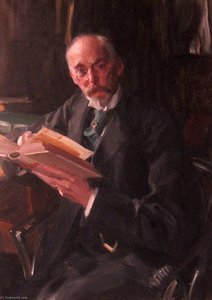
Anders Zorn (1860–1920) is best remembered for Self-portrait; 340 of the artist's works are listed here.

Key facts

  • Corpus themes:
    • scandinavian naturalism
    • swedish peasant life
    • spanish masters
    • impressionism
    • realism
  • Nationality: Sweden
  • Top-ranked work: Self-portrait
  • Topics explored:
    • portraits
    • women
    • portrait
    • woman
    • swedish art
  • Gift suitability: anniversary
  • Mediums: oil on canvas
  • Died: 1920
  • Top 3 works:
    • Self-portrait
    • Isabella Stewart Gardner in Venice
    • Junikväll (Evening in June)

What is the most famous work by Anders Zorn?

The best-known work by Anders Zorn is Self-portrait, followed by Isabella Stewart Gardner in Venice and Mrs. John Crosby Brown.

A Swedish Master of Light and Life: The World of Anders Zorn

Anders Leonard Zorn, a name synonymous with vibrant Impressionism and masterful portraiture, stands as Sweden’s most celebrated artist. Born in 1860 amidst the rustic beauty of Dalarna, his journey from humble beginnings to international acclaim is a testament to raw talent nurtured by relentless dedication. Unlike many artists who sought formal training within established circles, Zorn's early education was rooted in the practicalities of rural life and an innate artistic sensibility that blossomed even before entering the Royal Swedish Academy of Arts at the remarkably young age of twelve. His childhood on his grandparents’ farm instilled a deep connection to the land and its people—a theme that would resonate throughout his oeuvre, particularly in his evocative depictions of Swedish peasant life. This early exposure wasn't merely about subject matter; it was about capturing a way of being, an authenticity that infused his work with a unique emotional depth.

From Watercolors to International Recognition

Zorn’s initial artistic explorations centered on watercolors, a medium he mastered with astonishing speed and skill. He quickly gained recognition for his ability to capture fleeting moments of light and atmosphere, particularly in scenes depicting everyday life. A pivotal moment arrived with “In Mourning” (1880), a watercolor portrait that showcased his remarkable sensitivity and technical prowess. This work propelled him onto the art scene, attracting commissions from Stockholm’s elite and setting the stage for an international career. He embarked on extensive travels throughout Europe—London, Paris, Spain—and eventually to the United States, where he found immense success as a portraitist. His ability to distill the essence of his sitters, whether royalty like King Oscar II or American presidents Grover Cleveland, William H. Taft, and Theodore Roosevelt, earned him widespread admiration. Zorn didn’t simply paint likenesses; he captured character, intellect, and even a hint of the soul. This talent wasn't accidental—it stemmed from an acute observational skill honed through years of studying human form and expression.

A Synthesis of Influences and Artistic Development

While Zorn’s style is often categorized as Impressionistic, it was far from a simple imitation of French trends. He absorbed influences from various sources, blending them into a uniquely personal vision. The luminosity of Spanish masters like Velázquez resonated in his handling of light and shadow, while the directness and realism of Scandinavian naturalism informed his approach to subject matter. His time spent with artists like Albert Edelfelt in Paris exposed him to new ideas and techniques, but he always remained true to his own artistic instincts. A crucial turning point came when Zorn began experimenting with oil painting in the late 1880s. This allowed him to achieve a greater richness of color and texture, further enhancing the vibrancy and immediacy of his work. He embraced a limited palette, focusing on achieving maximum impact through subtle variations in tone and hue—a technique that became a hallmark of his style. His paintings from this period, such as “A Fisherman in St Ives,” demonstrate a newfound confidence and mastery of the medium.

Legacy and Enduring Impact

Anders Zorn’s influence extends far beyond his stunning body of work. He was not only a gifted artist but also a dedicated patron of the arts, establishing the Bellman Prize in 1920—a prestigious literary award for Swedish poets that continues to be awarded today. This act underscores his commitment to fostering creativity and supporting cultural expression within his homeland. His paintings are now held in prominent museums worldwide, including the Nationalmuseum in Stockholm, the Musée d'Orsay in Paris, and the Metropolitan Museum of Art in New York. The Zorn Collections in Mora, Sweden—comprising Zorngården, Zorn Museum, Gammelgård, and Gopsmor—serve as a lasting tribute to his life and legacy, offering visitors an intimate glimpse into his world. Zorn’s ability to capture the beauty of everyday life, combined with his technical brilliance and unwavering artistic vision, cemented his place as one of the most important artists of his generation. He remains a source of inspiration for artists today, a testament to the enduring power of light, color, and human connection in art. His work continues to resonate with audiences worldwide, reminding us of the beauty that can be found in both the grand and the mundane.

Quiz

There is only one correct answer for each question.

Question 1:
In what country was Anders Zorn born?
Question 2:
What artistic medium did Zorn initially focus on before transitioning to oils?
Question 3:
Which of the following US Presidents was NOT painted by Anders Zorn?
Question 4:
What prize did Zorn establish in 1920?
Question 5:
Zorn's early artistic talent was first recognized while studying at which institution?

Questions & Answers

Who were Anders Zorn's pupils?

Hilding Nyman, Ingrid Ruin and Emil Westman studied under Anders Zorn.

Which paintings is Anders Zorn known for?

Anders Zorn is known for the works listed in the most famous paintings by Anders Zorn.

How long did Anders Zorn live?

Anders Zorn lived about 60 years, from 1860 to 1920.

Where can I order a Anders Zorn reproduction?

Anders Zorn painting reproductions can be ordered here, hand-painted in oil or as prints.

What aliases or alternate names does Anders Zorn have?

Anders Zorn is also known as Anders Leonard Zorn, Anders T︠S︡orn, Anders Lenard Zorn, Andres Leonard Zorn, Andreas Zorn.

What are the birthplace and birth year of Anders Zorn?

Anders Zorn was born in Mora Parish in 1860.

What did Anders Zorn paint first, and last?

Among the dated works listed here, the earliest is Kulla som räfsar. akvarell (Watercolour). (1876) and the latest red stocking (1920). See the timeline of Anders Zorn's artworks.

What style did Anders Zorn paint in?

Anders Zorn painted in the Impressionism style, like the other famous Impressionism artists.

Over which years did Anders Zorn paint?

The 227 dated works by Anders Zorn listed here span 1876 to 1920. See Anders Zorn's career period by period.