A Monument Etched in Granite: The Majesty of El Escorial
Rising from the starkly beautiful landscape of the Sierra de Guadarrama mountains near Madrid, the Monasterio de El Escorial is far more than a mere building; it is a profound statement rendered in granite and steeped in the spirit of 16th-century Spain. Commissioned by King Philip II to commemorate the victory at Saint-Quentin in 1558, its origins are inextricably intertwined with both military triumph and deeply personal devotion. Initially conceived as a mausoleum for his parents, Charles I and Isabella of Portugal, the complex serves as a monumental bridge between the earthly power of the Spanish monarchy and the eternal promise of the divine. To define El Escorial solely through these historical milestones would be to diminish its astonishing complexity, for it is a multifaceted masterpiece that functions simultaneously as a royal palace, a monastery dedicated to the Hieronymite order, a basilica radiating spiritual grandeur, and a vast library brimming with the intellectual treasures of an empire.
The architectural language of El Escorial is uniquely its own, exemplifying the Herrerian style—a distinctly Spanish interpretation of Renaissance classicism characterized by an austere, disciplined beauty. Masterfully shaped by the vision of Juan de Herrera, the structure conveys an impression of unyielding strength and permanence through its vast rectilinear layout and heavy granite walls. Every element of the design reflects Philip II’s preference for order over ostentation; even the grid pattern of the complex subtly references the gridiron upon which Saint Lawrence, the monastery’s patron saint, was martyred. Within this imposing silhouette, one finds a breathtaking harmony of spaces: the soaring Basilica with its magnificent dome, the solemn Pantheon of Kings where generations of Spanish monarchs rest in dignified silence, and the Royal Palace, which offers glimpses into the opulent yet controlled lifestyle of the Habsburg court.
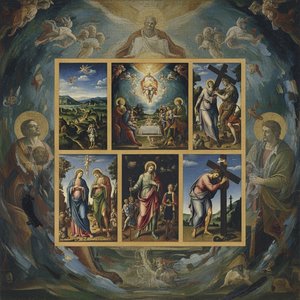
Beyond its architectural brilliance, El Escorial serves as a hallowed repository for some of the most exceptional artistic treasures of Spain’s Golden Age. The collection is a sensory journey through light and shadow, featuring masterpieces by masters such as El Greco, whose dramatic, emotionally charged brushwork perfectly complements the spiritual intensity of the monastic setting. As one wanders through the halls, the walls are graced by intricate tapestries depicting mythological scenes and Spanish history, providing a vibrant, textured counterpoint to the cold, grey granite. For the scholar and the lover of antiquity, the Royal Library offers an unparalleled sanctuary, housing an extraordinary collection of illuminated manuscripts and early printed books that stand as a testament to Spain’s profound intellectual heritage.
What truly distinguishes El Escorial is its unparalleled synthesis of function and symbolism—it is a place where architecture, art, and faith converge to create an immersive experience that transports the visitor back to the height of the Spanish Empire. It remains a site of continuous cultural dialogue, with exhibitions that delve into religious iconography, royal patronage, and the evolution of European architectural styles. For the art lover, the collector, or the designer seeking inspiration in historical grandeur, El Escorial offers more than just a glimpse into the past; it provides an encounter with a monument that embodies the very anxieties, aspirations, and unwavering faith of an era that shaped the course of Western history.