
A Symphony of Stone and Petal: The Living Legacy of Palacio de Viana
To step into the Palacio de Viana is to transcend the modern bustle of Córdoba and enter a realm where time flows as gently as the water in its many fountains. This architectural jewel, nestled within the historic heart of a UNESCO World Heritage city, serves as a profound narrative of Spanish nobility and the layered histories of Andalusia. The palace is not merely a static monument but a breathing chronicle of conquest and coexistence, where the echoes of Roman foundations, the intricate elegance of the Umayyad Caliphate, and the triumphant flourishes of the Christian Reconquest converge. For the art lover and the historian alike, the palace offers an immersive journey through centuries of aristocratic life, preserved with a meticulous devotion that allows one to feel the very pulse of Córdoba’s illustrious past.
The true soul of the Palacio de Viana lies in its breathtaking architectural rhythm, defined by its legendary series of twelve patios. These courtyards are far more than mere transitional spaces; they are independent artistic statements, each a masterclass in the harmonious blending of Gothic, Mudéjar, and Renaissance aesthetics. As one wanders from one garden to the next, the senses are met with a captivating interplay of textures—from the cool, intricate tilework that adorns the walls to the lush, verdant greenery that provides a sanctuary of shade. The design reflects a sophisticated mastery of climate and beauty, where the murmur of fountains creates a meditative soundtrack for contemplation. This horticultural excellence is so deeply ingrained in the local identity that the palace stands as a cornerstone of the Festival de los Patios , a UNESCO Intangible Cultural Heritage tradition that celebrates the enduring bond between Cordoban citizens and their botanical heritage.
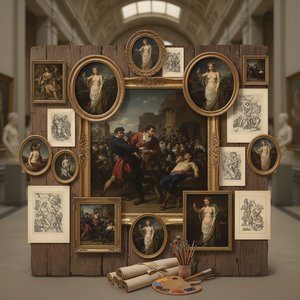
Beyond its structural splendor, the palace houses a collection of profound artistic significance, curated to reflect the refined tastes of the nobility who once called these halls home. The interior spaces are illuminated by the masterful frescoes of Antonio del Castillo y Saavedra , whose vibrant compositions breathe life into the ceilings and walls, transporting the viewer into a celestial realm of color and movement. Interspersed among these grand displays are exquisite works by artists such as Juan Bautista de Maguirol and Sergio de Castro Spikula , whose paintings capture the unique spirit and light of the Andalusian landscape. For the collector or interior designer, the palace serves as an ultimate inspiration, showcasing how Baroque furniture, ceremonial ceramics bearing ancestral emblems, and fine art can be integrated into a space to create an atmosphere of timeless grandeur and sophisticated elegance.
What distinguishes Palacio de Viana from any other palatial estate in Spain is its remarkable state of preservation. It remains an authentic vessel of history, where the original atmosphere of fifteenth-century aristocratic life has been safeguarded against the erosion of time. It is a place where art, architecture, and nature exist in a perfect, symbiotic loop—a destination that invites not just observation, but deep emotional engagement. Whether one is drawn to the technical brilliance of its Mudéjar motifs or the evocative power of its historical narrative, the palace remains an enduring beacon of culture, offering a rare glimpse into the heart of Cordoban nobility.