


 Aperçu en situation
 Envoyer
 Partager
 Détails de l'œuvre
 Guide
Guide

 Télécharger l'image
 Articles similaires
 Radiographie
 Diaporama
 Q&A
Q&A Statistiques
Flash—November 22


 Lire la suite
L’œuvre d'art présentée sur cette page est protégée par le droit d'auteur, ce qui signifie que nous ne pouvons légalement créer ou vendre de reproduction identique. Cette protection est appliquée en vertu d'accords internationaux tels que la Convention de Berne et par les lois nationales, notamment celles énoncées par le Loi américaine sur le droit d'auteur - Titre 17.
Cette méthode est pleinement conforme aux réglementations sur le droit d'auteur car elle ne repose pas sur la copie ou la duplication de l'œuvre protégée. Il s'agit plutôt d'une réinterprétation créative — une nouvelle peinture qui s'inspire de l'original sans pour autant lui être identique.
Giclées et impressions d'art
Impressions giclées ou sur toile de qualité musée, avec une production rapide et des finitions au choix. ( Commander la reproduction peinte à la main Passer au format numérique)




P118B €10

P118H €10

P118W €10

P438Z €10

P508JH €12

P508YH €12

P805H €10

P805Z €10

P919BZ €10

P919G €10

P919XJ €10

P959ZH €10

P968JZ €12

W106C €8

W218G €10

W218JH €8

W218Y €10

W307PJ €10

W316G €10

W316PJ €8

W316Y €10

W398PJ €8

W4111J €10

W500HY €15

W500JH €15

W692G €12

W849H €8

W940BG €15

W953PJ €8




Choisissez parmi nos formats prédéfinis qui respectent les proportions originales de l’œuvre.

Saisissez la largeur et la hauteur souhaitées pour qu'elles s'adaptent à votre cadre ou à votre mur. Une impression peut être recadrée, mais jamais agrandie au-delà de l'image originale ; ainsi, un format de forme différente entraînera la perte d'une partie de l'image. Nous vous envoyons une maquette numérique pour approbation avant toute impression. L'image présentée sur cette page ne montre pas le recadrage réel — seule la maquette le permet.
Livraison dans le monde entier () en 2 semaines au lieu des 4/5 semaines habituelles. (1 novembre)

Livraison express gratuite dans le monde entier

Toile de lin de qualité supérieure

Assurance transport complète

Garantie de remboursement des droits de douane

Garantie de fidélité des couleurs

Politique de retour de 100 jours (uniquement en cas de défaut)

Garantie de remboursement à 100%

Offre de tarifs dégressifs
 L'option verre n'est disponible que pour les dimensions inférieures à 110 cm.

Flash—November 22
Giclées et impressions d'art
Format de la reproduction
-


Prix total
€ 57
A Fragmented Reflection on Loss: Decoding Andy Warhol’s ‘Flash—November 22, 1963’
Andy Warhol’s ‘Flash—November 22, 1963’ isn’t a painting in the traditional sense; it's a visceral reaction captured in eleven screenprints, a fragmented memorial to a nation irrevocably altered. Created in 1968, five years after the assassination of President John F. Kennedy, this series isn’t about the event itself, but rather about *how* we consumed that event – through the relentless churn of mass media. Warhol doesn’t offer grief; he presents its packaging, the way tragedy was filtered and disseminated to a stunned public. The work stands as a chilling commentary on desensitization, the blurring lines between reality and representation, and the burgeoning power of image-making in shaping collective memory.
The Echoes of a News Bulletin
The title itself, “Flash—November 22, 1963,” evokes the urgent language of news bulletins, the staccato bursts of information that interrupted everyday life. Warhol deliberately sourced his imagery from campaign posters, newspaper photographs, and advertisements – the very materials that flooded homes across America in those days of mourning. He wasn’t interested in creating a heroic portrait or a solemn elegy; instead, he replicated the visual noise surrounding the assassination, presenting Kennedy's image alongside that of Lee Harvey Oswald, the Presidential Seal, even the gun used in the shooting. This deliberate juxtaposition is deeply unsettling. The repetition inherent in the screenprinting process further amplifies this effect, mimicking the relentless replay of images on television screens and in newspapers. Each print feels less like an individual artwork and more like a frame from an endless loop, a haunting echo of that fateful day.
Pop Art’s Confrontation with Tragedy
Warhol's choice of subject matter was particularly provocative for the Pop Art movement, which had largely focused on consumer culture and celebrity iconography. While his earlier works celebrated the vibrancy of everyday objects like Campbell’s Soup cans and Coca-Cola bottles, ‘Flash—November 22, 1963’ plunged into a far darker territory. It challenged the notion that art should be purely aesthetic or celebratory, forcing viewers to confront uncomfortable truths about violence, loss, and the manipulative power of media. Warhol himself confessed his initial detachment from the event, stating he was more disturbed by the *way* television dictated public emotion than by Kennedy’s death itself – a sentiment that permeates every print in the series.
A Legacy of Discomfort and Reflection
‘Flash—November 22, 1963’ remains profoundly relevant today. In an age saturated with information and increasingly reliant on visual media, Warhol's work serves as a prescient warning about the dangers of passive consumption and the erosion of genuine emotional connection. The series doesn’t offer answers or closure; it presents a fragmented, unsettling portrait of a nation grappling with trauma. It is a powerful reminder that images are not neutral representations of reality but rather constructed narratives that shape our perceptions and influence our understanding of the world. Owning a reproduction of this work isn’t simply acquiring an iconic piece of art history; it’s inviting a dialogue about memory, media, and the enduring impact of tragedy.
- Artist: Andy Warhol
- Born Year: 1928
- Death Year: 1987
- Birth City: Pittsburgh
- Birth Country: United States of America
Warhol’s artistic journey began in Pittsburgh, Pennsylvania, where he experienced a formative illness—Sydenham's chorea—that profoundly shaped his life and artistic vision. This neurological condition forced him to spend considerable time indoors, fostering an intense inner world where drawing became a crucial outlet for expression.
His early exposure to art supplies and popular imagery – comic books and movie magazines – instilled in him a fascination with visual culture that would become central to his distinctive style. Warhol excelled at the Carnegie Institute of Technology, graduating in 1949 with a degree in Pictorial Design, before embarking on a transformative move to New York City.
Driven by ambition and fueled by an unwavering belief in the power of art, Warhol established himself as a commercial illustrator, honing his skills and gaining invaluable experience in crafting compelling visual narratives. This initial foray into the creative realm provided him with a foundation for his later groundbreaking achievements.
Additional Research:
Warhol’s fascination with celebrity extended beyond mere admiration; he actively sought to explore its complexities and contradictions, reflecting on its influence on society and culture. His artistic explorations encompassed diverse mediums—painting, sculpture, photography, and filmmaking—demonstrating his versatility as an innovator.
Questions et réponses
Où puis-je acheter une impression de «Flash—November 22» de Andy Warhol ?
Vous pouvez commander une impression de «Flash—November 22» de Andy Warhol directement sur sa page Tirage d'art fine art : une impression d'art sur toile de coton ou sur papier canvas d'archive.
Quelle taille d'impression est recommandée pour « Flash—November 22 » ?
Pour «Flash—November 22», un format d'impression de Grand format est recommandé. D'autres tailles sont disponibles avec les mêmes proportions.
«Flash—November 22» de Andy Warhol est-il une composition en portrait, en paysage ou carrée ?
«Flash—November 22» de Andy Warhol présente un format Format carré. Le format décrit les proportions de la composition.
Œuvres similaires


Biographie de l'artiste
Andy Warhol : Une Vie dans la Pop Art
Jeunesse et Éducation
- Né le: 6 août 1928 à Pittsburgh, en Pennsylvanie.
- La jeunesse de Warhol a été marquée par une maladie d'enfance – la chorea de Sydenham (danse du vitiligo) – qui l’a conduit à des périodes prolongées de confinement et a favorisé son intérêt pour l’art.
- Il a étudié le design pictural au Carnegie Institute of Technology (aujourd’hui Carnegie Mellon University), où il est diplômé en 1949.
- Après avoir obtenu son diplôme, il s'est installé à New York pour poursuivre une carrière d'illustrateur commercial.
Art Commercial et Carrière Précoce
- Initialement, Warhol a travaillé comme illustrateur dans des magazines et de la publicité, obtenant du succès grâce à ses dessins au trait distinctifs pour les publications de mode.
- Il a acquis une compréhension approfondie de la production de masse et de la communication visuelle grâce à son travail commercial, ce qui a influencé fortement son style artistique plus tard.
- Ses premières œuvres se concentraient souvent sur des objets du quotidien et des biens de consommation, préfigurant les thèmes qu’il explorerait dans la Pop Art.
L'Ascension de la Pop Art
- Dans les années 1960, Warhol est devenu une figure de proue du mouvement Pop Art, remettant en question les notions traditionnelles de l’art.
- La Pop Art embrassait la culture populaire – publicité, bandes dessinées et objets manufacturés – comme sujets légitimes pour l'expression artistique.
- Œuvres clés de cette période comprennent : Campbell’s Soup Cans (1962) et Marilyn Diptych (1962).
- La technique de Warhol d'impression sérigraphique a permis la production en masse d'images, reflétant la culture du consommateur qu'il dépeignait.
L’Atelier et Production Artistique
- Warhol a établi “L’Atelier”, un espace de travail qui est devenu un centre névtral pour les artistes, les musiciens, les cinéastes et la haute société.
- L’Atelier n'était pas qu'un lieu de travail, mais aussi une scène : il favorisait la collaboration et l'expérimentation dans diverses disciplines artistiques.
- Warhol a embrassé le concept d'art comme un commerce, brouillant les lignes entre la haute culture et le commerce.
- Il a exploré des thèmes de célébrité, de mort et de catastrophe dans son œuvre, en utilisant souvent la répétition et des couleurs audacieuses pour créer des effets visuels frappants.
Œuvres Majeures et Style Artistique
- Œuvres notables : Che Guevara, Nan Kempner, Mona Lisa, Flowers, Couverture de l'album Velvet Underground & Nico.
- Le style de Warhol est caractérisé par l'utilisation de l'impression sérigraphique, des couleurs audacieuses et de la répétition.
- Il a souvent approprié des images de la culture populaire, les transformant en œuvres d’art emblématiques.
- Ses portraits de célébrités – Marilyn Monroe, Elvis Presley, Elizabeth Taylor – ont capturé la fascination pour la célébrité et l'image dans la société américaine.
Héritage et Importance Historique
- L’œuvre d’Andy Warhol a eu un impact profond sur le monde de l’art, remettant en question les définitions traditionnelles de l’art et ouvrant la voie à de nouveaux mouvements artistiques.
- Il était également une figure culturelle importante : ouvertement homosexuel avant le Mouvement pour la Libération des Hommes gays.
- Son exploration du consumérisme, de la culture de la célébrité et des médias de masse résonne encore aujourd'hui auprès du public.
- L’influence de Warhol se retrouve dans l’art contemporain, la mode, la musique et le cinéma.
- Ses œuvres sont exposées dans les grands musées du monde entier, notamment le Musée Andy Warhol à Pittsburgh.
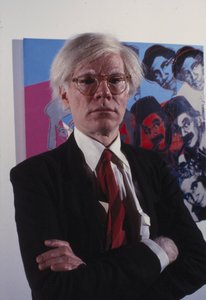
Andy Warhol
1928 - 1987 , États-Unis d'Amérique
L'essentiel de l'artiste
- Date De Décès: 1987
- Date De Naissance: 6 août 1928
- Lieu De Naissance: Pittsburgh, États-Unis
- Mouvement Artistique: Pop Art
- Nationalité: Américaine
- Nom Complet: Andy Warhol
- Œuvres Notables:
- Campbell’s Soup Cans
- Marilyn Diptych
- Che Guevara
- Flowers
- Velvet Underground & Nico
Articles connexes

Pop Art : Les 10 Œuvres Maîtresses Qui Ont Révolutionné l'Art Moderne |
Plongez dans l'univers vibrant du Pop Art ! Découvrez les 10 œuvres maîtresses d'Andy Warhol, Roy Lichtenstein et autres artistes iconiques. Histoire, techniques & inspiration déco. Explorez la collection sur .
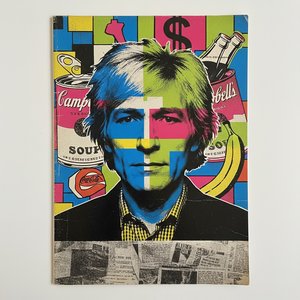
Andy Warhol : Déconstruction de la culture populaire et redéfinition de l'expression artistique
Explorez l'univers révolutionnaire d'Andy Warhol et du Pop Art. Découvrez sa technique unique, son impact sur la culture et les conseils d'experts pour collectionner ses œuvres emblématiques. AllPaintingsStore.

Les 25 chefs-d'œuvre iconiques d'Andy Warhol qui ont révolutionné le Pop Art
Explorez les 25 chefs-d'œuvre d'Andy Warhol et l'éclat du Pop Art. Découvrez ces icônes sur AllPaintingsStore.com.

Défis aux Conventions : Pop Art, Origines, Évolution et Héritage Durable
Explorez l'histoire fascinante du Pop Art : de ses origines à son influence durable. Découvrez les œuvres emblématiques d'Andy Warhol et des artistes clés. Guide expert pour collectionneurs.

De Warhol aux Étoiles d'Aujourd'hui : Récontextualiser les Icônes de la Culture Pop à Travers le Prisme de la Tradition Peinturale à l'Huile
Explorez la réinterprétation du Pop Art à travers l'huile ! Découvrez des artistes contemporains, conseils d'experts et reproductions personnalisées de qualité musée avec AllPaintingsStore.


