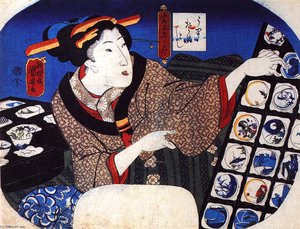
Acrylic On Canvas.

§ 1Données du catalogue

§ 2Abstrait
Description de la pièce
This exquisite 19th-century Japanese tryptych showcases the exceptional artistry of Utagawa Kuniyoshi, capturing a pivotal scene from Kabuki theater with vibrant colors and intricate detail. Printed on textured paper, it embodies the spirit of the *ukiyo-e* tradition. Admire Utagawa Kuniyoshi's masterful depiction of actors Ichimura Uzaemon XII and Tada Kurodo Yukitsuna in this stunning Japanese
 Lire la suite
Biographie de l'artiste
Découvrez Utagawa Kuniyoshi (1798-1861), maître japonais de l'ukiyo-e ! Explorez ses estampes guerrières, paysages fantastiques & son mélange unique des traditions et influences occidentales.
§ 3Commentaire
A Window Into Edo Japan: Kuniyoshi's "The Actor" – A Symphony of Color and Drama
Utagawa Kuniyoshi’s “The Actor,” executed in 1847, stands as a quintessential example of *shunga*, the Japanese erotic woodblock print genre that flourished during the Edo period (1603-1868). More than just a depiction of theatrical performance, this triptych delves into themes of beauty, masculinity, and fleeting moments captured in exquisite detail—a testament to Kuniyoshi’s mastery of technique and his profound understanding of Japanese aesthetics. Produced by Ichimura Uzaemon XII for the prestigious Gobuji Chūshingura series, commissioned to commemorate the heroic tale of samurai loyalists defending Edo Castle against Tokugawa forces, “The Actor” embodies the spirit of its time—a fascination with idealized figures and a celebration of artistic virtuosity.- Subject Matter: The print portrays Ichimura Uzaemon XII as Tada Kurodo Yukitsuna, a prominent Kabuki actor known for his dramatic performances and captivating stage presence. Kuniyoshi meticulously captures Yukitsuna’s posture—a deliberate pose designed to convey nobility and strength—emphasizing the importance of gesture and expression within Japanese theater traditions.
- Style & Technique: Kuniyoshi employed a bold, expressive style characteristic of *shunga*, utilizing thick black outlines and vibrant colors achieved through multiple blocks of pigment applied to the wood surface. The artist’s masterful use of tonal gradation—particularly in the background—creates depth and atmosphere, transporting viewers into the theatrical space depicted.
- Historical Context: “The Actor” reflects the Edo period's obsession with idealized beauty and heroic narratives. Gobuji Chūshingura itself was a popular tale celebrating samurai loyalty and courage, mirroring broader societal values during this era. Kuniyoshi’s inclusion of tattoos—a symbol of honor and warrior identity—further reinforces these themes, demonstrating his awareness of cultural conventions.
- Symbolism: The intricate patterns adorning Yukitsuna's kimono serve as visual metaphors for status and refinement—elements central to Edo society’s hierarchical structure. Furthermore, Kuniyoshi’s careful composition directs the viewer’s gaze towards Yukitsuna’s face, highlighting the importance of facial expression in conveying emotion and embodying character within Kabuki performances.
- Emotional Impact: Despite its erotic undertones—a common feature of *shunga*— “The Actor” transcends mere sensuality to evoke feelings of admiration for beauty and contemplation on the ephemeral nature of human experience. Kuniyoshi’s artistic vision captures a moment frozen in time, inviting viewers to appreciate the artistry and cultural significance of Edo Japan.
Questions et réponses
À quel mouvement artistique appartient « The actor (12) » ?
« The actor (12) » est une œuvre issue du Ukiyo-e. Ce mouvement définit la tradition artistique à laquelle l'œuvre appartient.
Où est-il recommandé d'exposer le format Square de « The actor (12) » ?
Avec son format Square, une reproduction de « The actor (12) » est idéale pour un(e) Living Room.
Quelle émotion les couleurs de «The actor (12)» de Utagawa Kuniyoshi dégagent-elles ?
«The actor (12)» de Utagawa Kuniyoshi allie une palette Neutrals à un ton Reflective.


 Passer au format impression


 Pour les œuvres ou reproductions dont un côté mesure plus de 105 cm (environ 41 pouces), le cadre sera expédié sous forme de kit démonté. Cette méthode garantit une livraison sécurisée et prévient tout dommage pendant le transport.