Rafael de Penagos: A Renaissance Visionary Bridging Tradition and Innovation
Rafael de Penagos (1889 – 1954) stands as a singular figure in Spanish Renaissance art, an artist who skillfully navigated the stylistic currents of his time while forging a distinctive artistic voice. Born in San Fernando, Spain, he emerged from a period marked by both academic conservatism and burgeoning modernist experimentation—a duality that profoundly shaped his oeuvre and cemented his legacy as one of the most captivating illustrators of the early 20th century.- Early Life & Education: Penagos received his formative artistic training at the Escuela Superior de Diseño Española in Madrid, where he honed his skills in watercolor illustration and graphic design under the tutelage of prominent instructors. This grounding in traditional techniques proved invaluable as he embarked on a career dedicated to capturing the beauty of the natural world and portraying human figures with remarkable sensitivity.
- Illustrative Career & Artistic Style: Penagos quickly gained renown for his evocative watercolors, particularly those depicting animals—a fascination that would permeate much of his artistic output. His distinctive style blended elements of Impressionism and Fauvist tendencies, characterized by bold color palettes, expressive brushstrokes, and a penchant for capturing fleeting moments of emotion. He meticulously studied the works of Monet and Cézanne, adapting their innovative techniques to create luminous surfaces and convey profound emotional depth.
- Notable Commissions & Collaborations: Penagos’s talent attracted commissions from prestigious publications like *La Vanguardia* and *El Mundo*, where he produced stunning illustrations for literary works and journalistic endeavors. He collaborated extensively with writers and poets, notably Federico García Lorca, forging enduring artistic partnerships that resulted in iconic images reflecting the spirit of Spanish culture. His meticulous attention to detail mirrored Raphael’s approach to fresco painting—a conscious effort to emulate classical grandeur.
- The Vatican Influence: Penagos’s artistic sensibilities were undeniably influenced by the grandeur of Italian Renaissance art, particularly Raphael Sanzio's frescoes adorning St. Peter's Basilica. He sought to emulate Raphael’s mastery of composition and tonal harmony, striving for elegance and spiritual depth in his own paintings and drawings. This aspiration reflected a humanist worldview rooted in classical ideals—a desire to elevate the visual arts as vehicles for conveying moral and aesthetic values.
- Legacy & Recognition: Though largely unrecognized during his lifetime, Penagos’s work has gained considerable appreciation in recent decades. Museums across Spain and internationally showcase his watercolors and illustrations, celebrating his contribution to Spanish art history and demonstrating the enduring power of his artistic vision. His images continue to inspire artists and captivate audiences with their beauty and emotional resonance.
Key Works & Artistic Achievements
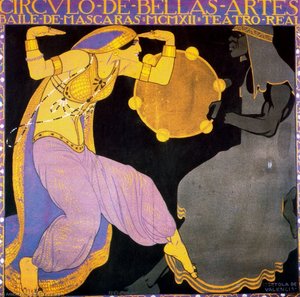
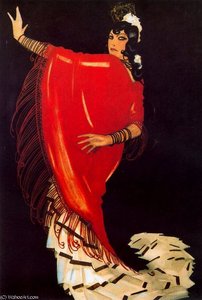
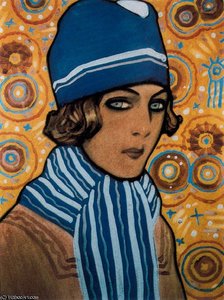
Penagos’s artistic output encompassed a diverse range of subjects, from botanical studies to animal portraits to literary illustrations—each piece imbued with his signature stylistic flair. Among his most celebrated creations are “Untitled (168),” a whimsical watercolor depicting a man and rabbit brimming with symbolic meaning; "Untitled (260)," a vibrant vintage baseball illustration showcasing heroic figures in stylized graphic design; and “Untitled (100)” – a Fauvist masterpiece capturing starry skies and emotive human forms. These artworks exemplify Penagos’s ability to synthesize classical influences with modernist sensibilities, establishing him as a pivotal figure in bridging the gap between tradition and innovation. He achieved renown for his masterful blending of Impressionistic color harmonies with Fauvist expressive brushstrokes—a stylistic breakthrough that distinguished him from many of his contemporaries.Symbolism & Technique
Penagos's watercolors are distinguished by their meticulous observation of nature combined with expressive brushwork—a technique that allowed him to convey not only visual accuracy but also profound emotional resonance. He skillfully employed tonal harmonies reminiscent of Raphael’s frescoes, creating luminous surfaces and capturing the subtleties of light and shadow. Recurring motifs in his paintings—such as rabbits symbolizing fertility and innocence—reflected a humanist worldview rooted in classical ideals. His dedication to capturing fleeting moments of emotion mirrored the expressive fervor characteristic of Romantic art—a testament to his artistic versatility and intellectual curiosity.Influence & Artistic Context
Penagos’s artistic trajectory coincided with the broader artistic landscape of Spain during the Belle Époque, where Impressionism and Fauvist movements challenged academic conventions. He absorbed inspiration from artists like Monet and Cézanne, adapting their techniques to his own distinctive style—a testament to his intellectual curiosity and artistic adaptability. His work stands as a compelling illustration of how individual creativity can flourish within a dynamic cultural milieu. He recognized the importance of embracing innovation while honoring established artistic traditions—a perspective that informed his entire oeuvre and solidified his place in Spanish art history.Domande e risposte
Di dove è Rafael De Penagos?
Rafael De Penagos è nato/a in Spagna.
In quale città e in quale paese è nato/a Rafael De Penagos?
Rafael De Penagos è nato a San Fernando, in Spagna.
In quali periodi è suddivisa la carriera di Rafael De Penagos?
La Cronologia artistica di Rafael De Penagos è una linea temporale interattiva che presenta le opere dell'artista in ordine cronologico, suddivise in capitoli corrispondenti ai diversi periodi della sua carriera.