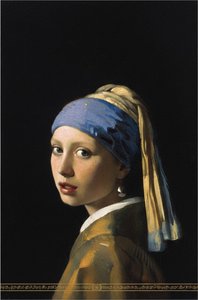
Self-Portrait Hand-painted oil painting – standard and custom sizes
1621. Oil On Canvas, 80.0 x 65.0 cm. 国立美術館 (Rijksmuseum).

§ 1Catalogue data
 Oil On Canvas
- WallArt
- Baroque
 1621
1621 80.0 x 65.0 cm
 国立美術館 (Rijksmuseum)
§ 2Abstract
コレクション詳細
Admire Abraham de Vries’ 1621 Self-Portrait – a dynamic Dutch Golden Age masterpiece! Explore chiaroscuro lighting, rich textures & symbolic details in this captivating Baroque portrait.
 続きを読む
続きを読む
アーティストプロフィール
Abraham de Vries (1590-1650): Dutch Golden Age portraitist blending Dutch & Flemish styles. Explore his dynamic portraits across Europe, influenced by Rembrandt & Rubens.
§ 3Commentary
Abraham de Vries’s “Self-Portrait”: A Window into the Dutch Golden Age
Abraham de Vries’s 1621 “Self-Portrait” is more than just a likeness; it's a meticulously crafted window into the intellectual and artistic currents of the Dutch Golden Age. Painted during a period of unprecedented prosperity and burgeoning self-awareness, this work embodies the era’s fascination with portraiture as both a formal exercise in skill and a profound exploration of individual identity. De Vries, a peripatetic artist who traversed Europe, masterfully blended influences from Flemish dynamism with the emerging realism of his native Netherlands, creating a compelling synthesis that speaks to his own restless artistic spirit.
The painting immediately draws the eye with its dramatic chiaroscuro lighting – a technique borrowed heavily from Caravaggio and Rembrandt. Deep shadows envelop much of the figure’s form, emphasizing the textures of his clothing and the subtle contours of his face. This masterful use of light not only creates a sense of depth and volume but also imbues the portrait with an air of solemnity and introspection. The artist himself is depicted in a three-quarter pose, a common convention at the time, yet de Vries avoids mere replication; he presents a carefully constructed image of scholarly sophistication.
A Scholar’s Attire: Symbolism and Status
The details of the portrait are laden with symbolic significance. De Vries is clad in an elaborate, dark robe adorned with intricate embroidery – a clear indication of his status and wealth. The voluminous sleeves and high collar, reminiscent of Renaissance attire, speak to his intellectual pursuits and connection to humanist learning. Notably, he holds a quill pen and several open books, suggesting his role as a learned man, perhaps a scholar or even an artist deeply engaged in the study of art and its principles. The inclusion of musical instruments – a lute and a recorder – further reinforces this association with intellect and refinement; music was considered a liberal art during this period.
The background is deliberately muted, a dark brown that serves to isolate the subject and draw attention to his features. This simplicity allows the viewer to focus entirely on de Vries’s face, which is rendered with remarkable precision and psychological insight. His gaze is direct and slightly melancholic, hinting at the complexities of the artist's life and perhaps reflecting upon his own artistic journey.
Technique and Artistic Influences
The painting is executed in oil on canvas, a medium that allowed for the rich textures and subtle gradations of tone characteristic of de Vries’s style. The brushwork is smooth and controlled, demonstrating a mastery of technique honed through years of practice. While undeniably influenced by the Flemish tradition – particularly the dramatic lighting and attention to detail evident in works by artists like Anthony van Dyck – de Vries also incorporates elements of Dutch realism, notably in his depiction of the subject’s face and hands. The subtle modeling of the skin, the delicate rendering of the wrinkles around his eyes, and the careful observation of anatomical details all testify to his skill as a portraitist.
A Legacy of Observation
Abraham de Vries's “Self-Portrait” stands as a testament to the artistic achievements of the Dutch Golden Age. It’s a work that invites contemplation, not just for its technical brilliance but also for its profound exploration of human identity and the complexities of self-representation. The painting’s enduring appeal lies in its ability to connect us with a specific moment in art history while simultaneously offering a timeless reflection on the nature of portraiture itself. It serves as a reminder that a portrait is not merely a likeness, but a carefully constructed narrative—a glimpse into the soul of the artist and the world he inhabited.
よくあるご質問
「Self-Portrait」は、Abraham de Vriesが繰り返し描いてきた主題の中でどのような位置を占めているのでしょうか?
「Self-Portrait」はportrait, scholar, instruments, baroque, chiaroscuro, dutch art, self portrait, renaissanceを描いていますが、Abraham de Vriesのこれまでのテーマとして記録されているのはself-representation, artistic identity, demonstrates technical mastery, van dyck's dynamism, rembrandt's realism, flemish portraiture, baroque idealsです。この二つを比較することで、本作が作家のいつもの主題とどのように関連しているかが明らかになります。
Abraham de Vries作「Self-Portrait」の形式には、どのような配置が適していますか?
Portraitの形状を活かした「Self-Portrait」の複製画は、Living Roomに飾るのがおすすめです。
Abraham de Vries作「Self-Portrait」は、どの部屋に飾るのがおすすめですか?
Abraham de Vries作「Self-Portrait」にふさわしい空間はLiving Roomです。もちろん、お客様のインテリアに合わせて調整していただくことも可能です。
§ 4The artist

Abraham de Vries
1590 - 1662, Netherlands
Quick facts about Abraham de Vries
- Full Name: Abraham de Vries
- Nationality: Dutch
- Date Of Birth: 1590
- Date Of Death: 1662
- Place Of Birth: Rotterdam, Netherlands
- Notable Artworks:
- Figure of Christ
- Portrait of Erminia Van Beresteyn
- Portrait of a Man
- Regents of the Burgerweeshuis
- Artistic Movement Or Style: Dutch Golden Age portraiture
- Artists Who Influenced This Artist:
- Thomas de Keyser
- Jan van Ravesteyn
- Peter Paul Rubens
- Rembrandt
アーティストについて
A Peripatetic Life in Paint: Abraham de Vries and the Dutch Golden Age
Abraham de Vries, a name perhaps less immediately recognizable than some of his contemporaries, nevertheless occupies a fascinating and significant niche within the vibrant tapestry of 17th-century Dutch and Flemish painting. Born around 1590 – with recent scholarship leaning towards The Hague rather than Rotterdam as his birthplace – de Vries led a remarkably mobile life for an artist of his era, traversing France, Antwerp, and various cities within the Dutch Republic. This peripatetic existence profoundly shaped his artistic development, resulting in a style that skillfully blended diverse influences, reflecting a keen eye for both Dutch realism and Flemish dynamism. Biographical details remain somewhat fragmented, pieced together from guild records, archival documents, and contemporary accounts, yet they reveal a portrait of an ambitious artist constantly seeking to refine his craft and navigate the complex art world of his time. His early training remains shrouded in some mystery, though a self-portrait from 1621 hints at both artistic skill and intellectual curiosity, depicting him as a learned practitioner aware of broader cultural currents.From French Sojourns to Flemish Flourishes
De Vries’s travels began early, with evidence suggesting a visit to Lyon in France as early as 1613. The following decades saw him establish a pattern of extended stays in various French cities – Aix-en-Provence, Toulouse, Montpellier, and Paris – where he not only practiced his art but also cultivated important connections. His time in Aix-en-Provence proved particularly formative, as he took on the young Flemish artist Jan Cossiers as a pupil, demonstrating an early willingness to share his knowledge and engage with artistic communities beyond his own origins. A pivotal moment arrived during his stay in Paris in 1629 when he encountered Peter Paul Rubens. This meeting left an indelible mark on de Vries’s work, introducing him to the dramatic energy and refined technique that characterized Flemish Baroque painting. Later, a sojourn in Antwerp from 1634 onwards solidified this influence. His portrait of Simon de Vos, painted during this period, exemplifies the dynamism and stylistic echoes of Anthony van Dyck that now permeated his oeuvre. Even a brief but impactful stint at the Brussels court in 1636, where his talents were reportedly favored even over Van Dyck’s, underscores his growing reputation and artistic prowess.A Synthesis of Styles: Dutch Roots and Rembrandt's Shadow
Despite his extended periods abroad, de Vries never entirely abandoned the sensibilities of his Dutch heritage. His early works demonstrate an affinity for the restrained realism favored by artists in Amsterdam and The Hague, such as Thomas de Keyser and Jan van Ravesteyn. However, the Flemish influence gradually became more pronounced, particularly in his portraits, where he embraced a richer palette, more dramatic lighting, and a greater emphasis on capturing the personality of his sitters. By the 1640s, another significant force entered the equation: Rembrandt van Rijn. The Dutch master’s innovative approach to portraiture – prioritizing psychological depth and characterization over mere physical likeness – resonated deeply with de Vries. This influence is strikingly evident in works like “Portrait of a Dutch Gentleman” (1647), which was initially mistaken for a Rembrandt painting, showcasing the artist's ability to convey inner life through subtle nuances of expression and masterful use of *chiaroscuro*.Beyond Individual Portraits: Innovation in Group Portraiture
While celebrated primarily as a portraitist, de Vries also demonstrated his versatility through group portraits – a particularly important genre in the Dutch Golden Age. His “Regents of the Burgerweeshuis Orphanage in Amsterdam” (1633) stands out for its innovative composition. Rather than arranging the regents in a static, symmetrical formation, de Vries divided them into standing and seated groups, connected by a staff member leading an orphan girl – a remarkably unusual inclusion that imbues the painting with a sense of compassion and social awareness. This subtle yet powerful detail elevates the work beyond a mere record of civic duty, transforming it into a poignant commentary on the responsibilities of those entrusted with the care of vulnerable children. This innovative approach demonstrates de Vries’s willingness to experiment with form and narrative within the conventions of his time.A Lasting Legacy: De Vries in the Context of His Era
Abraham de Vries's historical significance lies not in a single, revolutionary innovation but rather in his remarkable ability to synthesize diverse artistic influences into a cohesive and compelling style. He was a master adapter, seamlessly blending Dutch realism with Flemish dynamism and later incorporating Rembrandt’s psychological insights. His peripatetic lifestyle, while making it challenging to define a singular stylistic identity, ultimately enriched his art, exposing him to a wider range of techniques and perspectives. Though perhaps not as widely celebrated as some of his more famous contemporaries, de Vries's portraits offer invaluable glimpses into the social and cultural landscape of 17th-century Europe, showcasing a diverse array of individuals – artists, regents, and ordinary citizens – with sensitivity, skill, and an enduring sense of humanity. His work continues to captivate viewers today, offering a testament to the power of artistic exchange and the enduring appeal of masterful portraiture.§ 5Comparanda
関連作品


§ 6Questions
§ 7Cite this entry
AllPaintingsStore.com, “Abraham de Vries, Self-Portrait (1621)”, https://allpaintingsstore.com/ja/art/abraham-de-vries-self-portrait-8Y3LS9-en/ArtistReproduction/ (accessed 1 10月 2026).
§ 8The reproduction
手描き油彩複製画
当社のアーティストが、お客様のご希望のサイズと額縁に合わせて、キャンバスに手描きで制作する油彩画です。 ( プリント版に切り替え デジタル画像販売へ切り替え)
It is specified on the order sheet in the margin; the present state of that sheet reads as follows.

Self-Portrait
再現技法
複製画サイズ一覧
-

厳選された熟練アーティスト
より細部までこだわった表現、洗練された技術、そして十分な制作時間
-

複製画用額装
-
-
いずれかの辺が105 cm(約41インチ)を超えるアートワークまたは複製画の場合、フレームは分解されたキットの状態でお届けいたします。この方法は、輸送中の破損を防ぎ、安全に配送するために採用しております。
組み立てには専門知識が必要です(DIY用製品ではありません)。
本キットは、経験豊富なプロの額装師が、木工用ボンド(別売)、キャンバス用プライヤー、およびボンドの乾燥時に桟を直角に保持するためのクランプを使用して、組み立ておよびキャンバスの張り作業を行う必要があります。不適切な組み立てやキャンバスの張りの不均一は、作品に永久的な損傷を与える恐れがあり、弊社の保証対象外となります。
 いずれかの辺が105 cm(約41インチ)を超えるアートワークまたは複製画の場合、フレームは分解されたキットの状態でお届けいたします。この方法は、輸送中の破損を防ぎ、安全に配送するために採用しております。
すべての無垢材のパーツが含まれており、組み立てに最適なサイズに正確にカットされています。
付属のネジを使用し、角の接合部には別途木工用ボンドをご用意ください(ボンドは付属しておりません)。ボンドは額装業者様にてご手配をお願いいたします。
プロ仕様の道具が必要ですが、キットには含まれていません:キャンバス用ストレッチングプライヤー(テンショナー)、および接着剤が乾燥するまで木枠を直角に固定するためのクランプ。
重要:
コーナーの接合部には木工用ボンドが必要です。また、ボンドが完全に乾くまでクランプでバーを固定しておく必要があり、組み立てたフレームにキャンバスを張るにはキャンバス用ストレッチングプライヤーが必要となります。これらの道具はキットに含まれておりません。このサイズをご注文される前に、経験豊富なプロの額装師(フライマー)の手配をお願いいたします。

銘板
-
-

保護用ワニス
光沢ワニス(色彩を鮮やかに引き立て、光や湿気から保護します)
-

作品をカスタマイズ
カスタマイズの例:顔をお客様の写真に差し替える、ペットを追加する(例:猫を犬に変更)、背景に隠しメッセージを入れる、背景の風景や要素を変更する。
-

お急ぎ便
世界中への配送()は、通常の5週間ではなく、3〜4週間でお届けいたします。(29 10月)。品質には一切の妥協を許しません。
-
お急ぎ便
世界中への配送()は、5週間ほどでお届けします。(5 11月)。
送料込
合計金額
¥ 40592
Included with every order
- 世界中へ無料エクスプレス配送
- 高品質なリネンキャンバス
- 配送時完全保険付
- 関税・輸入税の払い戻し保証
- 忠実な色彩再現の保証
- 100日間返品保証(製造上の欠陥がある場合のみ)
- 100% 全額返金保証
- まとめ買い割引のご案内