

1955. Ink On Paper. MoMA(ニューヨーク近代美術館).

§ 1カタログデータ


本作品の著作権について
このページに掲載されている作品は著作権法によって保護されており、当社の許可なく同一の複製物を制作または販売することは法律で禁じられています。この保護は、以下のような国際条約に基づき執行されます。 ベルヌ条約 および、以下の条項に定められたものを含む各国の法律により、 米国著作権法 第17編。
敬意を払った法的な代替手段として、私たちはオリジナルにインスピレーションを与えられた、カスタムの手描きアートワークを提供しています。私たちの熟練したプロのアーティストは、元の作品が持つスタイル、情緒、そして芸術的なエッセンスを注意深く研究し、独自の創作物でありながら、同じ感性を呼び起こすような、新しくユニークな作品を作り上げます。
この手法は、著作権で保護された作品の複製や複写を伴わないため、著作権法に完全に準拠しています。これは単なる模倣ではなく、創造的な再解釈です。元の作品からインスピレーションを受けつつも、それとは異なる、全く新しい絵画を生み出すものです。
 詳しく読む
詳しく読む§ 2抽象
作品解説
Experience 'Panic' by André Masson – a surrealist etching of swirling chaos and raw emotion. Explore the artist’s automatic drawing style & delve into themes of anxiety & primal energy.
アーティストの略歴
アンドレ・マソンは、自動描画や砂絵で知られるシュルレアリスムの先駆者。暴力、エロティシズム、変容といったテーマを探求し、抽象表現主義に大きな影響を与えたフランス人画家。
§ 3解説
The Raw Nerve of Anxiety: Unpacking André Masson’s “Panic”
André Masson's "Panic," created in 1955, isn’t merely a painting; it’s an excavation. A visceral plunge into the turbulent depths of the human psyche, rendered with a frenetic energy that both unsettles and compels. This etching, executed on paper, captures a moment suspended between chaos and control, reflecting the anxieties simmering beneath the surface of post-war Europe – a period Masson himself deeply inhabited through his pioneering work in Surrealism and Automatism.
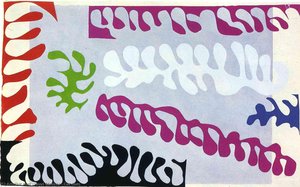
The composition immediately assaults the senses. A dominant teal background—a shade suggestive of both twilight and unease—is fractured by swirling, violently intertwined lines in shades of purple and magenta. These aren’t neat, controlled strokes; they are a deliberate act of disruption, mirroring the feeling of being overwhelmed by internal turmoil. The lack of a clear focal point forces the viewer's eye to dart across the surface, mimicking the restless, fragmented experience of panic itself. The overall effect is less about depicting a specific scene and more about conveying an intense emotional state – a raw, unfiltered expression of anxiety.
Automatism: A Journey Beyond Conscious Control
Masson’s technique—Automatism—was central to his artistic practice. Rejecting the constraints of rational thought and deliberate planning, he sought to tap into the unconscious mind through spontaneous action. In “Panic,” this manifests as a seemingly chaotic outpouring of lines, yet beneath the surface lies a carefully orchestrated process. Masson would often begin with sand drawings, allowing the subconscious to dictate the initial forms, then translate these images onto paper using various tools – in this case, etching techniques—to create the final image. This method aimed to bypass conscious control and reveal hidden emotions and associations.
The influence of Surrealism is undeniable, but Masson’s approach extends beyond simple dream imagery. He was deeply interested in primal emotions, exploring themes of violence, eroticism, and metamorphosis – all powerfully represented within the swirling forms of “Panic.” The piece echoes the work of artists like André Breton and Joan Miró, yet possesses a uniquely personal intensity, reflecting Masson's own struggles with psychological turmoil.
Symbolic Echoes: Violence, Repression, and the Unconscious
The imagery within "Panic" is rich in symbolic potential. The tangled lines can be interpreted as representing repressed emotions struggling to surface, a visual manifestation of internal conflict. The use of dark teal and vibrant purples and magentas creates a dramatic contrast, suggesting a battle between opposing forces – perhaps order versus chaos, reason versus instinct. Some viewers have noted the resemblance to organic forms—twisted limbs or distorted figures—suggesting a sense of fragmentation and loss of control.
Interestingly, Masson’s work frequently engaged with themes of violence, reflecting anxieties prevalent in post-war Europe. The piece can be seen as an exploration of the destructive potential within the human psyche – a warning against succumbing to overwhelming fear and losing oneself in the chaos of internal struggle. The title itself—"Panic"—underscores this central theme, encapsulating the feeling of being trapped within one’s own anxieties.
A Legacy of Raw Emotion: Masson's Enduring Impact
“Panic” stands as a powerful testament to André Masson’s innovative approach to art. It’s not a comfortable piece; it demands engagement and invites introspection. His exploration of Automatism, combined with his unflinching portrayal of psychological turmoil, cemented his place as a key figure in the Surrealist movement and beyond. Reproductions of this work continue to resonate today, offering a glimpse into the complexities of the human experience – a reminder that beneath the surface of everyday life, there often lies a turbulent landscape of anxieties and unresolved emotions.




 プリント版に切り替え


 いずれかの辺が105 cm(約41インチ)を超えるアートワークまたは複製画の場合、フレームは分解されたキットの状態でお届けいたします。この方法は、輸送中の破損を防ぎ、安全に配送するために採用しております。


