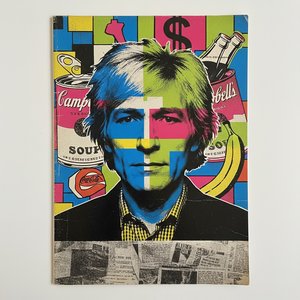
シルクスクリーン.

§ 1カタログデータ


本作品の著作権について
このページに掲載されている作品は著作権法によって保護されており、当社の許可なく同一の複製物を制作または販売することは法律で禁じられています。この保護は、以下のような国際条約に基づき執行されます。 ベルヌ条約 および、以下の条項に定められたものを含む各国の法律により、 米国著作権法 第17編。
敬意を払った法的な代替手段として、私たちはオリジナルにインスピレーションを与えられた、カスタムの手描きアートワークを提供しています。私たちの熟練したプロのアーティストは、元の作品が持つスタイル、情緒、そして芸術的なエッセンスを注意深く研究し、独自の創作物でありながら、同じ感性を呼び起こすような、新しくユニークな作品を作り上げます。
この手法は、著作権で保護された作品の複製や複写を伴わないため、著作権法に完全に準拠しています。これは単なる模倣ではなく、創造的な再解釈です。元の作品からインスピレーションを受けつつも、それとは異なる、全く新しい絵画を生み出すものです。
 詳しく読む
詳しく読む§ 2抽象
アーティストの略歴
ポップアートの巨匠、アンディ・ウォーホル (1928-1987)。マリリン・ディプティックやキャンベルスープ缶など、大量生産と消費文化を象徴するシルクスクリーン作品で知られます。現代美術に革命をもたらし、セレブリティやメディアの影響を鋭く捉えた芸術家。
§ 3解説
A Celebration of the Everyday: Decoding Andy Warhol’s “Flowers”
Andy Warhol, a titan of 20th-century art, fundamentally altered our perception of what constitutes ‘art.’ Among his most recognizable and enduring creations, “Flowers” stands as a vibrant emblem of Pop Art's revolutionary spirit. More than just a depiction of botanical beauty, this series is a complex commentary on consumer culture, mass production, and the very nature of originality.Origins & Inspiration: From Photography to Silkscreen
Warhol’s fascination with flowers blossomed in the early 1960s, coinciding with his exploration of silkscreen printing—a technique that would become synonymous with his artistic practice. The initial impetus for “Flowers” stemmed from a photograph of hibiscus blossoms featured in *Modern Photography* magazine (June 1964), captured by Patricia Caulfield. Warhol skillfully cropped and abstracted the image, transforming it into a repeatable motif ripe for mass production. This deliberate choice highlights his interest in appropriating existing imagery and elevating everyday subjects to iconic status.The Technique of Replication: Silkscreen & Pop Art Aesthetics
Warhol’s mastery of silkscreen printing is central to understanding “Flowers.” The process allowed him to create multiple, nearly identical images with subtle variations in color and texture. This deliberate repetition challenges traditional notions of artistic skill and uniqueness, mirroring the mass-produced nature of consumer goods. The flat planes of color, bold outlines, and lack of painterly brushstrokes contribute to a distinctly graphic aesthetic—hallmarks of Pop Art. The resulting image is immediate, visually arresting, and undeniably modern.Pop Art & Cultural Commentary
“Flowers” is quintessentially Pop Art, a movement that emerged in the 1950s and 60s as a reaction against Abstract Expressionism’s perceived elitism. Artists like Warhol, Roy Lichtenstein, and Jasper Johns sought to bridge the gap between “high art” and popular culture by incorporating imagery from advertising, comic books, and everyday objects into their work. By focusing on flowers—a seemingly innocuous subject—Warhol subtly critiques the superficiality of modern life and the pervasive influence of consumerism. The repetition also evokes a sense of detachment, mirroring the impersonal nature of mass production.Symbolism & Emotional Resonance
While appearing simple at first glance, “Flowers” is rich in symbolic meaning. The flower itself has long been associated with beauty, fragility, and the ephemeral nature of life. Warhol’s treatment of the subject—through mechanical reproduction—creates a fascinating tension between these traditional associations and the cold, impersonal world of mass production. The vibrant colors evoke feelings of joy and optimism, yet the repetitive nature can also feel unsettling or even alienating. Ultimately, “Flowers” invites viewers to contemplate the relationship between art, commerce, and the human experience.Legacy & Enduring Appeal
“Flowers” remains one of Warhol’s most beloved and recognizable works, exhibited in museums and private collections worldwide. Its enduring appeal lies in its accessibility, visual impact, and thought-provoking commentary on contemporary culture. The series continues to inspire artists, designers, and collectors alike, solidifying Warhol's place as a pivotal figure in art history.- Andy Warhol: A pioneering artist who redefined the boundaries of art through his innovative use of silkscreen printing and appropriation.
- Pop Art Movement: A revolutionary artistic movement that challenged traditional notions of art by embracing popular culture and mass media.
- Silkscreen Printing: A technique central to Warhol’s style, enabling the mass production of images with subtle variations in color and texture.
Q&A
ポップアートにおいて、「花」はどの程度人気がありますか?
ポップアート運動において、「花」は象徴的な存在の知名度を誇ります。
アンディ・ウォーホル作「花」 の画像はどのようにダウンロードすればよいですか?
アンディ・ウォーホル作「花」の画像は、作品のデジタルイメージをダウンロードページからダウンロードいただけます:高解像度デジタル画像のダウンロード。
「花」の色彩は、どの程度鮮やかですか?
「花」の色彩は、彩度が鮮やかな色彩です。


 プリント版に切り替え


 いずれかの辺が105 cm(約41インチ)を超えるアートワークまたは複製画の場合、フレームは分解されたキットの状態でお届けいたします。この方法は、輸送中の破損を防ぎ、安全に配送するために採用しております。