100日間返金保証 世界中へ送料無料
449,587作品一覧 30,613アーティスト一覧 4,660美術館・博物館 32言語設定
通貨
    言語
      アトリエ · 2015年設立 · フランス、パリ
      AllPaintingsStore
      allpaintingsstore.com
      Catalogue entry

      Crucifix

      1268. Tempera On Panel, 336.0 x 267.0 cm. San Domenico.

      Fig. 1. シマブエ, Crucifix, 1268. Shown as the reproduction you are specifying: , .

      § 1Catalogue data

      § 2Abstract

      コレクション詳細

      Experience the profound emotion of Cimabue's monumental Crucifix, a masterpiece bridging Byzantine tradition and Renaissance realism through its powerful depiction of Christ, inviting you to bring this timeless legacy home.

      アーティストプロフィール

      イタリア絵画の先駆者シマブエは、ビザンツ様式とルネサンス様式の融合を特徴とし、特に聖母マテアとアレッスの洗礼堂のモザイクで知られる芸術家です。彼の作品は美術史における重要な転換点を示し、後の画家たちに大きな影響を与えました。

      § 3Commentary

      A Bridge Between Byzantium and Renaissance Brilliance

      In the heart of Italian art history, Giovanni Cimabue stands as a monumental figure, a master who skillfully navigated the artistic currents flowing from the rigid grandeur of the Byzantine Empire toward the burgeoning innovations of the early Renaissance. His Crucifix is not merely a religious icon; it is a profound testament to a period of transformative change. Painted with an unwavering determination that earned him the nickname “bull-ed,” Cimabue dared to subtly challenge established conventions, laying the essential groundwork for the humanistic ideals that would later be championed by masters like Giotto. This work embodies a deliberate shift in sensibility, moving away from the stylized, flattened iconography of the past toward a more naturalistic and emotionally resonant representation of the divine.

      The composition is dominated by the central figure of Christ, whose presence is both physically imposing and deeply moving. Through a masterful blend of Byzantine influence and emerging realism, Cimabue employs tempera paint on wood to achieve a remarkable luminosity. The technique involves the careful layering of translucent glazes, a hallmark of the Byzantine tradition, which allows light to dance across the surface, lending a celestial quality to the scene. While the gilding and the monumental scale of the cross link the piece to sacred tradition, the expressive musculature and the fluid drapery of the figures suggest a newfound commitment to anatomical fidelity and volume.

      Symbolism and the Emotional Landscape

      Beyond its technical brilliance, the Crucifix serves as a powerful vessel for spiritual narrative. Flanked by the poignant figures of Mary and John, the painting captures the profound sorrow of the crucifixion with an unprecedented sense of pathos. The artist’s attention to detail is particularly striking in the intricate designs adorning the central beam of the cross; these patterns reflect Byzantine decorative motifs but are executed with a dynamic textural richness that signals the dawn of Renaissance principles. Above the scene, a starry sky serves as a backdrop, evoking biblical narratives of divine providence and enveloping the tragedy in a sense of cosmic significance.

      For the discerning collector or interior designer, a museum-quality reproduction of this masterpiece offers more than just decoration; it provides an opportunity to invite a piece of history into a contemporary space. The work’s ability to evoke both awe and introspection makes it a captivating focal point for any curated collection. It remains an enduring symbol of faith and artistic courage, capturing a pivotal moment when art began to reflect the depth of human emotion and the beauty of the natural world. To possess such a piece is to hold a window into the very moment Western art began its journey toward the light of the Renaissance.

      よくあるご質問

      シマブエ作「Crucifix」は、作家の母国に保管されていますか?

      はい、作品は作家の母国に保管されています。。「Crucifix」はイタリアに所蔵されていますが、シマブエの出生地はイタリアです。

      シマブエ作「Crucifix」の手描き複製画を販売しているのはどこですか?

      「Crucifix」は、リネンキャンバスに手描きされた油彩複製画としてご購入いただけます。ご注文は手描き油彩複製画のページから、お好みのサイズをお選びいただけます。

      シマブエ作「Crucifix」には何が描かれていますか?

      シマブエ作「Crucifix」に描かれているテーマには、christian iconography, medieval art, religious symbolism, italian painting, gothic style, jesus christ crucifixion, florence cimabueなどがあります。これらが合わさることで、本作の主題を構成しています。
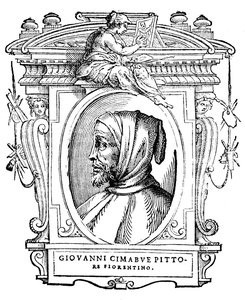
      § 4The artist

      シマブエ

      シマブエ

      1240 - 1302, イタリア

      Quick facts about シマブエ

      • Artistic Movement Or Style: ビザンチン様式とルネサンス様式
      • Artists Or Movements Influenced By This Artist: ['ジョットト・ディ・ボンドネ']
      • Artists Who Influenced This Artist: ['ギウント・ピサノ」「コッポ・ディ・マルコバルド']
      • Date Of Death: 1302年
      • Full Name: Giovanni Cimabue
      • Nationality: イタリア人
      • Notable Artworks: ['マエストラ」「十字架」「イエス・キリストの鞭打ち']
      • Place Of Birth: フィレンツェ、イタリア

      アーティストについて

      Cimabue: Grandfather of the Italian Renaissance

      Giovanni Cimabue, born Cenni di Pepo around 1240 in Florence, stands as a monumental figure—a bridge between the established artistic traditions of the Byzantine world and the burgeoning innovations that would define the Italian Renaissance. His life, though partially obscured by time and romanticized accounts – most notably those penned by Giorgio Vasari centuries later – marks an undeniable turning point in Western art history. Cimabue wasn’t simply a painter; he was a courageous innovator who dared to subtly challenge artistic conventions, laying the groundwork for the revolutionary changes that would soon sweep across Italy. Even his nickname, believed to mean “bull-headed,” hints at a strong will and perhaps a rebellious spirit—qualities demonstrably present in his willingness to experiment with form and expression. He represents a crucial moment where art began to shift from being solely devotional imagery towards something more humanistic and emotionally resonant.

      Early Influences and Artistic Development

      Initially immersed in the Italo-Byzantine style prevalent throughout Florence, Cimabue’s early work adhered closely to established aesthetic principles: flattened figures adorned with shimmering gold leaf, symbolic rather than realistic depictions of space, and a profound focus on religious iconography. However, even within these constraints, a nascent desire for naturalism began to emerge. He wasn't content merely replicating existing forms; he sought to imbue his paintings with a greater sense of life and emotional depth. While the precise nature of his early training remains debated, it’s likely he honed his skills within Florentine workshops, absorbing the techniques and influences of the time while simultaneously developing his own unique artistic voice. The Byzantine style, characterized by its formality and spiritual focus, provided him with a solid foundation, but Cimabue began to subtly introduce elements that would foreshadow the coming Renaissance—a greater attention to volume, more expressive facial features, and a nascent understanding of spatial relationships. This wasn’t a sudden break from tradition, but rather a gradual evolution, a delicate balancing act between honoring the past and embracing new possibilities.

      Masterpieces and Artistic Innovations

      Cimabue's legacy is cemented through a series of breathtaking works that showcase his evolving style. The *Maestà* (Louvre), originally created for the Church of San Francesco in Pisa, stands as one of his most celebrated masterpieces. This monumental altarpiece exemplifies his mastery of composition and use of color, while simultaneously hinting at the shift away from rigid Byzantine conventions. The figures, though still possessing a degree of formality, exhibit a newfound sense of volume and presence. The *Crucifixion* (San Domenico, Arezzo), dating around 1270, is particularly significant as an early demonstration of his departure from strict Byzantine norms. Here, the proportions are more realistic, and the emotional weight of the scene is palpable—a stark contrast to the often-distant depictions found in earlier religious art. Further evidence of Cimabue’s innovative spirit can be seen in works like the *Flagellation of Christ* (Frick Collection), generally attributed to his workshop. This complex composition reveals an evolving understanding of perspective and spatial relationships, showcasing a growing interest in creating more immersive and believable scenes. His contributions weren't limited to panel paintings; Cimabue also excelled as a mosaicist, contributing significantly to the decoration of the Baptistery of Florence—though these mosaics have unfortunately suffered from deterioration over time.

      A Pivotal Teacher: Giotto and Beyond

      Perhaps Cimabue’s most enduring legacy lies in his role as the teacher of Giotto di Bondone. While historical accounts vary regarding the exact nature of their relationship, it is widely accepted that Giotto received crucial training under Cimabue's guidance. However, Giotto would ultimately surpass his master, revolutionizing Italian painting with an even more radical embrace of naturalism and emotional realism. It’s a testament to Cimabue’s skill as a teacher that he fostered such talent, even knowing it might eclipse his own achievements. The story, often recounted by Vasari, of Giotto playfully painting a fly on Cimabue's face speaks volumes about the dynamic between master and pupil—a playful rivalry that ultimately pushed both artists to greater heights. Cimabue’s influence extended beyond Giotto, impacting numerous other artists of the period. He challenged the artistic norms of his time, demonstrating that art could be more than just religious symbolism; it could also reflect human emotion and experience. His willingness to experiment with form, proportion, and expression paved the way for the innovations of the Renaissance, establishing him as a crucial transitional figure in the history of Western art.

      Enduring Significance

      Cimabue passed away in 1302 in Pisa, leaving behind a body of work that continues to captivate and inspire. Despite his significant contributions, details surrounding his later life remain scarce. However, Cimabue’s artistic legacy resonates powerfully through the works of his students and the evolution of Italian art. He represents a crucial step in the development of Western painting, moving away from the stylized conventions of the Byzantine era towards a more humanistic and naturalistic approach. His paintings are not merely historical artifacts; they are windows into a pivotal moment in artistic history—a time when artists began to question established norms and explore new possibilities. He was a pioneer, a visionary who dared to challenge the status quo and lay the foundations for the artistic brilliance that would define the Renaissance. Cimabue’s work reminds us that even within tradition, there is always room for innovation, and that true artistry lies in the courage to push boundaries and explore new horizons.

      § 5Comparanda

      § 6Questions

      作品情報

      • Dimensions: 336 x 267 cm
      • Movement: Late Medieval Art
      • Artistic style: Byzantine-influenced
      • Year: 1268-71
      • Subject or theme: Religious iconography
      • Artist: Cimabue

      アート・クイズ

      各質問の正解は1つだけです。

      問題 1:
      In which Italian basilica is Cimabue's Crucifix housed?
      問題 2:
      What medium did Cimabue use to create this artwork?
      問題 3:
      Which two figures are depicted alongside Jesus in the painting?
      問題 4:
      According to the text, what was Cimabue's nickname?
      問題 5:
      What is the approximate size of the Crucifix?

      § 7Cite this entry

      AllPaintingsStore.com, “シマブエ, Crucifix (1268)”, https://allpaintingsstore.com/ja/art/cimabue-crucifix-8Y36VU-en/ArtistReproduction/ (accessed 2 10月 2026).

      § 8The reproduction

      手描き油彩複製画

      当社のアーティストが、お客様のご希望のサイズと額縁に合わせて、キャンバスに手描きで制作する油彩画です。 ( プリント版に切り替え デジタル画像販売へ切り替え)

      It is specified on the order sheet in the margin; the present state of that sheet reads as follows.

      Crucifix

      再現技法

      複製画サイズ一覧

      -

      厳選された熟練アーティスト

      より細部までこだわった表現、洗練された技術、そして十分な制作時間

      -

      複製画用額装

      -

      -

      いずれかの辺が105 cm(約41インチ)を超えるアートワークまたは複製画の場合、フレームは分解されたキットの状態でお届けいたします。この方法は、輸送中の破損を防ぎ、安全に配送するために採用しております。

      組み立てには専門知識が必要です(DIY用製品ではありません)。
      本キットは、経験豊富なプロの額装師が、木工用ボンド(別売)、キャンバス用プライヤー、およびボンドの乾燥時に桟を直角に保持するためのクランプを使用して、組み立ておよびキャンバスの張り作業を行う必要があります。不適切な組み立てやキャンバスの張りの不均一は、作品に永久的な損傷を与える恐れがあり、弊社の保証対象外となります。

      • すべての無垢材のパーツが含まれており、組み立てに最適なサイズに正確にカットされています。

      • 付属のネジを使用し、角の接合部には別途木工用ボンドをご用意ください(ボンドは付属しておりません)。ボンドは額装業者様にてご手配をお願いいたします。

      • プロ仕様の道具が必要ですが、キットには含まれていません:キャンバス用ストレッチングプライヤー(テンショナー)、および接着剤が乾燥するまで木枠を直角に固定するためのクランプ。

      重要:
      コーナーの接合部には木工用ボンドが必要です。また、ボンドが完全に乾くまでクランプでバーを固定しておく必要があり、組み立てたフレームにキャンバスを張るにはキャンバス用ストレッチングプライヤーが必要となります。これらの道具はキットに含まれておりません。このサイズをご注文される前に、経験豊富なプロの額装師(フライマー)の手配をお願いいたします。

      銘板

      -

      -

      保護用ワニス

      光沢ワニス(色彩を鮮やかに引き立て、光や湿気から保護します)

      -

      作品をカスタマイズ

      カスタマイズの例:顔をお客様の写真に差し替える、ペットを追加する(例:猫を犬に変更)、背景に隠しメッセージを入れる、背景の風景や要素を変更する。

      -

      お急ぎ便

      世界中への配送()は、通常の5週間ではなく、3〜4週間でお届けいたします。(30 10月)。品質には一切の妥協を許しません。

      -

      お急ぎ便

      世界中への配送()は、5週間ほどでお届けします。(6 11月)。

      送料込

      合計金額

      ¥ 40742

      Included with every order

      • 世界中へ無料エクスプレス配送
      • 高品質なリネンキャンバス
      • 配送時完全保険付
      • 関税・輸入税の払い戻し保証
      • 忠実な色彩再現の保証
      • 100日間返品保証(製造上の欠陥がある場合のみ)
      • 100% 全額返金保証
      • まとめ買い割引のご案内
      Order sheet