

.

§ 1Catalogue data
§ 2Abstract
アーティストの略歴
Explore the serene landscapes of Cornelius Decker (1623-1678), a Dutch Golden Age painter known for idyllic river scenes, cottages, and figures in nature. Discover his captivating works!
.
Explore the serene landscapes of Cornelius Decker (1623-1678), a Dutch Golden Age painter known for idyllic river scenes, cottages, and figures in nature. Discover his captivating works!
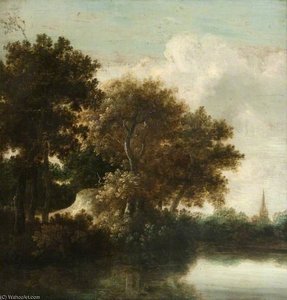
1623 - 1678
In the golden light of the seventeenth century, amidst the bustling artistic fervor of Haarlem, the works of Cornelius Gerritsz. Decker emerged as a quiet sanctuary for the soul. A master of the Dutch Golden Age, Decker possessed a rare ability to capture the profound stillness of the natural world, transforming simple river landscapes and rural vistas into poetic meditations on tranquility. While the biographical shadows surrounding his early years remain somewhat elusive, we know him to have been a vital presence in the Haarlem artistic community, a painter whose brushstrokes breathed life into the atmospheric textures of the Dutch countryside.
Decker’s artistic journey was deeply rooted in the prestigious traditions of his era. He sought mastery under the guidance of Gerrit Claesz Bleker, a respected figure who passed down the stylistic legacies of landscape giants like Jacob van Ruisdael and Salomon van Ruysdael. This lineage is evident in Decker’s sophisticated use of pyramidal compositions and his command over muted, earthy palettes that evoke the soft, shifting light of the Low Countries. His entry into the Haarlem Guild of St. Luke in 1643 marked his formal ascent into the professional elite, a milestone that allowed him to engage with the most significant artistic currents of his time.
To gaze upon a Decker landscape is to enter a world where time seems to decelerate. His canvases often feature winding rivers, sturdy bridges, and humble cottages, all rendered with an exquisite attention to atmospheric perspective. He did not merely paint scenery; he painted the very air that hangs over a summer meadow or a misty riverbank. Through meticulous detail and a harmonious blend of observation and imagination, Decker achieved a sense of grandeur within the seemingly ordinary. His work often serves as a window into the pastoral rhythms of Dutch life, where the movement of a small boat or the presence of distant figures adds a layer of human narrative to the vastness of nature.
The brilliance of his compositions was frequently enhanced through the art of collaboration. Decker had the remarkable ability to integrate staffage—the small, lively figures that populate his scenes—into his landscapes with seamless grace. He worked alongside contemporaries such as Adriaen van Ostade, Philips Wouwerman, and Johannes Lingelbach, whose contributions of peasants, travelers, or animals provided a dynamic counterpoint to his serene environments. These collaborations highlight the interconnectedness of the Haarlem school, where individual talents merged to create a collective vision of Dutch prosperity and natural beauty.
Though history occasionally overlooks the more subtle masters in favor of the more dramatic, the significance of Cornelius Decker remains undiminished for those who seek the quietude of the Dutch tradition. His ability to imitate and evolve from the styles of Jan Wynants and Wouwerman while maintaining his own distinctive, tranquil voice allowed him to leave an indelible mark on the landscape genre. He captured a specific moment in history—a period of profound stability and aesthetic refinement—ensuring that the peaceful essence of the seventeenth-century Dutch landscape would endure through the centuries.
Today, Decker’s legacy lives on in the museums and collections that house his masterpieces, where his river scenes continue to offer a sense of peace to the modern viewer. His work stands as a testament to the power of the landscape to convey complex human emotions, from the humble contentment of rural life to the sublime majesty of the natural world. Through his eyes, we are reminded of the beauty found in the stillness, and the enduring strength of the Dutch Golden Age spirit.

AllPaintingsStore.com, “Cornelius Decker, Vid Kvarnbäcken”, https://allpaintingsstore.com/ja/art/cornelius-decker-vid-kvarnbacken-9FTGDJ-en/ArtistReproduction/ (accessed 5 10月 2026).
当社のアーティストが、ご希望のサイズと額縁に合わせてキャンバスに手描きで制作する、オーダーメイドの油彩画です。 ( プリント版に切り替え デジタル画像販売へ切り替え)
It is specified on the order sheet in the margin; the present state of that sheet reads as follows.
Vid Kvarnbäcken
複製画サイズ一覧
より細部までこだわった表現、洗練された技術、そして十分な制作時間
-
いずれかの辺が105 cm(約41インチ)を超えるアートワークまたは複製画の場合、フレームは分解されたキットの状態でお届けいたします。この方法は、輸送中の破損を防ぎ、安全に配送するために採用しております。
組み立てには専門知識が必要です(DIY用製品ではありません)。
本キットは、経験豊富なプロの額装師が、木工用ボンド(別売)、キャンバス用プライヤー、およびボンドの乾燥時に桟を直角に保持するためのクランプを使用して、組み立ておよびキャンバスの張り作業を行う必要があります。不適切な組み立てやキャンバスの張りの不均一は、作品に永久的な損傷を与える恐れがあり、弊社の保証対象外となります。
すべての無垢材のパーツが含まれており、組み立てに最適なサイズに正確にカットされています。
付属のネジを使用し、角の接合部には別途木工用ボンドをご用意ください(ボンドは付属しておりません)。ボンドは額装業者様にてご手配をお願いいたします。
プロ仕様の道具が必要ですが、キットには含まれていません:キャンバス用ストレッチングプライヤー(テンショナー)、および接着剤が乾燥するまで木枠を直角に固定するためのクランプ。
重要:
コーナーの接合部には木工用ボンドが必要です。また、ボンドが完全に乾くまでクランプでバーを固定しておく必要があり、組み立てたフレームにキャンバスを張るにはキャンバス用ストレッチングプライヤーが必要となります。これらの道具はキットに含まれておりません。このサイズをご注文される前に、経験豊富なプロの額装師(フライマー)の手配をお願いいたします。
-
光沢ワニス(色彩を鮮やかに引き立て、光や湿気から保護します)
カスタマイズの例:顔をお客様の写真に差し替える、ペットを追加する(例:猫を犬に変更)、背景に隠しメッセージを入れる、背景の風景や要素を変更する。
世界中への配送()は、通常の5週間ではなく、3〜4週間でお届けいたします。(3 11月)。品質には一切の妥協を許しません。
世界中への配送()は、5週間ほどでお届けします。(10 11月)。
Included with every order
 詳細を表示
詳細を表示


 いずれかの辺が105 cm(約41インチ)を超えるアートワークまたは複製画の場合、フレームは分解されたキットの状態でお届けいたします。この方法は、輸送中の破損を防ぎ、安全に配送するために採用しております。


