


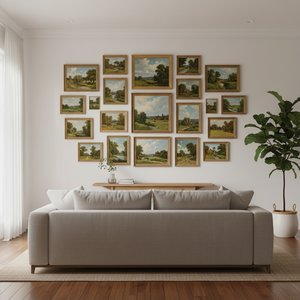
 設置イメージを確認
 送る
送る シェア
シェア
 詳細情報
詳細情報 ガイドを表示

 画像をダウンロード
 似ている作品
 X線調査
X線調査 スライドショー
 Q&A
Q&A 統計情報
統計情報Disillusion
 Acrylic On Canvas
- WallArt
- Romanticism
 1851
1851 65.0 x 72.0 cm
 エルミタージュ美術館
 続きを読む
続きを読む
ジークレー/アートプリント
スピーディーな制作と多彩な仕上げオプションが魅力の、ミュージアムクオリティなジークレー・キャンバスプリント。 ( 手描きの複製画を注文する デジタル画像販売へ切り替え)




P118B ¥10

P118H ¥10

P118W ¥10

P438Z ¥10

P508JH ¥12

P508YH ¥12

P805H ¥10

P805Z ¥10

P919BZ ¥10

P919G ¥10

P919XJ ¥10

P959ZH ¥10

P968JZ ¥12

W106C ¥8

W218G ¥10

W218JH ¥8

W218Y ¥10

W307PJ ¥10

W316G ¥10

W316PJ ¥8

W316Y ¥10

W398PJ ¥8

W4111J ¥10

W500HY ¥15

W500JH ¥15

W692G ¥12

W849H ¥8

W940BG ¥15

W953PJ ¥8




作品のオリジナル比率に合わせた、当店の規定サイズからお選びください。

額縁や壁のスペースに合わせて、ご希望の幅と高さを入力してください。プリントはカットすることは可能ですが、元の画像より大きくすることはできないため、異なる比率のサイズを選択された場合は、画像の一部が欠けることになります。印刷を開始する前に、内容を確認していただくためのデジタルモックアップをお送りいたします。このページに表示されている画像は、実際のカット後の状態を示すものではありません。実際の仕上がりはモックアップにてご確認ください。


 ガラスオプションは、110cm未満のサイズでのみご利用いただけます。

Disillusion
ジークレー/アートプリント
複製画サイズ一覧
-


合計金額
¥ 10106
The Weight of Disappointment: A Portrait of Édouard Hamman’s “Disillusion”
Édouard Hamman's "Disillusion," painted in 1851, isn’t merely a portrait; it’s a carefully constructed tableau of melancholy and quiet contemplation. The painting immediately draws the eye to its central figure – a woman seated on the ground, her hands clasped together before her as if shielding herself from an unseen sorrow. Her posture, subtly downturned, speaks volumes without resorting to overt drama. The landscape behind her, rendered in muted earth tones and punctuated by the distant suggestion of mountains and water, provides a stark contrast to the woman’s internal state; it's a beautiful backdrop that ironically underscores her isolation. The deliberate use of color – predominantly browns, grays, and the vibrant splash of her red dress – creates a visual tension between hope and despair, mirroring the emotional complexity at the heart of the work.
A Victorian Interior: Context and Artistic Influences
To understand “Disillusion,” one must consider the broader artistic climate of mid-19th century Europe. The painting emerged during a period of significant social and intellectual upheaval, marked by the rise of industrialization, the questioning of traditional values, and a growing sense of disillusionment with established institutions. Hamman, deeply influenced by the academic tradition yet subtly pushing against its rigid boundaries, captured this prevailing mood with remarkable sensitivity. His training at the Royal Academy in Antwerp instilled in him a mastery of classical techniques – evident in the careful rendering of the woman’s features and the meticulous detail of the landscape – while his exposure to artists like Nicaise de Keyser and Hendrik Leys likely fostered an appreciation for realism and psychological depth. The painting's subject matter, a solitary figure grappling with inner turmoil, aligns perfectly with the Romantic sensibility that was beginning to challenge the Enlightenment’s emphasis on reason and objectivity.
Symbolism in Detail: Dress, Gesture, and Composition
The red dress worn by the woman is a crucial element of the composition. It's not simply a decorative detail; it acts as a beacon of vibrancy within an otherwise subdued palette, suggesting a lingering spark of passion or perhaps even defiance against the prevailing sense of despair. Her hands clasped together are a universal gesture of vulnerability and introspection – a plea for solace, a shield against pain. The positioning of her body, slightly angled towards the viewer, invites us into her private world, encouraging empathy and contemplation. The composition itself is carefully balanced, with the woman occupying the central space while the landscape provides a sense of depth and perspective. This deliberate arrangement reinforces the feeling that she is both isolated within her own thoughts and connected to something larger than herself – perhaps the enduring beauty of nature or the shared human experience of sorrow.
Emotional Resonance: A Portrait of Inner Turmoil
"Disillusion" isn't a painting that shouts its message; it whispers it through subtle gestures, carefully chosen colors, and a profound sense of quietude. It’s a portrait not just of a woman, but of the human condition – the inevitable experience of disappointment, loss, and the struggle to find meaning in a world often marked by uncertainty. The painting's enduring power lies in its ability to evoke a deep emotional response, prompting viewers to reflect on their own experiences of disillusionment and the ways in which they cope with adversity. It’s a poignant reminder that even in moments of profound sadness, there can be beauty, grace, and an invitation to contemplate the complexities of life.
よくあるご質問
Edouard Hamman作「Disillusion」の形式には、どのような配置が適していますか?
Landscapeの形状を活かした「Disillusion」の複製画は、Living Roomに飾るのがおすすめです。
Edouard Hamman作「Disillusion」の色調は、鮮やかですか、それとも落ち着いていますか?
「Disillusion」のパレットは、彩度がBalanced Softです。
「Disillusion」は、どのアーティストの作品とされていますか?
「Disillusion」を手がけたアーティストはEdouard Hammanです。この作品はEdouard Hammanの名でカタログに登録されています。
関連作品


アーティストについて
Édouard Hamman: Life and Legacy
Early Life and Education
Édouard Jean Conrad Hamman (1819-1888) was a Belgian painter and engraver who distinguished himself through his portrayals of scenes from the lives of famous artists, scholars, and members of the nobility. Born in Ostend, Belgium, he came from a prosperous family; his father served as town receiver and secretary of the chamber of commerce, also establishing a fund to aid needy fishermen and their families.
Hamman’s artistic journey began early, reportedly studying under François-Antoine Bossuet at a young age. He formally enrolled at the Royal Academy of Fine Arts in Antwerp during the school year 1837/38. Further refining his skills, he became a private student in the studio of Nicaise de Keyser and is believed to have been influenced by Hendrik Leys, though Leys did not traditionally take on students.
Artistic Development and Influences
Hamman’s debut came at the Ghent Salon of 1838 with an “interior scene.” Exposure to other artists there led to his adoption of elements from the style of Louis Gallait. His breakthrough occurred at the Brussels Salon of 1842, securing him a commission for a mural – *The Triumphant Entry of the Archduke Albert and Isabella to Ostend in 1604* – for the town hall. Sadly, this work was lost during World War II.
Alongside painting, Hamman contributed illustrations to books published by J.E. Buschmann. In 1846, he moved to Paris to study at the École des Beaux-Arts, where he admired the works of Joseph-Nicolas Robert-Fleury and Thomas Couture. A traditional study trip to Italy in 1849 further broadened his artistic horizons.
Major Achievements and Recognition
Hamman achieved considerable fame in France. His work garnered favor with Napoleon III and Empress Eugénie, culminating in the French government’s purchase of *The Education of Charles V* for 4,000 francs in 1863.
Other significant commissions included six paintings of Italian history commissioned by Victor Emmanuel II, and a celebrated series depicting “Celebrated Composers,” reproductions of which remain popular today. Later in his career, he explored genre painting and portraiture, notably creating a portrait of King Norodom of Cambodia, earning him recognition in that country.
Style and Themes
- Historical Scenes: Hamman frequently depicted significant historical events with meticulous detail.
- Genre Painting: He captured everyday life and scenes from the period.
- Portraiture: His portraits often featured prominent figures, showcasing his skill in capturing likeness and character.
Legacy and Historical Significance
Hamman’s work reflects the academic traditions of 19th-century painting, emphasizing skillful technique and narrative storytelling. He successfully navigated artistic circles in both Belgium and France, gaining patronage from influential figures.
His son, Édouard Michel Ferdinand Hamman (1854-1952), also became a landscape painter of note, continuing the family’s artistic legacy. Hamman's paintings offer valuable insights into the cultural and social life of his time, solidifying his place as a notable figure in Belgian and French art history.
Awards
In 1885, Hamman was honored with the title of Officer in the Order of Leopold, recognizing his contributions to the arts.

Edouard Hamman
1819 - 1888 , Belgium
アーティスト情報
- Name: Édouard Hamman
- Movement: Academic art
- Birth Date: 1819
- Death Date: 1888
- Influenced: Édouard Michel Ferdinand Hamman
- Birth Place: Ostend, Belgium
- Nationality: Belgian
- Date Of Birth: 1819
- Date Of Death: 1888
- Influenced By: Louis Gallait, Joseph-Nicolas Robert-Fleury, Thomas Couture, Nicaise de Keyser
- Notable Works: Education of Charles V, series "Celebrated Composers"
- Place Of Birth: Ostend, Belgium
関連記事

Evocations of Place: A Historical Journey Through Landscape Art
Explore the rich history of landscape art with AllPaintingsStore. Discover renowned artists, movements like Impressionism & Romanticism, and expert guidance for collecting timeless pieces. Find your perfect serene escape today!

Serene Visions: Exploring Themes of Tranquility in Art History & Contemporary Practice
Explore the history of serene landscape art & discover artists who evoke tranquility. Find the perfect calming artwork for your home with expert guidance from AllPaintingsStore.

Crimson Threads of Narrative: Exploring Symbolism & Representation in Artworks Featuring the Red Dress
Explore the rich symbolism of the red dress in art history! From ancient power displays to iconic portraits like Cézanne’s 'Madame Cezanne', discover the cultural and artistic significance behind this captivating color. Expert analysis & insights.
ジョン・コンスタブルの傑作25選:英国風景画の巨匠が描く自然と光の詩 | AllPaintingsStore
ジョン・コンスタブルの傑作25選。英国風景画の巨匠が描く自然と光の詩の世界へ。ロマン主義を代表する絵画、デダム・ヴェールやヘイ・ウェインなど、AllPaintingsStoreで高品質なアートプリントをお楽しみください。インテリアに深みと感動を。コレクションはこちら。

ロマン派ランドスケープ:時代を彩る巨匠の10選|アートとインテリアの世界
ロマン派絵画の時代を彩る10選。巨匠たちの風景が織りなす感動の世界へ。ターナー、ルーベンスなど、名作の裏話と高精細複製でアートをお部屋に。AllPaintingsStore.comで至福のアート体験を。

