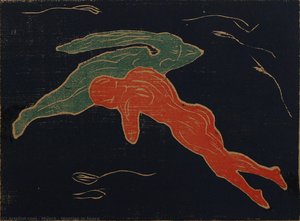
1909. Wash.

§ 1Catalogue data


§ 2Abstract
コレクション詳細
A monochrome masterpiece of profound anxiety and isolation, Edvard Munchs 1909 painting Chemistry uses ethereal light to explore human vulnerability, inviting you to experience this hauntingly beautiful work of Expressionism.
 続きを読む
続きを読む
アーティストプロフィール
エドヴァルド・ムンク(1863-1944):不安や死をテーマにした表現主義の先駆者。代表作「叫び」は、現代人の心の葛藤を象徴する不朽の名画です。愛、喪失、精神的な苦悩を描いた作品を通して、20世紀美術に大きな影響を与えました。
§ 3Commentary
The Alchemy of Isolation: Unveiling Munch’s Chemistry
In the quiet, unsettling depths of Edvard Munch’s 1909 masterpiece, “Chemistry,” we encounter more than just a painted scene; we step into a visceral landscape of the human psyche. This monochrome triumph serves as a haunting window into the soul, capturing the profound psychological anxieties that defined the Expressionist movement. The composition centers on two nude figures positioned before a table cluttered with glassware and bottles, yet despite their physical proximity, an invisible, palpable distance separates them. There is a heavy, breathless quality to the air within the frame, as if the very atmosphere is thick with unspoken dread. Through his masterful command of light and shadow, Munch invites us to witness a moment of profound vulnerability, where the boundaries between human connection and existential solitude begin to dissolve.
The technique employed in “Chemistry” is nothing short of ethereal. Eschewing the vibrant palettes often associated with later modernism, Munch utilizes thin washes of pigment applied to the canvas to create a diffused, ghostly light that seems to emanate from within the work itself. This deliberate lack of color is not merely an aesthetic choice but a powerful narrative tool; it strips away the distractions of the physical world to prioritize emotional impact and psychological truth. The monochromatic tones lend the piece a timeless, somber quality, making it an extraordinary focal point for any sophisticated interior. For the collector or designer, this artwork offers a profound sense of gravity and intellectual depth, acting as a meditative anchor in a room that demands contemplation.
Symbolism and the Shadows of the Mind
Every element within the frame of “Chemistry” is steeped in symbolic resonance, reflecting the turbulent inner life of the artist. The bottles and glassware scattered across the table are far more than mere still-life objects; they serve as potent metaphors for potential poisons—the toxic anxieties and intrusive thoughts that threaten to consume the figures. Amidst this atmosphere of unease, Munch provides a flicker of fragile hope through the presence of birds perched above the man’s head and in the upper periphery. These small, delicate creatures represent the elusive possibility of transcendence amidst despair, a light piercing through the gloom of the human condition.
To understand the weight of this piece, one must look to the historical context of Munch’s own life. Painted during a period of intense personal crisis, the work mirrors his struggles with mental health and the shadows cast by his family's history of illness and tragedy. As European intellectual circles began to grapple with the burgeoning psychoanalytic theories of Sigmund Freud, Munch was already translating these explorations of the subconscious onto his canvases. “Chemistry” is a testament to this era of discovery—a visual exploration of the "chemistry" between fear, love, and the unknown. It remains an evocative choice for those who appreciate art that does not merely decorate a space, but speaks to the very essence of what it means to be human.
よくあるご質問
ムンク作「Chemistry」は、お部屋にどのような雰囲気をもたらしてくれるでしょうか?
Dramaticな雰囲気を持つ「Chemistry」は、Restaurantに飾るのがおすすめです。
ムンク作「Chemistry」は、どの時代に制作されたものですか?
「Chemistry」は、Modern時代に制作されたものです。
「Chemistry」のガイドはどこにありますか?
「Chemistry」のガイドは、作品のガイドページです。このページは印刷可能なファクトシートとなっており、作品のキャプション、クレジット、および詳細情報(作家名、制作年、技法、原寸大、所蔵)をまとめてご確認いただけます。


 プリント版に切り替え


 いずれかの辺が105 cm(約41インチ)を超えるアートワークまたは複製画の場合、フレームは分解されたキットの状態でお届けいたします。この方法は、輸送中の破損を防ぎ、安全に配送するために採用しております。