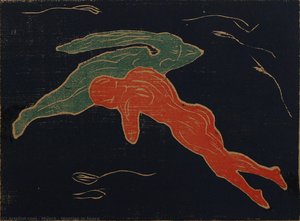
1902. Oil.

§ 1カタログデータ


§ 2抽象
作品解説
Experience Edvard Munch's haunting 'Fertility II,' a powerful Expressionist painting exploring themes of life, nature, and the human condition. A masterpiece to own.
 詳細を表示
詳細を表示
§ 3解説
Fertility II: A Descent into Emotional Landscape
Edvard Munch’s “Fertility II,” completed in 1902, stands as a cornerstone of Expressionism—a movement that sought to convey inner psychological states rather than objective reality. Held at the Von Der Heydt Museum in Wuppertal, Germany, this oil on canvas transcends mere depiction; it plunges viewers into a realm of profound unease and contemplation.
- Subject Matter: The painting portrays two figures seated beneath a solitary tree within an expansive field. A woman holds a basket, while a man sits beside her, suggesting a moment of quiet companionship amidst the natural world.
- Style & Technique: Munch’s masterful use of Expressionist technique is immediately apparent. Bold brushstrokes dominate the canvas, creating textured surfaces that convey movement and dynamism. The artist eschews meticulous realism in favor of conveying emotion—a palpable tension radiating from the scene.
- Color Palette: Dominated by muted browns and greens, punctuated by splashes of crimson – notably in the woman’s dress – Munch employs color symbolically. These hues contribute to the overall atmosphere of melancholy and foreshadowing impending darkness.
Symbolism Beyond Representation
More than just a visual record of a pastoral setting, “Fertility II” is laden with symbolic significance. The tree itself represents resilience and connection to nature—a fragile bastion against encroaching anxieties. However, its isolation underscores the vulnerability inherent in human relationships. The apples scattered across the canvas serve as potent emblems of temptation and decay, hinting at the darker side of existence.
- The Apples: These fruits symbolize both beauty and mortality—a reminder that even amidst idyllic landscapes, life is inevitably shadowed by death’s inevitability.
- Emotional Resonance: Munch's intention was to capture not just what he saw but how he *felt*. The painting embodies the pervasive sense of dread and melancholy characteristic of his oeuvre, reflecting his own personal struggles with illness and loss.
Historical Context & Artistic Legacy
"Fertility II" emerged during a period of intense artistic experimentation—the burgeoning Expressionist movement was challenging conventional aesthetic norms. Munch’s work aligns closely with the broader philosophical currents of the time, grappling with themes of existential angst and the human condition. It anticipates many of the stylistic innovations that would define subsequent art movements.
- Expressionism's Influence: Munch’s unflinching portrayal of emotion paved the way for artists like Ernst Ludwig Kirchner and Emil Nolde, who similarly explored psychological landscapes in their paintings.
- A Timeless Exploration: “Fertility II” continues to resonate with audiences today because it speaks directly to universal anxieties about life, death, and the complexities of human connection—a testament to Munch’s enduring artistic vision.
Discover a breathtaking reproduction of Edvard Munch's "Fertility II" at AllPaintingsStore.com – where artistry meets exceptional quality. Explore more masterpieces by Munch: Edvard Munch
Q&A
エドヴァルド・ムンク作「Fertility」は、明るい印象の作品ですか、それとも暗い印象の作品ですか?
全体として、「Fertility」の明るさはbalancedと記録されています。知覚的な明るさとは、作品がどの程度明るく、あるいは暗く感じられるかを表すものです。
エドヴァルド・ムンク作「Fertility」の制作年代と様式について教えてください。
「Fertility」は1902年に制作された、Expressionismの作品です。
「Fertility」の詳細を確認することはできますか?
エドヴァルド・ムンク作「Fertility」のX線ビューは、作品のX線解析ページでご覧いただけます。11層の光学レイヤーを通じて画像をインタラクティブに解析できる、詳細な検証機能です。


 プリント版に切り替え


 いずれかの辺が105 cm(約41インチ)を超えるアートワークまたは複製画の場合、フレームは分解されたキットの状態でお届けいたします。この方法は、輸送中の破損を防ぎ、安全に配送するために採用しております。