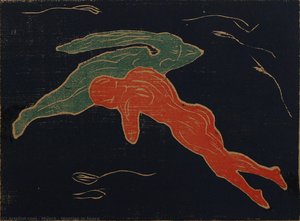
1895. Acrylic On Canvas.

§ 1カタログデータ


§ 2抽象
作品解説
 詳細を表示
詳細を表示
アーティストの略歴
エドヴァルド・ムンク(1863-1944):不安や死をテーマにした表現主義の先駆者。代表作「叫び」は、現代人の心の葛藤を象徴する不朽の名画です。愛、喪失、精神的な苦悩を描いた作品を通して、20世紀美術に大きな影響を与えました。
§ 3解説
Introduction to Edvard Munch
Edvard Munch (1863-1944) was a Norwegian painter, printmaker, and draughtsman who is best known for his hauntingly emotional depictions of human anxiety and despair. A pioneer in the Expressionist movement, Munch's work often featured distorted figures, jarring colors, and an emphasis on mood over detail. His unique style would go on to influence generations of artists, including notable names like Ernst Ludwig Kirchner, Max Beckmann, and Francisco Goya.The Self-Portrait: A Brief Overview
Munch's Self-Portrait, painted in 1895, is a striking example of the artist's ability to convey complex emotions through his work. The painting features Munch himself, gazing out at the viewer with an intense, almost pained expression. His face is framed by long, dark hair and a high collar, drawing attention to his eyes and mouth.Interpreting the Self-Portrait
At first glance, Munch's Self-Portrait may appear to be a simple depiction of the artist himself. However, upon closer examination, it becomes clear that this painting is anything but straightforward. The distorted features and intense colors suggest an underlying turmoil, as if Munch is grappling with some inner demon or existential crisis. This interpretation is further supported by the fact that Munch was deeply influenced by the ideas of Friedrich Nietzsche, who famously wrote about the "death of God" and the resulting void in human existence. Munch's work often reflects this sense of nihilism, as well as a pervasive feeling of loneliness and isolation.Munch's Legacy
Today, Edvard Munch's Self-Portrait is considered a masterpiece of Expressionist art, and it continues to inspire artists and collectors alike. At AllPaintingsStore.com, we are proud to offer high-quality reproductions of this iconic painting, allowing art lovers everywhere to experience the power and emotion of Munch's work in their own homes.Conclusion
In conclusion, Edvard Munch's Self-Portrait is a powerful example of Expressionist art that continues to captivate audiences more than a century after it was first painted. Through his unique style and unflinching exploration of the human condition, Munch created a work that speaks to the deepest fears and desires of the human soul. To learn more about Edvard Munch and his other masterpieces, visit our website at AllPaintingsStore.com.Q&A
Expressionist Movementにおいて、「Self-Portrait」はどの程度人気がありますか?
Expressionist Movement運動において、「Self-Portrait」はIconicの知名度を誇ります。
「Self-Portrait」のExpressionist Movementには、どの国のルーツが反映されているのでしょうか?
「Self-Portrait」は、スウェーデン出身のムンクによって、Expressionist Movementの潮流の中で制作されました。アーティストの出自は、この作品をスウェーデンの作家たちが実践したExpressionist Movementへと結びつけています。
ムンク作「Self-Portrait」の色彩構成はどのように成り立っていますか?
ムンク作「Self-Portrait」の色彩構成は、StatementなコントラストとSoftly Mixed Paletteな調和を併せ持っています。


 プリント版に切り替え


 いずれかの辺が105 cm(約41インチ)を超えるアートワークまたは複製画の場合、フレームは分解されたキットの状態でお届けいたします。この方法は、輸送中の破損を防ぎ、安全に配送するために採用しております。