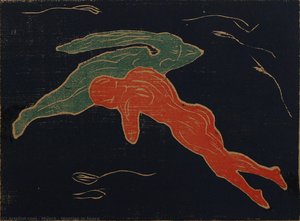
Acrylic On Canvas.

§ 1Catalogue data

§ 2Abstract
コレクション詳細
 続きを読む
続きを読む
アーティストプロフィール
エドヴァルド・ムンク(1863-1944):不安や死をテーマにした表現主義の先駆者。代表作「叫び」は、現代人の心の葛藤を象徴する不朽の名画です。愛、喪失、精神的な苦悩を描いた作品を通して、20世紀美術に大きな影響を与えました。
§ 3Commentary
A Window into Melancholy: Exploring Edvard Munch’s “Untitled”
Edvard Munch’s “Untitled,” created around 1893, stands as a cornerstone of Expressionism and arguably one of the most recognizable images in modern art. More than just a depiction of a man beneath a tree, it's a visceral portrayal of psychological distress—a landscape infused with anxiety and grief that continues to resonate powerfully with audiences today.
The painting’s stark simplicity belies its profound emotional depth. Munch employs a muted palette dominated by earthy tones – browns, ochres, and grays – mirroring the desolate atmosphere he sought to convey. Thick brushstrokes contribute to a textured surface that captures the turbulent emotions simmering beneath the surface of the scene. This technique—characteristic of Expressionist painters—prioritized conveying feeling over precise representation.
Symbolism Rooted in Personal Trauma
Munch’s artistic vision stemmed directly from his own experiences with illness and loss, notably the early deaths of his mother and sister from tuberculosis. These formative traumas fueled a preoccupation with mortality and psychological vulnerability that permeates his oeuvre. “Untitled” isn't merely a visual observation; it’s an embodiment of Munch’s internal struggle—a reflection of his profound fear of death and decay.
The central figure, positioned beneath the tree, embodies this anguish. His posture—hunched shoulders, outstretched hand—communicates vulnerability and despair. The cane symbolizes fragility and reliance on support, mirroring the artist's own precarious mental state. Above him, two birds soar against a turbulent sky, representing hope amidst darkness – yet their presence feels tenuous, almost illusory.
Historical Context: The Dawn of Expressionism
“Untitled” emerged during a period of significant artistic and intellectual upheaval—the burgeoning Expressionist movement challenged the conventions of Impressionism and championed subjective experience. Artists like Munch sought to depict inner emotions rather than external appearances, rejecting academic ideals in favor of raw honesty. This painting exemplifies the movement’s core tenets: prioritizing emotion over rational observation and utilizing bold color palettes and expressive brushstrokes to convey psychological states.
Its enduring appeal lies not only in its visual impact but also in its ability to tap into universal anxieties about existence. “Untitled” remains a haunting reminder of the human condition—a testament to Munch’s genius in transforming personal trauma into an iconic symbol of artistic innovation and emotional truth.
よくあるご質問
ムンク作「untitled (3692)」は、明るい印象の作品ですか、それとも暗い印象の作品ですか?
ムンク作「untitled (3692)」の明るさはbalanced、輝度はSoft Shadowと記録されています。
ムンク作「untitled (3692)」 の複製画は、どこに飾るのが最適でしょうか?
Portraitの形状を活かした「untitled (3692)」の複製画は、Living Roomに飾るのがおすすめです。
ムンク作「untitled (3692)」の全体的な雰囲気はどのようなものですか?
ムンク作「untitled (3692)」の全体的なムードはRomanticです。このムードは、作品が持つ全体的な雰囲気。


 プリント版に切り替え


 いずれかの辺が105 cm(約41インチ)を超えるアートワークまたは複製画の場合、フレームは分解されたキットの状態でお届けいたします。この方法は、輸送中の破損を防ぎ、安全に配送するために採用しております。