


 プレビュー
プレビュー
 プリントを購入
 シェアする
シェアする シェアする
シェアする
 詳細を見る
詳細を見る

 ダウンロード
 似ている作品
 X線調査
X線調査 スライドショー
File Cutters
 Contemporary Realism
 1917
1917 31.0 x 47.0 cm
 詳細を見る
詳細を見る




































作品のオリジナル比率に合わせた、当店の規定サイズからお選びください。

特定のフレームやスペースに合わせて、ご希望のサイズをご入力いただけます。選択されたサイズが元の画像の比率と異なる場合、アートワークをトリミングするか、手描きで要素を追加して絵画を拡張いたします。デジタルモックアップ を制作し、制作開始前にご確認(承認)をいただきます。
画面上のプレビューは、実際のトリミングや拡張を正確に反映しているものではありません。最終的な構図は、モックアップによってのみ正確にご確認いただけます。
カスタムサイズもご利用いただけますが、元の比率を維持するためには、あらかじめ用意されたリストからサイズを選択することをお勧めいたします。
ご注文後、AllPaintingsStore.com チームより詳細な指示をお送りするとともに、仕上がりイメージ(モックアップ)をご提供いたします。


 ガラスオプションは、110cm未満のサイズでのみご利用いただけます。

File Cutters
複製技法
複製画のサイズ
-


合計金額
$ 383
作品解説
Industrial Setting and Women's Roles
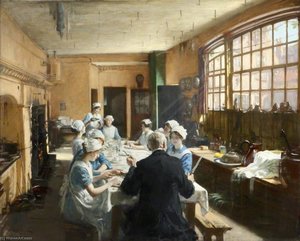
The scene depicts a group of women seated at tables with sewing machines, engaged in the production of clothing items such as dresses. The atmosphere suggests an industrial setting where teamwork and collaboration are essential. This painting highlights the significant role women played in the workforce during this period, often working in factories and contributing to the war effort. Key aspects of the painting include the attention to detail in the depiction of the sewing machines and the factory environment. The women appear focused and engaged in their tasks, demonstrating the importance of their work. For more information on industrial-themed paintings, visit Otto Friedrich Wilhelm Lietz: Industry in the Visual Arts at the Grohmann Museum.Artist and Style
Edward Frederick Skinner was a notable artist known for his contributions to the representation of industrial scenes. His style often featured detailed depictions of machinery and factory settings, as seen in "File Cutters" and other works like Coiling and Setting Springs and Making Bessemer Steel. These paintings provide a glimpse into the industrial era, showcasing the evolution of manufacturing processes.- Visit Painting by 'Edward Frederick Skinner': File Cutters to explore more about this artwork.
- Learn about the American frontier and its impact on industrial development.
The "File Cutters" by Edward Frederick Skinner is a significant artwork that highlights the importance of women's roles in the industrial era. Its detailed depiction of factory life and machinery makes it a fascinating piece for art enthusiasts and historians alike.
関連作品




アーティストの略歴
Edward Frederick Skinner: Documenting the Industrial Age
Edward Frederick Skinner (1865-1924) emerged as a prominent British painter during a period of rapid industrial expansion and fervent nationalistic fervor—the early 20th century. His artistic vision centered on capturing the gritty realities of factory life, wartime production, and the transformative impact of machinery upon society, offering viewers a visceral glimpse into an era defined by both progress and hardship. Unlike many artists of his time who favored idealized landscapes or mythological subjects, Skinner relentlessly pursued accuracy in portraying industrial environments, cementing his reputation as one of Britain’s foremost realist painters.- Early Life & Education: Born in London in 1865, Skinner received a formal artistic education at the Slade School of Fine Art, where he honed his skills under influential instructors like Frederic Leighton and Joseph Hooker. This grounding in academic tradition instilled in him a meticulous attention to detail and a commitment to mastering traditional techniques—a cornerstone of his distinctive style.
- The Industrial Landscape: Skinner’s artistic breakthrough arrived with his series of paintings depicting factories, mills, and workshops across England. He eschewed romantic embellishments, instead presenting scenes bathed in harsh sunlight, populated by laborers engaged in strenuous labor—often depicted with unflinching honesty. These canvases weren't merely representations of physical spaces; they served as powerful symbols of Britain’s industrial prowess and the pervasive influence of machinery on daily life.
- WWI Art & Propaganda: As World War I engulfed Europe, Skinner turned his considerable talent to documenting the war effort. He produced numerous paintings illustrating scenes of munitions factories, naval shipyards, and soldiers preparing for battle—works commissioned by the British Government as part of a concerted propaganda campaign aimed at bolstering morale and galvanizing public support.
- Technique & Style: Skinner’s artistic style was characterized by unwavering realism achieved through painstaking observation and masterful execution. He employed oil paints with exceptional precision, layering thin glazes to build up tonal gradations that conveyed the textures of brickwork, metal surfaces, and human flesh alike. His canvases possessed a remarkable luminosity—a testament to his understanding of light and color—and reflected an enduring fascination with capturing the essence of industrial labor.
- Legacy & Historical Significance: Skinner’s paintings stand as invaluable records of Britain's industrial transformation and wartime experience. They offer historians and art scholars alike a compelling window into the social, economic, and psychological landscape of the Edwardian era—a period marked by both optimism about technological advancement and apprehension regarding the human cost of progress. His unflinching portrayal of labor and machinery continues to resonate today as an enduring symbol of artistic integrity and a testament to the power of visual art to illuminate history.

edward frederick skinner
1865 - 1924
基本情報
- Artistic Movement Or Style: Realism
- Artists Or Movements Influenced By This Artist: ['Arts and Crafts Movement']
- Artists Who Influenced This Artist: ['William Morris']
- Date Of Birth: 1865
- Date Of Death: 1924
- Full Name: Edward Frederick Skinner
- Nationality: British
- Notable Artworks:
- Factory Scene I
- Coal Mine Landscape
- Place Of Birth: London, England
関連記事

エドワード・ホッパー傑作25選:アメリカの孤独と光影の世界 | AllPaintingsStore
エドワード・ホッパーの傑作25選。アメリカ絵画を代表するモダンアート、孤独と光影の世界を紐解きます。名画「Nighthawks」や「ハウス・バイ・ザ・レールロード」など、美術史に残る作品群をAllPaintingsStoreで高品質複製画としてお楽しみください。インテリアに深みを与えるアートプリントも多数。今すぐコレクションをご覧ください。

Industrial Revolution on Canvas: 10 Artworks That Define a Modern Aesthetic
Explore 10 iconic artworks capturing the Industrial Revolution’s grit & beauty. From Monet to Manet, discover realism, impressionism & powerful scenes of urban life. Find museum-quality reproductions for your home at AllPaintingsStore.com.

The Enduring Muse: Women as Subject & Symbol in Art History
Explore the rich history of women in art – from iconic muses to groundbreaking artists. Discover feminist movements, global perspectives & reclaim female narratives with AllPaintingsStore.

The Gritty Muse: Industrial Vibe as Defining Aesthetic in Modern Artwork
Explore the captivating world of industrial aesthetics in modern art. Discover key movements, influential artists & collecting insights at AllPaintingsStore.com – your source for museum-quality reproductions and expert art guidance.
Portrayals of Power & Perception: A Historical Survey of Women in Art
Explore the rich history of women in art – from iconic muses to groundbreaking artists. Discover feminist movements & reclaim female narratives with AllPaintingsStore. Expert insights for discerning collectors.



