100日間返金保証 世界中へ送料無料
449,587作品一覧 30,613アーティスト一覧 4,660美術館・博物館 32言語設定
Catalogue entry

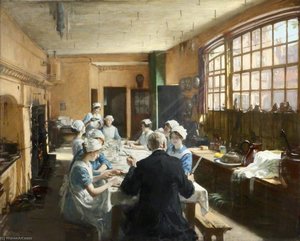
File Cutters

1917. , 31.0 x 47.0 cm.

Fig. 1. Edward Frederick Skinner, File Cutters, 1917. Shown as the reproduction you are specifying: , .

§ 1Catalogue data

サイズ
31.0 x 47.0 cm

§ 2Abstract

コレクション詳細

Explore 'File Cutters' by Edward Frederick Skinner (1917). A detailed oil painting capturing Victorian-era factory life & women’s labor. Academic realism, industrial detail. Perfect for art collectors!

アーティストプロフィール

Edward Frederick Skinner (1865-1924) was a British painter known for his realistic depictions of industrial scenes, factories, and wartime production. Explore his captivating works documenting the era's labor & machinery.

§ 3Commentary

The painting "File Cutters" by Edward Frederick Skinner is a remarkable representation of the industrial era, showcasing women working together in a factory setting. Created in 1917, this oil on canvas piece measures 31 x 47 cm and is currently housed at the Science Museum in the United Kingdom.

Industrial Setting and Women's Roles

The scene depicts a group of women seated at tables with sewing machines, engaged in the production of clothing items such as dresses. The atmosphere suggests an industrial setting where teamwork and collaboration are essential. This painting highlights the significant role women played in the workforce during this period, often working in factories and contributing to the war effort. Key aspects of the painting include the attention to detail in the depiction of the sewing machines and the factory environment. The women appear focused and engaged in their tasks, demonstrating the importance of their work. For more information on industrial-themed paintings, visit Otto Friedrich Wilhelm Lietz: Industry in the Visual Arts at the Grohmann Museum.

Artist and Style

Edward Frederick Skinner was a notable artist known for his contributions to the representation of industrial scenes. His style often featured detailed depictions of machinery and factory settings, as seen in "File Cutters" and other works like Coiling and Setting Springs and Making Bessemer Steel. These paintings provide a glimpse into the industrial era, showcasing the evolution of manufacturing processes. Handmade oil painting reproductions of "File Cutters" by Edward Frederick Skinner are available at AllPaintingsStore, allowing art enthusiasts to own a piece of history. These reproductions are carefully crafted to capture the essence and detail of the original painting, making them a valuable addition to any art collection.
The "File Cutters" by Edward Frederick Skinner is a significant artwork that highlights the importance of women's roles in the industrial era. Its detailed depiction of factory life and machinery makes it a fascinating piece for art enthusiasts and historians alike.

よくあるご質問

「File Cutters」の作者であるEdward Frederick Skinnerには、他に知られている名前はありますか?

Edward Frederick Skinnerは、E F Skinnerという名でも知られています。

「File Cutters」は何を描いた作品ですか?

Edward Frederick Skinner作「File Cutters」に描かれているもの:industrial labor, women workers”, “factory life”, “victorian era”, “detailed art”, “social commentary”, “1917 history”

Edward Frederick Skinner作「File Cutters」 の主要な色調は何ですか?

Edward Frederick Skinner作「File Cutters」には、Warm Sunset Tonesの色調が全体に広がっています。

§ 4The artist

Quick facts about Edward Frederick Skinner

  • Artistic Movement Or Style: Realism
  • Artists Or Movements Influenced By This Artist: ['Arts and Crafts Movement']
  • Artists Who Influenced This Artist: ['William Morris']
  • Date Of Birth: 1865
  • Date Of Death: 1924
  • Full Name: Edward Frederick Skinner
  • Nationality: British
  • Notable Artworks:
    • Factory Scene I
    • Coal Mine Landscape
  • Place Of Birth: London, England

アーティストについて

The Chronicler of the Industrial Soul

Edward Frederick Skinner, a name synonymous with the gritty, unvarnished reality of Britain’s industrial zenith, occupied a unique space in the early 20th-century art world. Born in London in 1865, Skinner emerged during an era defined by rapid technological expansion and a profound shift in the social fabric of the nation. While many of his contemporaries sought refuge in the ethereal beauty of idealized landscapes or the timeless grace of mythological subjects, Skinner turned his gaze toward the smoke-filled horizons of factories, mills, and workshops. His work serves as a visceral window into an age of iron and steam, capturing the transformative impact of machinery upon the human spirit and the physical landscape of England.

His artistic foundation was laid within the prestigious halls of the Slade School of Fine Art, where he underwent rigorous training under the watchful eyes of masters such as Frederic Leighton and Joseph Hooker. This academic lineage bestowed upon him a meticulous command of traditional techniques and an unwavering commitment to precision. It was this very discipline that allowed him to approach industrial subjects not with mere observation, but with a profound anatomical and structural accuracy. Skinner did not merely paint machines; he understood their weight, their texture, and the way they interacted with the light and the laborers who tended them.

A Realist Vision of Progress and Labor

The true essence of Skinner’s oeuvre lies in his refusal to romanticize the hardships of the working class. His breakthrough came through a seriesed of paintings that documented the pulsating heart of British industry. In works such as File Cutters, created in 1917, he captures the quiet intensity of women engaged in factory production. Through his brush, the rhythmic movement of sewing machines and the focused expressions of the laborers become symbols of a collective national effort. He utilized light not to soften the harshness of the factory floor, but to illuminate the dignity found within strenuous toil.

Skinner’s mastery of composition allowed him to weave complex narratives of productivity and order. In Forging Files, he employs a sophisticated use of warm colors and soft lighting to create a sense of familiarity within the industrial setting, yet he maintains an unflinching eye for the mechanical details that define the era. His ability to balance the monumental presence of heavy machinery with the delicate human elements of his subjects created a tension that mirrored the societal shifts of his time. Whether depicting the heat of a forge or the organized chaos of a machine shop, Skinner’s canvases act as historical documents, preserving the atmosphere of an era that was rapidly being reshaped by the very tools he so lovingly rendered.

War, Propaganda, and Lasting Legacy

As the shadows of World War I descended upon Europe, Skinner’s artistic mission took on a new, more urgent dimension. His talent was harnessed for the purpose of documentation and national morale, leading to commissions from the British Government. During this period, his work became an essential component of a concerted propaganda campaign, illustrating the vital role of munitions factories, naval shipyards, and the preparation of soldiers. In paintings like One of the Machine Shops, he captured the scale of wartime production, where large-scale weaponry and heavy transport were integrated into the daily landscape of labor.

The historical significance of Edward Frederick Skinner extends far beyond the aesthetic value of his oil paintings. He remains a pivotal figure for understanding the visual identity of the Industrial Age. His legacy is found in the way he bridged the gap between fine art and social documentation, elevating the factory floor to the status of a worthy subject for high art. Today, his works, many of which are preserved in institutions like the Science Museum in the United Kingdom, continue to offer profound insights into the evolution of manufacturing, the changing roles of women in the workforce, and the enduring, complex relationship between humanity and the machines we create.

§ 5Comparanda

§ 6Questions

§ 7Cite this entry

AllPaintingsStore.com, “Edward Frederick Skinner, File Cutters (1917)”, https://allpaintingsstore.com/ja/art/edward-frederick-skinner-file-cutters-AR28W2-en/ArtistReproduction/ (accessed 4 10月 2026).

§ 8The reproduction

手描き油彩複製画

当社のアーティストが、お客様のご希望のサイズと額縁に合わせて、キャンバスに手描きで制作する油彩画です。 ( プリント版に切り替え デジタル画像販売へ切り替え)

It is specified on the order sheet in the margin; the present state of that sheet reads as follows.

File Cutters

再現技法

複製画サイズ一覧

-

厳選された熟練アーティスト

より細部までこだわった表現、洗練された技術、そして十分な制作時間

-

複製画用額装

-

-

いずれかの辺が105 cm(約41インチ)を超えるアートワークまたは複製画の場合、フレームは分解されたキットの状態でお届けいたします。この方法は、輸送中の破損を防ぎ、安全に配送するために採用しております。

組み立てには専門知識が必要です(DIY用製品ではありません)。
本キットは、経験豊富なプロの額装師が、木工用ボンド(別売)、キャンバス用プライヤー、およびボンドの乾燥時に桟を直角に保持するためのクランプを使用して、組み立ておよびキャンバスの張り作業を行う必要があります。不適切な組み立てやキャンバスの張りの不均一は、作品に永久的な損傷を与える恐れがあり、弊社の保証対象外となります。

  • すべての無垢材のパーツが含まれており、組み立てに最適なサイズに正確にカットされています。

  • 付属のネジを使用し、角の接合部には別途木工用ボンドをご用意ください(ボンドは付属しておりません)。ボンドは額装業者様にてご手配をお願いいたします。

  • プロ仕様の道具が必要ですが、キットには含まれていません:キャンバス用ストレッチングプライヤー(テンショナー)、および接着剤が乾燥するまで木枠を直角に固定するためのクランプ。

重要:
コーナーの接合部には木工用ボンドが必要です。また、ボンドが完全に乾くまでクランプでバーを固定しておく必要があり、組み立てたフレームにキャンバスを張るにはキャンバス用ストレッチングプライヤーが必要となります。これらの道具はキットに含まれておりません。このサイズをご注文される前に、経験豊富なプロの額装師(フライマー)の手配をお願いいたします。

銘板

-

-

保護用ワニス

光沢ワニス(色彩を鮮やかに引き立て、光や湿気から保護します)

-

作品をカスタマイズ

カスタマイズの例:顔をお客様の写真に差し替える、ペットを追加する(例:猫を犬に変更)、背景に隠しメッセージを入れる、背景の風景や要素を変更する。

-

お急ぎ便

世界中への配送()は、通常の5週間ではなく、3〜4週間でお届けいたします。(1 11月)。品質には一切の妥協を許しません。

-

お急ぎ便

世界中への配送()は、5週間ほどでお届けします。(8 11月)。

送料込

合計金額

¥ 60445

Included with every order

  • 世界中へ無料エクスプレス配送
  • 高品質なリネンキャンバス
  • 配送時完全保険付
  • 関税・輸入税の払い戻し保証
  • 忠実な色彩再現の保証
  • 100日間返品保証(製造上の欠陥がある場合のみ)
  • 100% 全額返金保証
  • まとめ買い割引のご案内
Order sheet