

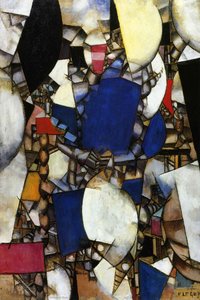
1914. Acrylic On Canvas, 65.0 x 58.0 cm.

§ 1Catalogue data
 Acrylic On Canvas
- WallArt
- Tubism
 1914
1914- Modern
 65.0 x 58.0 cm
§ 2Abstract
コレクション詳細
A vibrant abstract artwork by Fernand Léger in the Tubism style showcases dynamic shapes and colors, including flags and trees, reflecting the artist’s exploration of modernity's forms. Discover this iconic piece and bring art home.
 続きを読む
続きを読む
アーティストプロフィール
レジェは、キュビスムと「チューブズム」の先駆者。機械美や都市生活を大胆な色彩と形態で表現し、ポップアートへの道を開いたフランス画家。現代社会のエネルギーと躍動感を捉えた作品群は、今なお多くの人々に影響を与え続けています。
§ 3Commentary
Fernand Léger’s ‘juil-14’: A Vibrant Echo of Modernity
“juil-14,” painted in 1914 by Fernand Léger, is more than just a colorful abstraction; it's a potent distillation of the anxieties and aspirations swirling through Europe at the dawn of the 20th century. Executed during Leger’s pivotal period within the Tubism movement, this artwork embodies his radical attempt to reconcile the burgeoning industrial world with artistic expression. The canvas explodes with a dynamic interplay of red, blue, green, yellow, white, and black – colors that resonate with both the vibrancy of urban life and the starkness of mechanized forms. The presence of trees in the background offers a grounding element, a subtle nod to the rural origins that shaped Leger’s artistic sensibility, while scattered flags introduce an immediate sense of national identity, subtly hinting at the impending storm.
Tubism: Integrating the Machine Age
Created in Tubism style – a movement Léger himself pioneered – “juil-14” reflects his core philosophy. Tubism sought to break down objects into their geometric components, then reconstruct them in abstract forms, often emphasizing angularity and repetition. This is vividly apparent here; the shapes aren’t simply decorative; they are echoes of industrial machinery, a deliberate engagement with the dominant aesthetic of the age. Léger wasn't rejecting representation entirely, but rather transforming it to capture the essence of modernity – its speed, its power, and its inherent geometric logic. The painting’s bold, fragmented forms evoke the feeling of shattered perspectives, mirroring the disruption caused by rapid technological advancement.
Symbolism and Historical Context
The title itself, “juil-14,” immediately anchors the artwork to a specific historical moment: Bastille Day, July 14th, 1789 – the anniversary of the French Revolution. While seemingly anachronistic within the abstract composition, this inclusion subtly layers meaning. The flags, prominent throughout the piece, represent not just national pride but also the volatile political climate of 1914, a year that would soon erupt in global conflict. Léger’s choice to depict this iconic event through such a radically modern lens suggests a questioning of tradition and an embrace of a new, uncertain future. The artwork was created just months before the outbreak of World War I, adding another layer of poignant significance.
Technique and Emotional Impact
Léger’s technique in “juil-14” is characterized by broad, confident brushstrokes and a deliberate lack of blending. This creates a sense of raw energy and immediacy, further amplifying the painting's dynamism. The composition isn’t static; it feels as though the forms are constantly shifting and interacting. The overall effect is one of controlled chaos – an emotional response to the anxieties and possibilities of a world undergoing profound transformation. This reproduction captures that same vibrant intensity, offering a powerful visual statement for any collection or interior space.
よくあるご質問
フェルナンド・レジェ作「juil-14」 の画像はどのようにダウンロードすればよいですか?
フェルナンド・レジェ作「juil-14」は、作品のダウンロードページから高解像度デジタル画像のダウンロードとしてダウンロードいただけます。
「juil-14」の作者と制作年はいつですか?
「juil-14」は、1914年にフェルナンド・レジェによって制作されました。
フェルナンド・レジェ作「juil-14」の解説ページはありますか?
フェルナンド・レジェ作「juil-14」には、ガイドページをご用意しています。これは、学生や教室での学習用に設計された、印刷可能な作品解説シートです。





 プリント版に切り替え


 いずれかの辺が105 cm(約41インチ)を超えるアートワークまたは複製画の場合、フレームは分解されたキットの状態でお届けいたします。この方法は、輸送中の破損を防ぎ、安全に配送するために採用しております。


