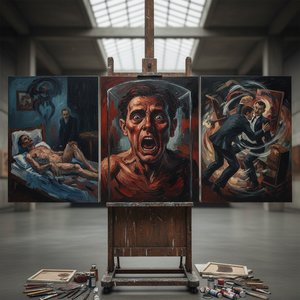
1961. Oil On Canvas.

§ 1Catalogue data


著作権保護について
このページに掲載されている作品は著作権法によって保護されており、当社の許可なく同一の複製物を制作または販売することは法律で禁じられています。この保護は、以下のような国際条約に基づき執行されます。 ベルヌ条約 および、以下の条項に定められたものを含む各国の法律により、 米国著作権法 第17編。
敬意を払った法的な代替手段として、私たちはオリジナルにインスピレーションを与えられた、カスタムの手描きアートワークを提供しています。私たちの熟練したプロのアーティストは、元の作品が持つスタイル、情緒、そして芸術的なエッセンスを注意深く研究し、独自の創作物でありながら、同じ感性を呼び起こすような、新しくユニークな作品を作り上げます。
この手法は、著作権で保護された作品の複製や複写を伴わないため、著作権法に完全に準拠しています。これは単なる模倣ではなく、創造的な再解釈です。元の作品からインスピレーションを受けつつも、それとは異なる、全く新しい絵画を生み出すものです。
 詳細を見る
詳細を見る§ 2Abstract
コレクション詳細
Experience the raw emotion of Francis Bacon's 'Seated Figure.' This unsettling portrait captures psychological turmoil through distorted forms, muted colors, and visceral brushstrokes – a cornerstone of modern art.
アーティストプロフィール
フランシス・ベーコンは、20世紀を代表する表現主義画家。ピカソやキリアーニの影響を受け、人間の苦悩や孤独を強烈な色彩と歪んだ人体描写で表現しました。『三幕劇』や『インノセント10世の肖像』など、衝撃的な作品群は現代美術史に大きな足跡を残しています。
§ 3Commentary
A Descent into Anguish: Unpacking Francis Bacon’s ‘Seated Figure’
Francis Bacon's “Seated Figure,” painted in 1961, isn’t merely a portrait; it’s an excavation of the human psyche, a raw and unsettling glimpse into the depths of isolation and existential dread. This work, residing within the intimate confines of Bacon’s London studio at 7 Reece Mews, immediately confronts the viewer with a figure rendered in agonizing distortion – a slumped man seemingly trapped within the claustrophobic space defined by a worn couch and shadowed curtains. It's a painting that lingers long after viewing, prompting reflection on themes of loneliness, anxiety, and the inherent vulnerability of the human condition.
Bacon’s signature style is powerfully evident here: brushstrokes are not carefully blended but aggressively applied, creating a palpable sense of movement and instability. The muted palette – dominated by browns, greys, blacks, and punctuated by flashes of orange and blue – contributes to this feeling of unease. These colors aren't used descriptively; instead, they’re deployed with gestural abandon, mirroring the emotional turmoil at the heart of the piece. The blurred forms, particularly in the figure’s face and body, further amplify this sense of disorientation, as if reality itself is fracturing before our eyes.
Deconstructing Distortion: Form, Technique, and Symbolism
The composition itself is deceptively simple – a central figure occupying almost all of the frame. However, this apparent simplicity belies a carefully constructed tension. The couch, chairs, and curtains aren’t merely background elements; they actively contribute to the painting's claustrophobic atmosphere, suggesting a confinement that mirrors the subject’s internal state. Bacon deliberately flattened perspective, eliminating any sense of spatial recession, forcing the viewer into an uncomfortable proximity with the figure’s suffering. This flattening is not accidental; it’s a deliberate tactic to heighten the emotional impact and create a feeling of being trapped within the painting's unsettling space.
Technically, “Seated Figure” exemplifies Bacon’s expressionistic approach. He employed oil paint on canvas with visible brushstrokes – layers built up with a rough texture that speaks to the urgency and physicality of his process. The layering is not smooth or polished; it's deliberately uneven, reflecting the chaotic nature of the subject’s emotional state. Notably, the crimson and blue staining of the background and furniture are exceptionally vivid, hinting at a potential symbolic significance – perhaps representing blood and sorrow, or the overwhelming intensity of the figure’s experience.
A Portrait of Isolation: Context and Interpretation
Painted in 1961, “Seated Figure” is considered part of a series created during a pivotal period in Bacon's career. Following the death of his lover, George Dyer, in 1971, many of his works became increasingly introspective and focused on themes of mortality and loss. Research suggests that this particular painting was intended as one of the major pieces for a 1962 Tate Gallery retrospective, initially titled “Seated Man with Turkey Rug.” The inclusion of the turkey rug itself is intriguing – it’s a recurring motif in Bacon's work, often associated with themes of decay and vulnerability.
The figure’s slumped posture, anguished expression, and distorted features powerfully convey a sense of profound isolation and psychological distress. While the exact identity of the subject remains ambiguous, many art historians believe it represents Peter Lacy, a close friend and companion to Bacon who tragically died in 1964. The open-necked shirt, a recurring cipher for Lacy, further solidifies this interpretation. “Seated Figure” isn’t simply a depiction of a man; it's an embodiment of the anxieties and uncertainties that plagued the human condition during the mid-20th century – a timeless meditation on loneliness, despair, and the fragility of existence.
Bringing ‘Seated Figure’ Home: Reproduction & Artistic Impact
AllPaintingsStore offers meticulously hand-painted reproductions of Francis Bacon's “Seated Figure,” capturing the raw emotion and visceral intensity of this iconic work. Our skilled artists replicate Bacon’s distinctive brushwork, color palette, and textural approach with remarkable accuracy, ensuring that your reproduction faithfully embodies the painting’s original power. Whether displayed in a contemporary art space or incorporated into a sophisticated interior design scheme, “Seated Figure” – now rendered in exquisite detail – serves as a potent reminder of Bacon's enduring legacy and his profound exploration of the human psyche.
よくあるご質問
フランシス・ベーコン作「Seated Figure」の雰囲気はどのように表現されていますか?
「Seated Figure」は、Dramaticな雰囲気を纏っています。
フランシス・ベーコン作「Seated Figure」 の画像はどのようにダウンロードすればよいですか?
フランシス・ベーコン作「Seated Figure」の画像は、作品のダウンロードページからダウンロードいただけます:高解像度デジタル画像のダウンロード。
フランシス・ベーコン作「Seated Figure」の複製画には、どのサイズがおすすめですか?
フランシス・ベーコン作「Seated Figure」には、Largeのレプリカをおすすめします。比率を維持したまま、サイズを調整することが可能です。


 プリント版に切り替え


 いずれかの辺が105 cm(約41インチ)を超えるアートワークまたは複製画の場合、フレームは分解されたキットの状態でお届けいたします。この方法は、輸送中の破損を防ぎ、安全に配送するために採用しております。