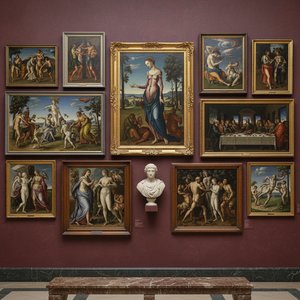
1573. Acrylic, 76.0 x 63.0 cm. ルーブル美術館.

§ 1Catalogue data
 Acrylic
- WallArt
- Northern Renaissance
 1573
1573 76.0 x 63.0 cm
 ルーブル美術館
§ 2Abstract
コレクション詳細
Experience Giuseppe Arcimboldo's 'Winter': A captivating portrait of a tree-like man crafted from fruits, vegetables, and leaves – a unique Renaissance masterpiece.
 続きを読む
続きを読む
アーティストプロフィール
ジョゼッペ・アルチンボルド(1527-1593)は、果物や野菜を組み合わせて人物像を描いたイタリアの画家。ルネサンス期の奇抜な芸術家として知られ、その作品はシュールレアリズムにも影響を与えました。
§ 3Commentary
A Portrait Unlike Any Other: Exploring Giuseppe Arcimboldo’s “Winter”
- Subject Matter & Composition The artwork presents an arresting visual paradox – a human face meticulously crafted from botanical elements. Arcimboldo's genius lies in transforming the familiar portrait genre into something utterly revolutionary, presenting a man whose visage is reimagined as a stylized tree. Antlers dominate the upper portion of the composition, immediately establishing a connection between humanity and nature’s grandeur. Leaves cascade through his hair and drape around his neck, reinforcing this symbolic fusion.
- Style & Technique Arcimboldo's distinctive style epitomizes Mannerism, characterized by exaggerated forms and stylized representations. He employs meticulous trompe l'oeil techniques—creating illusions of depth and texture—to convincingly integrate disparate objects into a cohesive whole. The artist’s painstaking attention to detail is evident in every carefully positioned fruit, vegetable, and flower, demonstrating an unparalleled mastery of artistic craft.
- Historical Context Created in 1573 during the Renaissance, “Winter” reflects the intellectual currents of its time—a fascination with alchemy, astrology, and the pursuit of universal harmony. Arcimboldo’s work aligns with humanist ideals that celebrated human intellect and creativity alongside reverence for the natural world. It served as a visual commentary on the anxieties surrounding mortality and decay prevalent during the Reformation.
- Symbolism & Allegory Beyond its striking appearance, “Winter” is laden with symbolic meaning. The tree represents resilience and regeneration amidst adversity—a potent emblem of hope and renewal—particularly relevant in the context of religious upheaval. Fruits like apples and bananas symbolize fertility and abundance, while books signify knowledge and erudition. Each element contributes to a complex tapestry of ideas intended to provoke contemplation.
- Emotional Impact & Artistic Legacy “Winter” transcends mere visual spectacle; it evokes a profound emotional response in the viewer. The juxtaposition of organic forms with human representation generates an unsettling yet captivating tension, prompting reflection on themes of identity and transformation. Arcimboldo’s innovative approach cemented his place as one of the most influential artists of his era and continues to inspire admiration for its audacious creativity and intellectual depth. Its enduring appeal speaks to a timeless fascination with blending artifice and nature—a concept that resonates powerfully in contemporary artistic discourse.
よくあるご質問
ジュゼッペ・アルチンボルド作「Winter」 の主要な色調は何ですか?
ジュゼッペ・アルチンボルド作「Winter」には、Amber to Saffronの色調が全体に広がっています。
「Winter」は、ジュゼッペ・アルチンボルドの作品群の中でどのような位置を占めているのでしょうか?
ジュゼッペ・アルチンボルドの作品群において、「Winter」はNorthern Renaissance様式に属しており、botanical tradition, renaissance idealism, court patronage, symbolic portraiture, arcimboldo legacyというテーマを共有しています。
「Winter」の色彩は、どの程度鮮やかですか?
ジュゼッペ・アルチンボルド作「Winter」は、彩度Balanced Softで記録されています。


 プリント版に切り替え


 いずれかの辺が105 cm(約41インチ)を超えるアートワークまたは複製画の場合、フレームは分解されたキットの状態でお届けいたします。この方法は、輸送中の破損を防ぎ、安全に配送するために採用しております。