100日間返金保証 世界中へ送料無料
449,587作品一覧 30,613アーティスト一覧 4,660美術館・博物館 32言語設定
通貨
    言語
      アトリエ · 2015年設立 · フランス、パリ
      AllPaintingsStore
      allpaintingsstore.com
      Catalogue entry

      Prometheus

      Oil On Canvas.

      Fig. 1. ゴスタヴ・モロー, Prometheus. Shown as the reproduction you are specifying: , .

      § 1Catalogue data

      § 2Abstract

      コレクション詳細

      Explore Gustave Moreau's dramatic 'Prometheus,' a Symbolist masterpiece depicting the Titan's rebellious gift of fire & enduring sacrifice. A powerful statement on knowledge and freedom.

      アーティストプロフィール

      19世紀フランス象徴主義を代表するギュスターヴ・モロー(1826-1898)。「サロメ」に象徴される神話や聖書の物語を、豪華絢爛な色彩と幻想的な世界観で表現。マティスやルオーらに影響を与えた巨匠の作品を Musée Gustave Moreau で堪能してください。

      § 3Commentary

      A Titan’s Defiance: Unveiling Gustave Moreau's "Prométhée"

      Gustave Moreau’s “Prométhée” (Prometheus) is not merely a painting; it’s an immersion into the heart of Romantic rebellion and Symbolist introspection. The canvas pulsates with the weight of myth, depicting the chained Titan in a moment of profound sacrifice. Moreau doesn't present us with a triumphant hero, but rather a figure burdened by his act of defiance – a solitary beacon against a desolate landscape, extending the fragile flame of knowledge towards a shadowy humanity. This work, completed in 1868, stands as a cornerstone of Symbolist art, rejecting the literalism of Realism and instead delving into the realm of subjective emotion and philosophical inquiry.

      The Language of Suffering and Light

      Moreau’s technique is immediately striking. Visible brushstrokes define Prometheus' muscular form and the jagged rocks that imprison him, while softer lines evoke swirling clouds and distant mountains, creating a sense of vastness and isolation. The palette is dominated by muted browns, blues, and grays – colors that amplify the somber mood and emphasize the painting’s melancholic core. He masterfully uses light to draw our attention; a single source illuminates Prometheus' face and torso, casting dramatic shadows that heighten the sense of suffering and struggle. This isn’t about precise realism; it’s about capturing an atmosphere – a feeling of monumental scale and timelessness achieved through a flattened perspective. The texture itself feels rough and uneven, mirroring the harshness of Prometheus’ fate.

      Decoding the Symbols: A Gift and Its Cost

      The symbolism woven into “Prométhée” is rich and layered. Prometheus himself embodies resilience, sacrifice, and the enduring human spirit in the face of oppression. The flame he offers isn't simply fire; it represents knowledge, enlightenment, progress – but also carries within it the potential for destruction. The chains are a potent symbol of constraints imposed by authority, both divine and societal, while the mortal figure below represents humanity receiving this gift, with all its attendant joys and sorrows. A recurring motif in Moreau’s work, the bird appears here as well, often suggesting freedom, spirituality, or a connection to the divine realm – a poignant counterpoint to Prometheus' earthly imprisonment. The painting invites us to contemplate fundamental questions about our place in the universe and the price of liberation.

      Moreau and His Legacy: A Bridge Between Worlds

      Gustave Moreau (1826-1898) was a pivotal figure in the Symbolist movement, rejecting the prevailing artistic trends of his time to explore subjective emotions and mythological themes. Heavily influenced by literary giants like Shakespeare and Byron, he transformed familiar myths into deeply personal statements. “Prométhée” exemplifies this approach, demonstrating Moreau’s fascination with classical narratives and his ability to imbue them with a uniquely emotional charge. His work profoundly impacted later artists such as Henri Matisse and Georges Rouault, paving the way for modern art's exploration of inner worlds and symbolic language. Today, the Musée Gustave Moreau in Paris stands as a testament to his enduring legacy, preserving his studio and an extensive collection of his works. “Prométhée” is more than just a historical artwork; it’s a timeless meditation on the human condition, capable of resonating with audiences for generations to come.

      An Evocative Presence in Your Space

      “Prométhée” evokes a sense of awe, melancholy, and profound contemplation. Its dramatic composition and muted color palette make it a striking focal point for a study, library, or living room. The artwork pairs beautifully with dark wood furnishings, antique accents, and textured fabrics to enhance its Romantic atmosphere. A high-quality reproduction would add a touch of intellectual sophistication and artistic depth to any interior space – a constant reminder of the power of knowledge, the burden of freedom, and the enduring spirit of rebellion.

      よくあるご質問

      ゴスタヴ・モロー作「Prometheus」に関する統計情報はどこで確認できますか?

      ゴスタヴ・モロー作「Prometheus」に関する統計情報は、作品の統計情報ページでご確認いただけます。こちらでは、作品の月間訪問数、アーティストの作品への訪問数、および最近の訪問者の国別・言語別の内訳をご覧いただけます。

      「Prometheus」のダウンロードは可能ですか?

      「Prometheus」はダウンロード可能です。作品のダウンロードページにて高解像度デジタル画像のダウンロードいただけます。

      ゴスタヴ・モロー作「Prometheus」は、お部屋にどのような雰囲気をもたらしてくれるでしょうか?

      ゴスタヴ・モロー作「Prometheus」が醸し出すDramaticな雰囲気は、おすすめの空間であるLiving Roomにぴったりです。
      § 4The artist

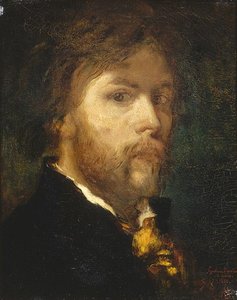
      ゴスタヴ・モロー

      ゴスタヴ・モロー

      1826 - 1898, フランス

      Quick facts about ゴスタヴ・モロー

      • Artistic Movement Or Style: シンボリズム
      • Artists Who Influenced This Artist:
        • エウゲニオ・デルラクロワール
        • ミケランジェロ
        • レオナルド・ダ・ヴィンチ
      • Date Of Birth: 1826年4月6日
      • Date Of Death: 1898年4月18日
      • Full Name: Gustave Moreau
      • Nationality: フランス人
      • Notable Artworks:
        • ソロモンの踊り før ヘロドス
        • ユピテルのセメレ
        • オレアフス
        • 出現
        • デスメドナ
      • Place Of Birth: パリ、フランス

      アーティストについて

      Gustave Moreau (1826 - 1898)

      Gustave Moreau, a name synonymous with the ethereal beauty and enigmatic depths of Symbolist painting, emerged from 19th-century Paris as a singular artistic voice. Born in 1826 into a bourgeois family—his father an architect and archivist—Moreau’s early life was steeped in intellectual curiosity and aesthetic sensibility. From a young age, he displayed a remarkable gift for drawing, nurtured through traditional academic training at the École des Beaux-Arts under figures like François-Édouard Picot. However, Moreau's artistic path would diverge sharply from the prevailing Realist and Impressionist currents of his time. He wasn’t interested in capturing fleeting moments or objective reality; instead, he sought to unlock the hidden realms of myth, religion, and the human psyche through a deeply personal and symbolic visual language. His journey was one of inward exploration, translating subjective emotions and spiritual yearnings onto canvas with an obsessive attention to detail and a vibrant, often opulent palette.

      Early Influences and Artistic Training

      Moreau’s artistic development wasn't born in a vacuum. While rejecting the dominant trends of his era, he drew inspiration from diverse sources. The dramatic use of color and exotic subject matter found in the works of Eugène Delacroix ignited a passion for narrative painting imbued with emotional intensity—a fascination that would define much of his oeuvre. He particularly admired Michelangelo’s monumental sculptures and Leonardo da Vinci’s masterful anatomical drawings, recognizing their profound impact on artistic technique and psychological insight. Moreau's formal training at the École des Beaux-Arts solidified these influences, equipping him with the skills necessary to execute ambitious projects and forge a distinctive visual style. However, he quickly distinguished himself from his peers by prioritizing imaginative exploration over mere replication of nature—a decision that would propel him toward the forefront of Symbolist painting.

      The Italian Journey: Rediscovering Antiquity

      Between 1857 and 1859, Moreau embarked on a transformative voyage to Italy—a pilgrimage fueled by an ardent desire to reconnect with the artistic heritage of antiquity and the Renaissance. Guided by his mentor Frédéric de Courcy, he immersed himself in the art of Rome and Florence, meticulously copying Old Master paintings and studying architectural ruins. This experience profoundly shaped his artistic sensibilities, fostering a fascination for Byzantine iconography and inspiring him to synthesize classical and medieval traditions into a wholly original visual language. Moreau’s meticulous observation and unwavering dedication to craft—traits that would characterize his entire career—were honed during this formative period, preparing him for the monumental achievements that lay ahead.

      Salome Dancing Before Herod: A Symbolist Masterpiece

      Moreau's artistic breakthrough arrived in 1864 with *Salome Dancing before Herod*, a painting that instantly established his reputation as a visionary artist and cemented his place among the pioneers of Symbolism. Departing radically from the conventions of academic art, Moreau presented a dramatic depiction of the biblical tale—not as a literal recounting of events, but as an exploration of psychological complexities and symbolic resonances. The composition is strikingly asymmetrical, mirroring the fractured psyche of Salome—a figure embodying sensual desire and moral ambiguity—and reflecting the unsettling interplay between light and shadow. Moreau’s masterful use of color—particularly crimson and gold—creates an atmosphere of opulent grandeur and underscores the painting's spiritual dimension. He employed a technique characterized by painstaking layering of paint, achieving remarkable textural detail and capturing the elusive beauty of the human form with unparalleled precision.

      Legacy and Influence: Shaping Modern Art

      Though initially met with skepticism from some critics, Moreau’s work gained recognition in subsequent decades—particularly after the resurgence of interest in Symbolism during the 1960s and 70s. His influence extended far beyond the confines of his own time, inspiring artists across generations—including Henri Matisse and Georges Rouault—to embrace imaginative exploration and challenge conventional artistic norms. Moreau championed the notion that painting should strive to evoke emotion and convey spiritual truths—a conviction that resonated deeply with the existential anxieties of the 20th century. His unwavering commitment to craft—combined with his profound understanding of mythology and psychology—established him as a pivotal figure in the history of art—a testament to the enduring power of Symbolist painting and its capacity to illuminate the complexities of human experience. Gustave Moreau’s legacy continues to inspire artists today, reminding us that true artistic achievement lies not merely in technical virtuosity but in the ability to capture the essence of the soul and transform vision into tangible form.

      § 5Comparanda

      § 6Questions

      作品情報

      • Movement: Symbolism, Romanticism
      • Notable elements or techniques: Muted palette, brushstrokes
      • Artistic style: Dramatic, evocative
      • Medium: Oil on canvas

      アート・クイズ

      各質問の正解は1つだけです。

      問題 1:
      Gustave Moreau’s “Prométhée” primarily belongs to which art movement?
      問題 2:
      What does the flame held by Prometheus symbolize in the painting?
      問題 3:
      Which mythological figure is depicted in Gustave Moreau’s “Prométhée”?
      問題 4:
      The painting's color palette is best described as:
      問題 5:
      What artistic influence is mentioned as impacting Gustave Moreau's work?

      § 7Cite this entry

      AllPaintingsStore.com, “ゴスタヴ・モロー, Prometheus”, https://allpaintingsstore.com/ja/art/gustave-moreau-prometheus-ARJELN-en/ (accessed 2 10月 2026).

      § 8The reproduction

      手描き油彩複製画

      当社のアーティストが、お客様のご希望のサイズと額縁に合わせて、キャンバスに手描きで制作する油彩画です。 ( プリント版に切り替え デジタル画像販売へ切り替え)

      It is specified on the order sheet in the margin; the present state of that sheet reads as follows.

      Prometheus

      再現技法

      複製画サイズ一覧

      -

      厳選された熟練アーティスト

      より細部までこだわった表現、洗練された技術、そして十分な制作時間

      -

      複製画用額装

      -

      -

      いずれかの辺が105 cm(約41インチ)を超えるアートワークまたは複製画の場合、フレームは分解されたキットの状態でお届けいたします。この方法は、輸送中の破損を防ぎ、安全に配送するために採用しております。

      組み立てには専門知識が必要です(DIY用製品ではありません)。
      本キットは、経験豊富なプロの額装師が、木工用ボンド(別売)、キャンバス用プライヤー、およびボンドの乾燥時に桟を直角に保持するためのクランプを使用して、組み立ておよびキャンバスの張り作業を行う必要があります。不適切な組み立てやキャンバスの張りの不均一は、作品に永久的な損傷を与える恐れがあり、弊社の保証対象外となります。

      • すべての無垢材のパーツが含まれており、組み立てに最適なサイズに正確にカットされています。

      • 付属のネジを使用し、角の接合部には別途木工用ボンドをご用意ください(ボンドは付属しておりません)。ボンドは額装業者様にてご手配をお願いいたします。

      • プロ仕様の道具が必要ですが、キットには含まれていません:キャンバス用ストレッチングプライヤー(テンショナー)、および接着剤が乾燥するまで木枠を直角に固定するためのクランプ。

      重要:
      コーナーの接合部には木工用ボンドが必要です。また、ボンドが完全に乾くまでクランプでバーを固定しておく必要があり、組み立てたフレームにキャンバスを張るにはキャンバス用ストレッチングプライヤーが必要となります。これらの道具はキットに含まれておりません。このサイズをご注文される前に、経験豊富なプロの額装師(フライマー)の手配をお願いいたします。

      銘板

      -

      -

      保護用ワニス

      光沢ワニス(色彩を鮮やかに引き立て、光や湿気から保護します)

      -

      作品をカスタマイズ

      カスタマイズの例:顔をお客様の写真に差し替える、ペットを追加する(例:猫を犬に変更)、背景に隠しメッセージを入れる、背景の風景や要素を変更する。

      -

      お急ぎ便

      世界中への配送()は、通常の5週間ではなく、3〜4週間でお届けいたします。(30 10月)。品質には一切の妥協を許しません。

      -

      お急ぎ便

      世界中への配送()は、5週間ほどでお届けします。(6 11月)。

      送料込

      合計金額

      ¥ 40592

      Included with every order

      • 世界中へ無料エクスプレス配送
      • 高品質なリネンキャンバス
      • 配送時完全保険付
      • 関税・輸入税の払い戻し保証
      • 忠実な色彩再現の保証
      • 100日間返品保証(製造上の欠陥がある場合のみ)
      • 100% 全額返金保証
      • まとめ買い割引のご案内
      Order sheet