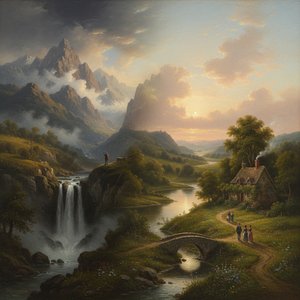
1798. Oil On Canvas. シュタットリッヒェ・クンストハレ・カールスルーエ.

§ 1カタログデータ


§ 2抽象
作品解説
Explore 'Project for The Disposition of the ''Grande Galerie''' by Hubert Robert, a captivating capriccio showcasing Roman ruins & French landscapes. A masterpiece of 18th-century art.
 詳細を表示
詳細を表示
アーティストの略歴
18世紀フランスの画家、ユベール・ロベール(1733-1808年)。遺跡や幻想的な風景を描き、ロマン主義と新古典主義に影響を与えました。歴史、衰退、そして想像力を融合させた作品をご覧ください!
§ 3解説
A Symphony of Decay and Grandeur
In the twilight of the eighteenth century, as the echoes of the French Revolution began to settle into the broader European consciousness, Hubert Robert captured a vision of Rome that transcends mere architectural documentation. His 1798 masterpiece, Roman Capriccio, is not simply a landscape; it is an evocative journey into the heart of memory and the sublime. Through his masterful use of the capriccio technique—a style defined by architectural fantasy rather than topographical accuracy—Robert invites the viewer to wander through a dreamscape where the boundaries between reality and imagination dissolve. The canvas presents a breathtaking panorama of crumbling columns, weathered arches, and majestic statues, all bathed in a hazy, golden light that suggests the warmth of a setting sun over an empire long passed.
The composition is a delicate dance of light and shadow, where Robert employs layered planes of color to create an illusionistic depth that draws the eye deep into the Roman ruins. This atmospheric approach allows the monumental structures to appear both physically imposing and ethereally transient. Amidst the skeletal remains of classical greatness, small figures—the staffage—are scattered throughout the scene. These individuals, engaged in quiet contemplation or casual interaction around the ancient sculptures, provide a vital sense of scale and human connection. Their presence transforms the ruins from cold, dead stone into a living stage, where the grandeur of the past meets the fleeting pulse of the present.
The Poetics of Time and Transformation
Beyond its visual splendor, Roman Capriccio serves as a profound meditation on the relentless march of time. To look upon these decaying structures is to witness the inevitable triumph of nature over human ambition. Robert utilizes the crumbling masonry as a powerful symbol of the ephemeral nature of power and the futility of even the most monumental architectural achievements. Yet, there is no sense of pure tragedy in this decay; instead, the artist weaves in elements of regeneration. The subtle emergence of vibrant blossoms amidst the rubble acts as a poignant counterpoint to the stone, suggesting that from the wreckage of old worlds, new beauty and hope can inevitably bloom.
For the discerning collector or interior designer, this painting offers more than just aesthetic appeal; it provides an emotional anchor for a space. The work possesses a unique ability to evoke nostalgia and a sense of wonder, making it an ideal centerpiece for rooms designed for reflection and intellectual engagement. Whether placed in a grand library or a contemporary living space, the Roman Capriccio brings with it a storied atmosphere of classical elegance and Romantic mystery. It is a piece that does not merely decorate a wall but tells a story of endurance, transformation, and the eternal beauty found within the ruins of history.
Q&A
ユベール・ロベール作「Roman Capriccio」の色彩構成はどのように成り立っていますか?
「Roman Capriccio」において、Gentleな対比とUnified Paletteな調和が響き合っています。
学生向けのユベール・ロベール作「Roman Capriccio」に関するファクトシートはありますか?
ユベール・ロベール作「Roman Capriccio」には、解説資料ページをご用意しています。これは、学生や教室での学習用に設計された、印刷可能な作品解説シートです。
「Roman Capriccio」の作者と、その画風について教えてください。
「Roman Capriccio」は、ユベール・ロベールの手によるRomantic Landscape様式の作品です。作者と様式は、その作品が受け継ぐ伝統を定義するものです。


 プリント版に切り替え


 いずれかの辺が105 cm(約41インチ)を超えるアートワークまたは複製画の場合、フレームは分解されたキットの状態でお届けいたします。この方法は、輸送中の破損を防ぎ、安全に配送するために採用しております。