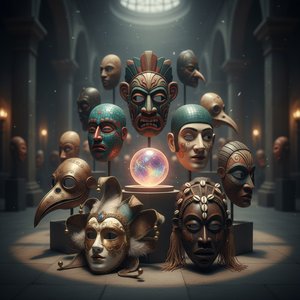
Acrylic On Canvas.

§ 1Catalogue data

§ 2Abstract
コレクション詳細
 続きを読む
続きを読む
アーティストプロフィール
19世紀ベルギーの画家、ジェームズ・エンスール。仮面や骸骨をモチーフに、社会風刺と幻想的な世界を描き出し、表現主義・シュルレアリスムの先駆者として知られています。『キリスト受難』など、その異様な作風は現代美術にも大きな影響を与えました。
§ 3Commentary
James Ensor’s Disturbing Reflection: Exploring the Symbolism of ‘Mirror with Skeleton’
James Sidney Edouard Ensor (1860-1949) stands as a singular figure in Belgian art history—a provocateur who relentlessly interrogated societal anxieties and psychological complexities through his unsettling visual language. Born into an English father and Belgian mother, Ensor's upbringing instilled within him a profound appreciation for duality, mirroring the paradoxical nature of his artistic output. His formative years spent amidst the vibrant spectacle of Ostend’s seaside resort town undeniably shaped his worldview, fostering an obsession with masks and disguises that would permeate his canvases throughout his prolific career. This fascination wasn’t merely aesthetic; it represented a deliberate strategy to expose hidden truths beneath superficial appearances—a core principle guiding Ensor's artistic endeavors.- Subject Matter: The painting depicts a stark tableau featuring a skeleton positioned before a mirror reflecting multiple faces, creating an immediate confrontation between mortality and identity.
- Style: Ensor’s work firmly establishes itself within the Expressionist movement, rejecting academic conventions in favor of conveying raw emotion and psychological intensity.
Technique and Composition – A Masterclass in Texture and Tension
Ensor's masterful technique is characterized by thick impasto—a layering of paint that builds up substantial texture—particularly evident in the depiction of the skeleton’s bones and the surrounding faces. This tactile approach isn’t simply decorative; it serves to amplify the emotional impact of the image, conveying a palpable sense of unease and decay. The composition itself is deliberately unsettling, utilizing diagonals and overlapping planes to generate visual tension. The placement of clocks—several prominent on the left and right sides—further contributes to this feeling of disorientation and underscores the relentless passage of time against which human existence struggles. Ensor’s meticulous attention to detail ensures that every element within the painting reinforces the overarching theme of existential dread.Historical Context – The Shadow of Trauma and Societal Critique
Created around 1908, ‘Mirror with Skeleton’ emerged during a period marked by significant social upheaval in Belgium—the aftermath of World War I profoundly impacted the nation's psyche. Ensor responded to this trauma not through idealized representations but rather through confronting uncomfortable realities. His artistic vision aligns closely with Surrealist principles, exploring dreamlike imagery and subconscious anxieties as avenues for critique. The painting’s symbolism transcends mere visual depiction; it speaks to universal concerns about death, illusion, and the fragility of human consciousness—themes that resonate powerfully even today.Symbolism – Masks, Mortality, and the Illusion of Self
The central image of the skeleton gazing into the mirror is laden with symbolic significance. The skeleton represents mortality, confronting viewers with the inescapable reality of death while simultaneously embodying vulnerability and decay. The mirrored faces symbolize the multiplicity of identities—the masks we wear to conceal our true selves—and the deceptive nature of appearances. Ensor’s deliberate use of clocks reinforces this idea, highlighting the relentless march of time and suggesting that all endeavors ultimately succumb to oblivion. Ultimately, ‘Mirror with Skeleton’ compels us to contemplate the unsettling truth that beneath the veneer of social convention lies a profound darkness – a darkness that Ensor unflinchingly confronts in his unforgettable artwork.よくあるご質問
ジェイムズ・エンソウ作「Mirror with Skeleton」にはどのような主題が描かれていますか?
ジェイムズ・エンソウ作「Mirror with Skeleton」に描かれているテーマには、body, mirrors, skeletonなどがあります。これらが合わさることで、本作の主題を構成しています。
ご購入前に、ジェイムズ・エンソウ作「Mirror with Skeleton」 をご自身の壁に飾った様子を確認することはできますか?
「Mirror with Skeleton」は、拡張現実(AR)でのプレビューが可能です。対応デバイスで作品のARプレビューページを表示すると、ご自身の空間に作品を配置してご確認いただけます。
「Mirror with Skeleton」の作者とスタイルは何ですか?
「Mirror with Skeleton」の背景には、ジェイムズ・エンソウとSurrealist Expressionism運動があります。


 プリント版に切り替え


 いずれかの辺が105 cm(約41インチ)を超えるアートワークまたは複製画の場合、フレームは分解されたキットの状態でお届けいたします。この方法は、輸送中の破損を防ぎ、安全に配送するために採用しております。