


 プレビュー
プレビュー
 シェアする
シェアする シェアする
シェアする
 詳細を見る
詳細を見る

 ダウンロード
 似ている作品
 X線調査
X線調査 スライドショー
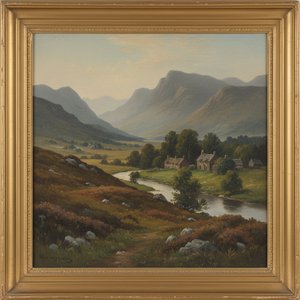
On The River Neath

 詳細を見る
詳細を見る
ジークレー/アートプリント
迅速な制作と多彩な仕上げオプションを備えた、ミュージアムクオリティのジークレーまたはキャンバスプリント。 ( 手描き画への切り替え 画像に切り替え)




































作品のオリジナル比率に合わせた、当店の規定サイズからお選びください。

特定のフレームやスペースに合わせて、ご自身でサイズを指定することも可能です。選択されたサイズが元の画像の比率と一致しない場合、作品をトリミングするか、鏡面反射または単色での塗りつぶしによって画像を拡張いたします。制作を開始する前に、ご確認用のデジタルモックアップをお送りいたします。
画面上のプレビューには、実際のトリミングや拡張は反映されませんのでご注意ください。最終的な構図を正確に確認できるのは、モックアップのみとなります。
カスタムサイズも承っておりますが、元の比率を維持するためには、あらかじめ用意されたリストからサイズを選択することをお勧めいたします。


 ガラスオプションは、110cm未満のサイズでのみご利用いただけます。

On The River Neath
ジークレー/アートプリント
複製画のサイズ
-


合計金額
$ 65
関連作品


アーティストの略歴
The Ethereal Landscapes of John Brandon Smith
In the annals of Victorian landscape painting, few artists captured the raw, untamed spirit of the British wilderness with as much emotive power as John Brandon Smith. Born in London in 1848, Smith emerged during a period when the Romantic movement was deeply entwining itself with the natural world, seeking to find the sublime within the rugged corners of the United Kingdom. While his life was tragically brief, spanning only thirty-six years, his contribution to the depiction of the Welsh landscape remains a testament to a profound connection between the artist and the earth. His work does not merely document scenery; it seeks to translate the very pulse of falling water and the heavy, mist-laden atmosphere of the mountains into a visual language of texture and light.
Smith’s artistic journey began with a rigorous formal education at Somerset House, an institution that provided him with the technical discipline required to master the complexities of light and shadow. This foundational training instilled in him a meticulous attention to tonal harmony, yet his heart was never truly captured by the urbanity of London. Instead, he found his true muse in the dramatic topography of Wales. It was here, amidst the thunderous cascades of Gwynedd Falls and the secluded pools of the South Welsh valleys, that Smith developed his signature style. He became a chronicler of the ephemeral, obsessed with the way light fractures through spray and how the verdant mosses of the riverbanks absorb the dampness of the mountain air.
Technique and the Romantic Vision
To observe a Smith canvas is to witness a deliberate struggle between form and fluidity. Heavily influenced by the atmospheric legacies of Turner and Constable, Smith moved beyond mere topographical accuracy to embrace a more subjective, emotional realism. He was a master of impasto, applying thick, sculptural layers of paint to his canvases to mimic the physical ruggedness of the terrain he depicted. This technique allowed him to create surfaces that felt tactile, where the white of a waterfall was not just a color, but a raised, energetic movement of pigment that seemed to catch the light even in a darkened gallery.
His approach to composition often centered on the tension between the monumental and the intimate. In many of his most celebrated works, such as his depictions of the Lower Falls of Afon Hepste, he utilized a sophisticated blending of tonal gradations to guide the viewer's eye through the swirling mists. His brushwork was rarely static; it possessed a rhythmic quality that mirrored the constant motion of the rivers and streams that were his primary subjects. Through this expressive method, Smith achieved a sense of sublime beauty—a feeling of awe mixed with a touch of melancholy that is so characteristic of the late Romantic era.
Legacy and Historical Significance
Though John Brandon Smith passed away in 1884, leaving behind an unfinished body of work, his impact on the perception of the Welsh landscape continues to resonate. He belonged to a generation of British painters who helped define the national identity through the lens of its natural splendor. His ability to imbue a landscape with a sense of living, breathing energy ensured that his paintings were more than mere decorations; they were emotional experiences.
Today, collectors and art historians look to Smith as a vital link in the evolution of 19th-century landscape art. His work serves as a window into a vanished era of British Romanticism, reminding us of a time when the wildness of nature was viewed with both reverence and wonder. The enduring appeal of his paintings lies in their ability to transport the viewer to the edge of a misty precipice, feeling the cool spray of a waterfall and hearing the silent roar of the Welsh countryside through the masterful application of oil on canvas.

John Brandon Smith
1848 - 1884 , United Kingdom
基本情報
- Artistic Movement Or Style: Romantic Landscape
- Date Of Birth: London, United Kingdom (1848)
- Full Name: John Brandon Smith
- Nationality: British
- Notable Artworks:
- The Waterfall
- On The River Neath
- Place Of Birth: London
関連記事

Flowing Narratives: Rivers in Painting – A Historical Exploration
Explore the rich history of rivers in painting! Discover masterpieces from ancient times to Impressionism & beyond. Learn about symbolism, artists like Monet & Daubigny, and find your perfect serene artwork at AllPaintingsStore.

William James Müller: Navigating Victorian Sentiment & Realism in British Landscape Painting
Explore the captivating landscapes of William James Müller, the leading artist of the Bristol School. Discover his Victorian masterpieces, Egyptian travels & Lycian sketches – a journey through 19th-century art and technique.

John Fulleylove: Evoking Rural England Through Watercolour & Oil
Explore the serene landscapes of John Fulleylove (1845-1908), a celebrated English artist. Discover his charming watercolours & oils, evocative travel illustrations, and lasting legacy. Learn about his life, exhibitions, and artistic style.
Sir John Watson Gordon: A Study in Scottish Landscape Painting & Tonal Impressionism
Explore the captivating portraits of Sir John Watson Gordon, a leading Scottish master. Discover his evolution from neoclassical style to atmospheric Tonalism and influence on 19th-century British art. Learn about his iconic sitters & legacy.

John Frederick Lewis: Orientalism, Detail & Genre Painting in 19th-Century British Art
Explore the captivating Orientalist paintings of John Frederick Lewis! Discover his mastery of detail, genre scenes & influence on 19th-century British art. Learn about his life, techniques & legacy at AllPaintingsStore.



