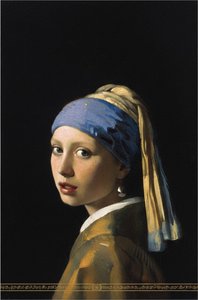
1631. Oil, 31.0 x 24.0 cm. モウリツハウイス.

§ 1カタログデータ

- 31.0 x 24.0 cm


§ 2抽象
作品解説
This painting portrays a woman diligently sewing in a dimly lit room, attended by an older man offering her money – a visual representation of the complexities between virtue and indulgence within the domestic sphere.
 詳細を表示
詳細を表示
アーティストの略歴
ユディト・ヤンス・レイステル(1609-1660)は、生き生きとした風俗画、肖像画、静物画で知られるオランダ黄金時代の先駆的な画家です。1893年に再発見された彼女の作品は、17世紀の生活を垣間見せるとともに、従来の美術史の物語に一石を投じています。
§ 3解説
A Quiet Tension in Haarlem
Step closer and observe the stillness within this room. In 1631, Judith Jans Leyster captured a moment that feels remarkably private, as if we have interrupted a conversation mid-sentence. A woman sits at a table, her attention anchored to her sewing, a task representing the industriousness expected of her station. Yet, there is a subtle disruption in the air. An older man stands beside her, his presence marked by a gesture that carries weight: he presents a fist adorned with jewelry. It is a small movement, but it introduces an unspoken desire into this domestic setting, hinting at the complexities that can exist within even the most stable relationships.
The atmosphere is shaped by a masterful use of chiaroscuro. Leyster employs light and shadow to sculpt the figures, pulling them from the darkness of the room with a luminous touch. This interplay of light does more than define form; it creates a palpable sense of intimacy. The shadows are deep, yet they do not obscure, but rather focus our gaze on the textures of the scene—the delicate thread of the sewing, the glint of the ring, and the scattered books that lie nearby. These books offer a quiet metaphor for knowledge and education, suggesting an intellectual life existing alongside domestic duty.
The Weight of Virtue and Temptation
There is a profound psychological depth to be found in the way these figures interact without direct eye contact. The woman’s focus on her needlework symbolizes moral integrity and responsibility, values held dear in the Dutch Golden Age. However, the man's gesture acts as a subtle commentary on temptation and the potential for disruption. It is a delicate balance between duty and passion, rendered through tonal variations that imbue the scene with a sense of melancholy.
The setting itself speaks to the era of Haarlem’s flourishing. During this period of Dutch innovation, such genre scenes allowed artists to explore the nuances of human interaction. Leyster’s technique, characterized by confident yet delicate brushstrokes, allows us to feel the weight of the moment. The scene does not demand attention through loud colors; instead, it invites a slow contemplation of the tension between what is seen and what is felt. It remains a study of restraint, leaving us to wonder about the resolution of this silent encounter.
Q&A
ユディット・レイスター作「The Proposition」を彩る主役の色は何ですか?
ユディット・レイスター作「The Proposition」の色彩表現:Espresso (#43371c)を基調とした、Earthyなパレット。
ユディット・レイスター作「The Proposition」は、どのような情緒や感情を表現していますか?
ユディット・レイスター作「The Proposition」が醸し出す雰囲気はCalmであり、その感情的なトーンはReflectiveです。
ユディット・レイスター作「The Proposition」の色彩構成はどのように成り立っていますか?
「The Proposition」において、Sereneな対比とUnified Paletteな調和が響き合っています。


 プリント版に切り替え


 いずれかの辺が105 cm(約41インチ)を超えるアートワークまたは複製画の場合、フレームは分解されたキットの状態でお届けいたします。この方法は、輸送中の破損を防ぎ、安全に配送するために採用しております。