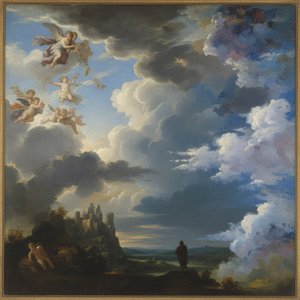
1931. Acrylic.

§ 1カタログデータ


§ 2抽象
作品解説
Nicholas Roerich’s ethereal River Chandra captures majestic mountains bathed in crimson hues beneath swirling white clouds—a stunning testament to the artist's Symbolist style and 1931 vision. Explore this captivating landscape reproduction and bring its timeless beauty into your home.
 詳細を表示
詳細を表示
アーティストの略歴
ロシアの画家ニコラス・ロエリヒは、シンボリズムとヒマラヤ風景を特徴とする神秘的な絵画で知られています。バレエ芸術家ディャギレフとのコラボレーションや文化遺産の保護活動で国際的に評価されています。
§ 3解説
A Visionary Landscape: Exploring Nicholas Roerich’s “River Chandra”
- Subject Matter: This breathtaking landscape depicts the majestic Himalayas, rendered with an unparalleled sensitivity to light and atmosphere. The painting captures a serene vista of towering mountains enveloped in swirling clouds—specifically, two prominent white formations dominating the upper reaches of the composition.
- Style: Roereich’s artistic style is firmly rooted in Symbolism and Transcendental Impressionism. He eschewed purely representational depiction, opting instead to convey spiritual ideas and emotions through color and form. The painting embodies a profound connection between nature and the divine—a hallmark of his distinctive approach.
- Technique: Roereich employed a masterful glazing technique, layering thin washes of pigment over each other to achieve luminous effects and subtle tonal variations. This meticulous process allowed him to capture the ethereal quality of the mountains and clouds, creating an illusion of depth that transcends mere visual observation. The artist utilized tempera on canvas, a medium known for its durability and ability to preserve color vibrancy.
- Historical Context: Created in 1931, “River Chandra” emerged during Roereich’s prolific period of artistic exploration—particularly his engagement with Eastern mysticism and shamanic traditions. His travels throughout Tibet and Mongolia profoundly influenced his worldview and fueled his desire to depict landscapes imbued with spiritual significance. The painting reflects the broader cultural movement toward synthesizing Western scientific observation with Eastern philosophical contemplation.
- Symbolism: The white clouds symbolize purity, enlightenment, and transcendence—concepts central to Roereich’s cosmology. They represent the boundless expanse of consciousness and invite viewers to contemplate the mysteries of existence. The river itself symbolizes flow, continuity, and the cyclical nature of life, mirroring the spiritual journey toward self-realization.
- Emotional Impact: “River Chandra” evokes a feeling of awe and wonder—a visceral response to the grandeur of the natural world combined with an inner contemplation of its spiritual essence. It’s more than just a beautiful image; it's an invitation to reconnect with one’s own intuition and experience the transformative power of art.
Q&A
ニコライ・ロエリヒ作「River Chandra」 の色彩は、どの程度調和していますか?
「River Chandra」の色彩の調和は、Softly Mixed Paletteと表現されます。
「River Chandra」はどのような雰囲気を感じさせますか?
ニコライ・ロエリヒ作「River Chandra」の全体的なムードはEtherealです。このムードは、作品が醸し出す全体的な雰囲気。
ニコライ・ロエリヒ作「River Chandra」の構図を主導している色は何ですか?
ニコライ・ロエリヒ作「River Chandra」の主色(メインカラー)はPutty (#d5bfc4)です。


 プリント版に切り替え


 いずれかの辺が105 cm(約41インチ)を超えるアートワークまたは複製画の場合、フレームは分解されたキットの状態でお届けいたします。この方法は、輸送中の破損を防ぎ、安全に配送するために採用しております。