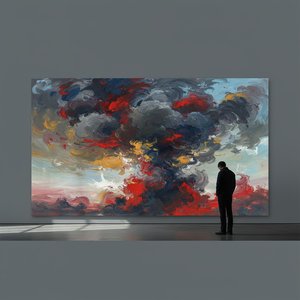
Oil On Canvas.

§ 1カタログデータ


§ 2抽象
作品解説
Explore Jackson Pollock's 'Number 8,' a dynamic abstract expressionist masterpiece. Witness the energy of his drip technique & vibrant colors in this iconic work.
 詳細を表示
詳細を表示
アーティストの略歴
ジャクソン・ポロック(1912-1956)は抽象表現主義の先駆者。ドリッピング技法で描かれた革新的な作品群、その情熱的でダイナミックな表現は現代美術に多大な影響を与えました。代表作『No. 1, 1950 (Lavender Mist)』など。
§ 3解説
Number 8: A Dynamic Exploration of Abstract Expressionism by Jackson Pollock
- Title: Number 8
- Artist: Jackson Pollock
- Date: 1949
- Medium: Oil, enamel, and aluminum paint on canvas
- Dimensions: Unknown
The Essence of Action Painting
Jackson Pollock's "Number 8," created in 1949, stands as a pivotal work within the Abstract Expressionist movement. This piece exemplifies Pollock’s revolutionary “drip technique,” where paint was poured and flung onto a canvas laid horizontally on the floor. This method allowed for a complete immersion of the artist into the creative process, moving beyond traditional easel painting to embrace a dynamic, almost performative act. The absence of recognizable imagery forces viewers to engage directly with the raw energy and materiality of the paint itself. "Number 8" isn't about depicting something; it’s about *doing* – capturing a moment of spontaneous creation.
Technique and Composition
The composition of "Number 8" is a complex web of interwoven lines, drips, and splatters. Pollock utilized a variety of tools—sticks, knives, even hardened brushes—to manipulate the paint's flow, creating layers of texture and depth. The dominant color palette features greens, blacks, yellows, and rust tones, all blended in an intricate dance across the canvas. Notice how the lines don’t simply stop at the edges; they seem to extend beyond the frame, suggesting a boundless energy contained within the work's boundaries. This "all-over" composition, where every inch of the canvas is treated with equal importance, was a hallmark of Pollock’s style and challenged traditional notions of pictorial space.
Historical Context and Symbolism
"Number 8" emerged during a period of significant cultural change in post-World War II America. Abstract Expressionism reflected a desire to break from European artistic traditions and establish a uniquely American voice in the art world. The movement was also influenced by psychological theories, particularly Jungian psychology, which explored the power of the unconscious mind. While Pollock’s work is largely non-representational, some critics have interpreted his drip paintings as symbolic representations of primal forces, emotional turmoil, or even cosmic energies. The act of creation itself became a form of self-expression and exploration.
Emotional Impact and Legacy
Viewing "Number 8" can be an intensely visceral experience. The chaotic yet controlled arrangement of paint evokes feelings of energy, movement, and perhaps even anxiety. It’s a work that demands active engagement from the viewer – there's no passive observation here. Pollock’s innovative technique and his commitment to pure abstraction profoundly influenced subsequent generations of artists, solidifying his place as one of the most important figures in modern art history. The painting continues to inspire awe and debate, prompting viewers to reconsider the very nature of artistic creation and the power of abstract expression.
Q&A
ジャクソン・ポロック作「Number 8」の色使いは、作品の感情とどのように結びついているのでしょうか?
ジャクソン・ポロック作「Number 8」のDarkなパレットは、そのDramaticな情緒的トーンと見事に調和しています。色彩は、作品が感情を伝えるための重要な要素の一つです。
ジャクソン・ポロック作「Number 8」は、Abstract Expressionismにおいてどのような情緒を表現していますか?
「Number 8」は、Abstract Expressionismのムーブメントにおいて、Dramaticな情緒を湛えています。
ジャクソン・ポロック作「Number 8」のスライドショーはありますか?
ジャクソン・ポロック作「Number 8」は、作品のスライドショーページにてスライドショーとしてご覧いただけます。


 プリント版に切り替え


 いずれかの辺が105 cm(約41インチ)を超えるアートワークまたは複製画の場合、フレームは分解されたキットの状態でお届けいたします。この方法は、輸送中の破損を防ぎ、安全に配送するために採用しております。