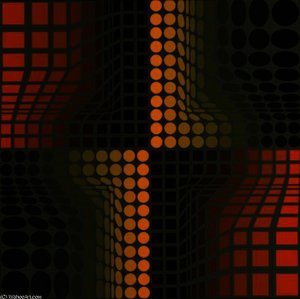
Acrylic On Canvas.

§ 1Catalogue data

著作権保護について
このページに掲載されている作品は著作権法によって保護されており、当社の許可なく同一の複製物を制作または販売することは法律で禁じられています。この保護は、以下のような国際条約に基づき執行されます。 ベルヌ条約 および、以下の条項に定められたものを含む各国の法律により、 米国著作権法 第17編。
敬意を払った法的な代替手段として、私たちはオリジナルにインスピレーションを与えられた、カスタムの手描きアートワークを提供しています。私たちの熟練したプロのアーティストは、元の作品が持つスタイル、情緒、そして芸術的なエッセンスを注意深く研究し、独自の創作物でありながら、同じ感性を呼び起こすような、新しくユニークな作品を作り上げます。
この手法は、著作権で保護された作品の複製や複写を伴わないため、著作権法に完全に準拠しています。これは単なる模倣ではなく、創造的な再解釈です。元の作品からインスピレーションを受けつつも、それとは異なる、全く新しい絵画を生み出すものです。
 詳細を見る
詳細を見る§ 2Abstract
コレクション詳細
Explore Victor Vasarely's 'Abstract Composition 13,' a vibrant Op Art masterpiece! Dive into its geometric shapes, dynamic colors & lasting influence on modern art.
§ 3Commentary
A Dance of Geometry and Color: Exploring Victor Vasarely's "Abstract Composition 13"
Victor Vasarely, a name synonymous with Op Art and kinetic art, gifted the world a visual language rooted in geometry and vibrant color. His work transcends mere decoration; it’s an exploration of perception, a challenge to our understanding of space and form. “Abstract Composition 13,” exemplifies this perfectly – a dynamic interplay of shapes that seems to shimmer and move before your eyes. This isn't simply a painting; it is an experience, a carefully orchestrated illusion designed to engage the viewer on a deeply sensory level. The piece invites us into a world where logic and emotion intertwine, where the precision of mathematical principles gives rise to a surprisingly organic and captivating aesthetic.The Genesis of Op Art: Vasarely's Vision
To truly appreciate "Abstract Composition 13," one must understand its historical context. Born in Hungary in 1906, Vasarely’s journey was far from conventional. Initially studying medicine, he abandoned it to pursue his artistic calling, immersing himself in the burgeoning world of modern art. The influence of Bauhaus principles – a focus on functional design and geometric abstraction – is undeniable in his work. However, Vasarely didn't merely replicate these influences; he synthesized them into something entirely new. He sought to create an art that was accessible, democratic, and capable of transforming the everyday environment. This ambition led him to develop Op Art (Optical Art), a movement characterized by its use of optical illusions and dynamic visual effects. "Abstract Composition 13," created during this pivotal period, stands as a testament to Vasarely’s pioneering spirit and his unwavering commitment to pushing the boundaries of artistic expression. It was a time when artists were questioning traditional representation, seeking new ways to engage with the viewer and explore the very nature of perception.A Symphony of Shapes: Technique and Composition
The visual impact of "Abstract Composition 13" stems from Vasarely’s masterful manipulation of geometric forms – triangles, circles, squares, and lines – arranged in a complex yet harmonious composition. The colors are equally crucial; blues, greens, purples, yellows, oranges, and blacks collide and interact, creating a sense of depth and movement. Notice how the shapes overlap and intersect, generating optical vibrations that seem to pulse with energy. Vasarely’s technique involved meticulous planning and precise execution. He often began with small-scale studies, carefully calculating the placement of each element before transferring his design to larger canvases. This methodical approach belies the seemingly spontaneous nature of the final result. The "all-over" composition – where no single area dominates – is a hallmark of Vasarely’s style, ensuring that the viewer's eye is constantly drawn across the surface, exploring the intricate network of shapes and colors. He wasn't interested in creating a focal point; instead, he aimed to create an immersive visual experience.Beyond Illusion: Symbolism and Emotional Resonance
While "Abstract Composition 13" may appear purely decorative at first glance, deeper contemplation reveals layers of symbolic meaning. Vasarely believed that art should be accessible to everyone, transcending the elitism often associated with traditional fine art. His geometric abstractions can be interpreted as representations of universal patterns – the underlying structures that govern our world. The repetition of shapes and colors evokes a sense of order and harmony, while the dynamic interplay creates a feeling of energy and vitality. The emotional impact is subtle yet profound. There's a sense of optimism and forward momentum, a celebration of human ingenuity and creativity. It’s not an artwork that demands a specific interpretation; rather, it invites viewers to project their own emotions and experiences onto its surface. The vibrant colors evoke feelings of joy and excitement, while the precise geometry provides a grounding sense of stability. Ultimately, "Abstract Composition 13" is a testament to the power of abstraction to communicate complex ideas and evoke profound emotional responses without relying on representational imagery. It’s an invitation to see the world in new ways – to appreciate the beauty of order, the dynamism of change, and the endless possibilities of human imagination.よくあるご質問
「Abstract Composition 13」はどの様式に属していますか?
ヴィクトル・ヴァザレリ作「Abstract Composition 13」に関連する芸術運動はOp Artです。この分類により、本作は関連する他の芸術家や作品群の中に位置づけられます。
「Abstract Composition 13」のスタイルは、作者の時代背景とどのように関わっていますか?
「Abstract Composition 13」はOp Artの様式に属しており、その作者は近代美術の時代に活動していました。
ヴィクトル・ヴァザレリ作「Abstract Composition 13」 の主要な色調は何ですか?
「Abstract Composition 13」はGreen to Violet Spectrumの色調が際立っています。


 プリント版に切り替え


 いずれかの辺が105 cm(約41インチ)を超えるアートワークまたは複製画の場合、フレームは分解されたキットの状態でお届けいたします。この方法は、輸送中の破損を防ぎ、安全に配送するために採用しております。