Acrylic On Canvas.

§ 1カタログデータ


本作品の著作権について
このページに掲載されている作品は著作権法によって保護されており、当社の許可なく同一の複製物を制作または販売することは法律で禁じられています。この保護は、以下のような国際条約に基づき執行されます。 ベルヌ条約 および、以下の条項に定められたものを含む各国の法律により、 米国著作権法 第17編。
敬意を払った法的な代替手段として、私たちはオリジナルにインスピレーションを与えられた、カスタムの手描きアートワークを提供しています。私たちの熟練したプロのアーティストは、元の作品が持つスタイル、情緒、そして芸術的なエッセンスを注意深く研究し、独自の創作物でありながら、同じ感性を呼び起こすような、新しくユニークな作品を作り上げます。
この手法は、著作権で保護された作品の複製や複写を伴わないため、著作権法に完全に準拠しています。これは単なる模倣ではなく、創造的な再解釈です。元の作品からインスピレーションを受けつつも、それとは異なる、全く新しい絵画を生み出すものです。
 詳しく読む
詳しく読む§ 2抽象
作品解説
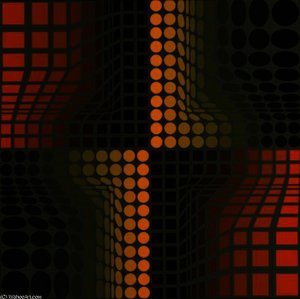
Experience Victor Vasarely’s iconic Op Art masterpiece, Sende C, featuring a mesmerizing array of blue and green dots creating an illusion of depth and movement. A captivating geometric abstraction from 1960, perfect for art lovers.
§ 3解説
A Symphony of Perception: Unveiling Victor Vasarely’s *Sende C*
Victor Vasarely's *Sende C*, a captivating close-up study of vibrant blue and green, is more than just an image; it’s an invitation to explore the very nature of perception. This Op Art masterpiece, created by the Hungarian pioneer, embodies the core tenets of kinetic art – the manipulation of visual experience through geometric forms. The painting's deceptively simple composition immediately draws the eye into a dynamic interplay of color and shape, creating an illusion of movement and depth that shifts with every glance. Vasarely’s meticulous approach to translating mathematical principles onto canvas resulted in a work that is both intellectually stimulating and profoundly visually arresting.
The Genesis of Op Art: Vasarely's Bauhaus Roots
Born in 1906 in Pécs, Croatia, Károly Vaszary – later Victor Vasarely – initially pursued a medical career before embracing his artistic destiny. His formative years were deeply influenced by the Bauhaus movement and Sándor Bortnyik’s “Műhely” workshop, where he absorbed the principles of functional design and geometric abstraction. This training instilled in him a rigorous approach to composition, utilizing precise mathematical ratios and optical illusions to generate his signature style. *Sende C* exemplifies this legacy – a direct descendant of the Bauhaus emphasis on clarity, order, and the exploration of visual phenomena.
Decoding the Visual Language: Technique and Style
*Sende C* showcases Vasarely’s mastery of “stabék,” a technique he developed to create precisely defined, isolated shapes. The painting is constructed from numerous small, overlapping circles in varying shades of blue and green, meticulously arranged to generate an illusion of three-dimensionality. This method, combined with the deliberate use of contrasting colors, amplifies the visual impact and creates a mesmerizing sense of movement. The seemingly random distribution of dots actually adheres to a carefully calculated system, reflecting Vasarely’s belief that art could be both aesthetically pleasing and scientifically grounded.
Symbolism and Emotional Resonance
While ostensibly abstract, *Sende C* resonates with deeper symbolic meanings related to the exploration of consciousness and perception. Vasarely sought to represent the subjective experience of reality – how our brains actively construct our understanding of the world. The dynamic interplay of color and form evokes a sense of excitement, disorientation, and ultimately, wonder. This piece invites viewers to question their own perceptions and consider the complex relationship between art and the human mind. Its enduring appeal lies in its ability to tap into fundamental aspects of our visual experience.
Q&A
ヴィクトル・ヴァザレリ作「Sende C」は、どの部屋に飾るのがおすすめですか?
ヴィクトル・ヴァザレリ作「Sende C」 は、Living Room に飾るのがおすすめです。作品の主題、色彩、そして雰囲気に合わせたご提案です。
「Sende C」のOp Artには、どの国のルーツが反映されているのでしょうか?
「Sende C」は、クロアチア出身のヴィクトル・ヴァザレリによって、Op Artの潮流の中で制作されました。アーティストの出自は、この作品をクロアチアの作家たちが実践したOp Artへと結びつけています。
「Sende C」の閲覧数はどのくらいですか?
「Sende C」には、専用の閲覧統計ページがあります。このページでは、その作品およびアーティストの他の作品の月間訪問者数を、国別・言語別の内訳とともにグラフで表示しています。


 プリント版に切り替え


 いずれかの辺が105 cm(約41インチ)を超えるアートワークまたは複製画の場合、フレームは分解されたキットの状態でお届けいたします。この方法は、輸送中の破損を防ぎ、安全に配送するために採用しております。