Gwarancja zwrotu pieniędzy · 100 dni Darmowa dostawa na cały świat
449 587dzieła sztuki 30 613artyści 4 660muzea 32język
Waluta
    Język
      Atelier · Est. 2015 · Paryż, Francja
      AllPaintingsStore
      allpaintingsstore.com
      Catalogue entry

      Forms at Play

      Oil On Canvas. Muzeum Folkwang.

      Fig. 1. Franz Marc, Forms at Play. Shown as the reproduction you are specifying: , .

      § 1Catalogue data

      § 2Abstract

      Opis obiektu

      A vibrant explosion of red, blue, and yellow geometric planes defines this German Expressionist masterpiece by Franz Marc, offering a spiritual journey through abstraction that you can bring into your own collection.

      Biografia artysty

      Franz Marc (1880-1916) – niemiecki malarz ekspresjonistyczny, znany z symbolicznych obrazów zwierząt i duchowego przesłania. Odkryj jego unikalny styl i wpływ na sztukę nowoczesną!

      § 3Commentary

      A Dialogue Between Nature and Abstraction: Exploring Franz Marc’s “Forms at Play”

      Franz Marc's "Forms at Play," painted in 1914, stands as a pivotal moment in the evolution of German Expressionism. More than just a visually striking composition—a riot of reds, blues, yellows, greens, and oranges interwoven with black and white—it represents a profound exploration of artistic philosophy and spiritual contemplation. Produced during a period marked by burgeoning anxieties about impending war, Marc sought solace and inspiration within the natural world, mirroring a broader trend toward simplification and emotional resonance that characterized the era. The painting’s genesis lies in Marc's fervent admiration for Robert Delaunay and his groundbreaking Les Fenêtres sur la Ville series. Influenced by Delaunay’s radical embrace of abstraction—specifically, the fragmentation of forms into geometric planes—Marc embarked on a personal journey toward distilling art down to its purest essence. He consciously rejected the ornate stylistic conventions prevalent at the time, opting instead for a technique characterized by bold color harmonies and rhythmic structuring. This deliberate simplification wasn't merely aesthetic; it was driven by Marc’s conviction that art could communicate directly with the soul, bypassing intellectual mediation.
      • Technique: Marc employed oil paint on canvas, utilizing layering and blending to achieve luminous effects and textural nuances. The artist meticulously crafted each brushstroke, prioritizing expressive gesture over precise representation.
      • Color Palette: Dominating the composition is a striking red hue—a deliberate choice that distinguishes “Forms at Play” from Delaunay’s Les Fenêtres sur la Ville, where fragmented planes shimmer with iridescent light. This bold color serves as an anchor, grounding the energetic dynamism of the painting.
      • Composition: The artwork unfolds in a spiraling trajectory, beginning with crystalline structures on the left edge and culminating in amorphous forms radiating outward toward the center. This dynamic arrangement reflects Marc’s fascination with natural processes—the growth of crystals and plants—a counterpoint to Delaunay's preoccupation with urban landscapes.
      The painting’s symbolism transcends mere visual beauty; it speaks to fundamental questions about existence and spirituality. Marc envisioned his work as mirroring the underlying order of nature, reflecting a humanist belief in the interconnectedness of all living things. Unlike Delaunay’s depiction of the city—a symbol of modernity and fragmentation—Marc's image embodies tranquility and organic harmony. This deliberate contrast underscores the artist’s desire to express not just what he saw but what he felt—a yearning for transcendence amidst the uncertainties of his time. Provenance: Currently housed at the Museum Folkwang in Essen, Germany, “Forms at Play” exemplifies the museum's commitment to showcasing exceptional examples of modern art. Its presence within this prestigious institution ensures its continued appreciation and scholarly study. Ultimately, "Forms at Play" remains a testament to Marc’s unwavering dedication to artistic integrity and his profound engagement with spiritual ideals. It invites viewers to contemplate the beauty and complexity of the natural world while acknowledging the transformative power of abstraction—a legacy that continues to inspire artists and collectors alike.

      Pytania i odpowiedzi

      Jaki poziom luminancji ma „Forms at Play” – Franz Marc?

      Kolory dzieła "Forms at Play" charakteryzują się luminancją na poziomie Soft Shadow.

      Do jakiego wnętrza polecane jest dzieło „Forms at Play” – Franz Marc?

      Dzieło „Forms at Play” – Franz Marc jest rekomendowane do Living Room. Sugestia ta opiera się na tematyce, kolorystyce oraz nastroju pracy.

      W jakiej technice wykonano „Forms at Play” – Franz Marc?

      Franz Marc wykorzystał/a technikę Oil On Canvas w pracy „Forms at Play”. Technika ta definiuje materię oryginalnego dzieła.

      § 4The artist

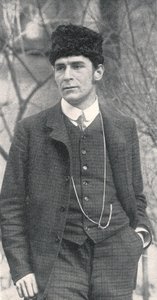
      Franz Marc

      Franz Marc

      1880 - 1916, Niemcy

      Quick facts about Franz Marc

      • Artistic Movement Or Style: Ekspresjonizm
      • Artists Or Movements Influenced By This Artist: ['Der Blaue Reiter']
      • Artists Who Influenced This Artist:
        • Van Gogh
        • Delaunay
      • Date Of Birth: 8 lutego 1880
      • Date Of Death: 4 marca 1916
      • Full Name: Franz Moritz Wilhelm Marc
      • Nationality: Niemiec
      • Notable Artworks:
        • Kruk
        • Jeździec
        • Koń
      • Place Of Birth: Monachium, Niemcy

      Biografia artysty

      A Life Immersed in Color and Spirit

      Franz Moritz Wilhelm Marc, born in Munich in 1880, was a painter whose brief but intensely focused career irrevocably altered the course of German Expressionism. His story is one of profound spiritual seeking translated into a vibrant visual language, a quest to understand the essence of life through the purity he found in the natural world—particularly within the animal kingdom. Initially influenced by his father, Wilhelm Marc, a landscape painter, young Franz’s artistic path wasn't immediately certain. He briefly considered theology, grappling with questions of faith and existence before ultimately dedicating himself to art at the Academy of Fine Arts in Munich. These early explorations into religious thought would remain deeply embedded within his work, shaping his belief that art could be a conduit for spiritual experience. His academic training provided him with technical foundations, but it was encounters with the works of Vincent van Gogh during visits to Paris that truly ignited his artistic vision. Van Gogh’s emotive use of color and raw expression resonated profoundly with Marc, liberating him from conventional techniques and setting him on a path toward a more subjective and emotionally charged style.

      The Blue Rider and a New Artistic Vision

      Marc's artistic development wasn’t solitary; it flourished within the dynamic context of early 20th-century Munich. He experimented with various artist groups, including the Neue Künstlervereinigung München, before co-founding *Der Blaue Reiter* (The Blue Rider) in 1911 alongside Wassily Kandinsky. This wasn’t merely a group or an exhibition series; it was a philosophical and artistic revolution. *Der Blaue Reiter* sought to move beyond mere representation, aiming instead to express inner spiritual truths through abstraction and symbolic color. The journal of the same name became a platform for disseminating these ideas, showcasing not only their own work but also that of other forward-thinking artists and exploring diverse cultural influences from folk art to primitive sculpture. Marc’s contributions during this period were pivotal. He moved away from depicting landscapes as static scenes, instead focusing on animals—horses, deer, foxes—as vessels of spiritual energy. These weren’t simply animal portraits; they were symbolic representations of innocence, harmony, and a connection to the natural world that he believed humanity had lost. The influence of Robert Delaunay’s exploration of abstract forms and vibrant colors further propelled Marc toward simplification and heightened emotional expression in his work. Paintings like *The Tiger* (1912) and *Red Deer* (1912) exemplify this shift, showcasing bold color choices and a growing focus on the inherent qualities of his subjects rather than realistic depiction.

      Symbolism, Color, and the Essence of Being

      Marc’s artistic style is immediately recognizable for its distinctive use of color and form. He didn't employ color descriptively; instead, he imbued it with symbolic meaning. Blue represented spirituality and masculinity, yellow signified joy and femininity, and red embodied violence and materiality. These weren’t arbitrary choices but a carefully constructed system designed to convey specific emotional and philosophical ideas. His animals aren’t merely subjects; they are embodiments of these concepts. The simplification of forms—reducing figures to their essential shapes—further emphasized the underlying spiritual essence he sought to capture. *The Tower of Blue Horses* (1913), sadly lost during World War II, is perhaps the most iconic example of this approach, a powerful and evocative composition that encapsulates his artistic vision. He believed animals possessed an inherent purity and connection to nature that humans had forfeited through societal constraints and intellectualization. By portraying them with such reverence and symbolic weight, Marc sought to remind viewers of this lost harmony and inspire a deeper appreciation for the natural world. His work wasn’t about depicting *what* he saw but rather *how* he felt—a deeply personal and spiritual response to his surroundings.

      Influences and Development

      Marc's artistic journey was shaped by a confluence of influences. Initially, his father’s landscape paintings instilled in him an appreciation for the beauty of nature. However, it was his exposure to Impressionism during his time in Paris that fundamentally altered his approach. The vibrant colors and fleeting moments captured by artists like Monet ignited within him a desire to express emotion through color rather than simply replicating reality. Van Gogh’s raw emotionality and expressive brushstrokes proved particularly transformative, liberating Marc from the constraints of academic tradition. He also drew inspiration from Symbolist art, which emphasized subjective experience and spiritual symbolism. The writings of Nietzsche and Schopenhauer, exploring themes of spirituality and existentialism, further informed his artistic vision. The encounter with Kandinsky within *Der Blaue Reiter* was crucial; their shared interest in abstraction and the exploration of inner states led to a collaborative dialogue that pushed both artists toward new creative horizons. Marc’s early works, characterized by meticulous detail and realistic depictions, gradually gave way to a more expressive style marked by simplified forms, bold colors, and symbolic imagery.

      A Tragic End and Lasting Legacy

      The outbreak of World War I in 1914 dramatically altered Marc's life and artistic trajectory. Despite seeking exemption due to his status as an artist, he was drafted into the German army, serving as a cavalryman. The horrors of war deeply affected him, yet even amidst the chaos, he continued to paint, finding solace and meaning in his art. Tragically, Franz Marc died on March 4, 1916, at the Battle of Verdun, a devastating loss for the art world. His untimely death cut short a career brimming with potential, but it also cemented his place as a pivotal figure in modern art history. His work continues to resonate today, influencing generations of artists and captivating audiences with its emotional depth and spiritual resonance. Marc’s paintings are exhibited in major museums worldwide, including the Lenbachhaus in Munich, which holds an extensive collection of his work. He is remembered not only as a pioneer of German Expressionism but also as a visionary artist who dared to explore the profound connection between art, spirituality, and the natural world—a legacy that continues to inspire awe and contemplation. His artistic vision remains a testament to the power of art to transcend the material realm and touch upon something deeper within the human spirit.

      § 5Comparanda

      § 6Questions

      Najważniejsze informacje

      • Location: Museum Folkwang, Essen
      • Artistic style: Abstraction
      • Movement: Expressionism
      • Subject or theme: Nature; Spirituality
      • Title: Forms at Play

      Quiz o sztuce

      Do każdego pytania dotyczy tylko jedna poprawna odpowiedź.

      Pytanie 1:
      What artistic influence is prominently evident in Franz Marc’s ‘Forms at Play,’ particularly due to his collaboration with Robert Delaunay?
      Pytanie 2:
      How does Marc's painting contrast with Delaunay’s approach in Les Fenêtres sur la Ville regarding structural organization?
      Pytanie 3:
      According to Marc's writings, what is his primary artistic belief regarding the role of art?
      Pytanie 4:
      What natural processes does Marc suggest are reflected in his abstraction, referencing both crystals and plants?
      Pytanie 5:
      Where is ‘Forms at Play’ currently housed, highlighting its significance within the realm of modern art?

      § 7Cite this entry

      AllPaintingsStore.com, “Franz Marc, Forms at Play”, https://allpaintingsstore.com/pl/art/franz-marc-forms-at-play-D3YGB4-en/ArtistReproduction/ (accessed 1 Październik 2026).

      § 8The reproduction

      Ręcznie malowana reprodukcja olejowa

      Ręcznie malowany obraz olejny na płótnie, wykonany na zamówienie przez naszych artystów w wybranym przez Ciebie wymiarze i oprawie. ( Przełącz na wydania drukowane Przejdź do wersji cyfrowej)

      It is specified on the order sheet in the margin; the present state of that sheet reads as follows.

      Forms at Play

      Technika reprodukcji

      Wymiary reprodukcji

      -

      Wybitny mistrz artystyczny

      Większa szczegółowość, finezja i dodatkowy czas na realizację

      -

      Opcje oprawy reprodukcji

      -

      -

      W przypadku dzieł sztuki lub reprodukcji, których którykolwiek z boków przekracza 105 cm (około 41 cali), rama zostanie wysłana w formie zestawu do samodzielnego montażu. Metoda ta zapewnia bezpieczną dostawę i zapobiega uszkodzeniom podczas transportu.

      Wymagany profesjonalny montaż – nie jest to produkt typu DIY.
      Zestaw musi zostać złożony, a płótno naciągnięte przez doświadczonego profesjonalnego ramiarza, przy użyciu kleju do drewna (brak w zestawie), kleszczy do naciągania płótna oraz ścisków, które utrzymają krosna w równej pozycji podczas schnięcia kleju. Nieprawidłowy montaż lub nierównomierne napięcie płótna może trwale uszkodzić dzieło sztuki i nie podlega naszej gwarancji.

      • W zestawie znajdują się wszystkie listwy z litego drewna, precyzyjnie docięte do wymiarów.

      • Montaż odbywa się przy użyciu dołączonych wkrętów oraz kleju do drewna do łączenia narożników, którego zestaw nie zawiera i który musi zostać dostarczony przez ramiarza.

      • Wymagane są profesjonalne narzędzia, których nie ma w zestawie: kleszcze do naciągania płótna (napinacz) oraz zaciski, które pozwolą utrzymać listwy w równej pozycji podczas schnięcia kleju.

      Ważne:
      Do połączenia narożników niezbędny jest klej do drewna, listwy należy unieruchomić za pomocą ścisków do momentu całkowitego wyschnięcia kleju, a naciągnięcie płótna na złożoną ramę wymaga użycia kleszczy do naciągania płótna. Żaden z tych elementów nie jest dołączony do zestawu. Przed zamówieniem tego rozmiaru zalecamy konsultację z doświadczonym ramiarzem.

      Etykieta obiektu

      -

      -

      Lakier ochronny

      Lakier z połyskiem (pogłębia kolory, chroni przed światłem i wilgocią)

      -

      Personalizacja dzieła

      Przykłady możliwości personalizacji: zastąp twarz zdjęciem klienta; dodaj zwierzę domowe (np. zamień kota na psa); umieść ukrytą wiadomość w tle; zmień krajobraz lub elementy tła.

      -

      Ekspresowa

      Dostawa na cały świat () w ciągu 3–4 tygodni zamiast standardowych 5 tygodni. (29 Październik). Bez kompromisów w kwestii jakości.

      -

      Przesyłka ekspresowa

      Dostawa na cały świat () w ciągu 5 tygodni. (5 Listopad).

      W cenie

      Cena całkowita

      zł 993

      Included with every order

      • Bezpłatna ekspresowa wysyłka na cały świat
      • Wysokiej jakości płótno lniane
      • Pełne ubezpieczenie przesyłki
      • Gwarancja zwrotu należności celnych i podatków importowych
      • Gwarancja wiernego odwzorowania kolorów
      • 100-dniowa polityka zwrotów (tylko w przypadku wad)
      • Gwarancja 100% zwrotu pieniędzy
      • Zniżka przy zakupie wielu sztuk
      Order sheet