Gwarancja zwrotu pieniędzy · 100 dni Darmowa dostawa na cały świat
449 582dzieła sztuki 30 618artyści 4 705muzea 32języki
Waluta
    Język
      Atelier · Est. 2015 · Paryż, Francja
      AllPaintingsStore
      allpaintingsstore.com
      Zobacz w skali 1:1 Zobacz w AR Przełącz na wersję drukowaną Przełącz na wersję cyfrową Wyślij
      Szczegóły Przewodnik Dodaj do ulubionych Pobierz plik obrazu Podobne obiekty RTG Pokaz slajdów Statystyki

      Śpiący Cervus

      ‘Śpiący Cervus’ przez Franz Marcę – ikoniczny obraz ekspresjonizmu niemieckiego, przedstawiający spokojnego jelonka w lesie. Odkryj piękno i duchową głębię dzieła Marca na WikiArt!

      Franz Marc (1880-1916) – niemiecki malarz ekspresjonistyczny, znany z symbolicznych obrazów zwierząt i duchowego przesłania. Odkryj jego unikalny styl i wpływ na sztukę nowoczesną!

      Ręcznie malowana reprodukcja olejowa

      Ręcznie malowany obraz olejny na płótnie, wykonany na zamówienie przez naszych artystów w wybranym przez Ciebie wymiarze i oprawie. ( Przełącz na wersję drukowaną Przełącz na wersję cyfrową)

      Corner sample of the P118B picture frame: moulded polystyrene, 5 cm wide and 3 cm thick
      P118B 10
      Corner sample of the P118H picture frame: moulded polystyrene, 5 cm wide and 3 cm thick
      P118H 10
      Corner sample of the P118W picture frame: moulded polystyrene, 5 cm wide and 3 cm thick
      P118W 10
      Corner sample of the P438Z picture frame: moulded polystyrene, 5.5 cm wide and 3.5 cm thick
      P438Z 10
      Corner sample of the P508JH picture frame: moulded polystyrene, 7 cm wide and 3.5 cm thick
      P508JH 12
      Corner sample of the P508YH picture frame: moulded polystyrene, 7 cm wide and 3.5 cm thick
      P508YH 12
      Corner sample of the P805H picture frame: moulded polystyrene, 5 cm wide and 3.5 cm thick
      P805H 10
      Corner sample of the P805Z picture frame: moulded polystyrene, 5 cm wide and 3.5 cm thick
      P805Z 10
      Corner sample of the P919BZ picture frame: moulded polystyrene, 7 cm wide and 3.5 cm thick
      P919BZ 10
      Corner sample of the P919G picture frame: moulded polystyrene, 7 cm wide and 3.5 cm thick
      P919G 10
      Corner sample of the P919XJ picture frame: moulded polystyrene, 7 cm wide and 3.5 cm thick
      P919XJ 10
      Corner sample of the P959ZH picture frame: moulded polystyrene, 5 cm wide and 3 cm thick
      P959ZH 10
      Corner sample of the P968JZ picture frame: moulded polystyrene, 6 cm wide and 4 cm thick
      P968JZ 12
      Corner sample of the W106C picture frame: solid wood, 5 cm wide and 3 cm thick
      W106C 8
      Corner sample of the W218G picture frame: solid wood, 5 cm wide and 3 cm thick
      W218G 10
      Corner sample of the W218JH picture frame: solid wood, 5 cm wide and 3 cm thick
      W218JH 8
      Corner sample of the W218Y picture frame: solid wood, 5 cm wide and 3 cm thick
      W218Y 10
      Corner sample of the W307PJ picture frame: solid wood, 6 cm wide and 3 cm thick
      W307PJ 10
      Corner sample of the W316G picture frame: solid wood, 6 cm wide and 3 cm thick
      W316G 10
      Corner sample of the W316PJ picture frame: solid wood, 6 cm wide and 3 cm thick
      W316PJ 8
      Corner sample of the W316Y picture frame: solid wood, 6 cm wide and 3 cm thick
      W316Y 10
      Corner sample of the W398PJ picture frame: solid wood, 5 cm wide and 3 cm thick
      W398PJ 8
      Corner sample of the W4111J picture frame: solid wood, 6.5 cm wide and 3.5 cm thick
      W4111J 10
      Corner sample of the W500HY picture frame: solid wood, 7 cm wide and 5 cm thick
      W500HY 15
      Corner sample of the W500JH picture frame: solid wood, 7 cm wide and 5 cm thick
      W500JH 15
      Corner sample of the W692G picture frame: solid wood, 8 cm wide and 4 cm thick
      W692G 12
      Corner sample of the W849H picture frame: solid wood, 5 cm wide and 3 cm thick
      W849H 8
      Corner sample of the W940BG picture frame: solid wood, 7.5 cm wide and 4.5 cm thick
      W940BG 15
      Corner sample of the W953PJ picture frame: solid wood, 6 cm wide and 3.5 cm thick
      W953PJ 8

      Standardowy
      na zamówienie
      CM
      INCH

      Wybierz spośród naszych standardowych rozmiarów, które zachowują oryginalne proporcje dzieła sztuki.

      szerokość
      wysokość

      Możesz wprowadzić własne wymiary, aby dopasować obraz do konkretnej ramy lub przestrzeni. Jeśli wybrany rozmiar nie będzie odpowiadał proporcjom oryginału, przytniecie dzieło sztuki lub rozszerzymy je o dodatkowe elementy, ręcznie domalowane przez artystę. Przed rozpoczęciem produkcji wyślemy projekt cyfrowy do Twojej akceptacji.
      Należy pamiętać, że podgląd na ekranie nie odzwierciedla rzeczywistego przycinania ani rozszerzania obrazu. Tylko projekt dokładnie pokaże ostateczną kompozycję.
      Choć oferujemy możliwość zamówienia niestandardowych rozmiarów, zalecamy wybór wymiaru z gotowej listy, aby zachować oryginalne proporcje dzieła.

      Przykłady możliwych zmian: Zamień twarz na zdjęcie klienta; Dodaj zwierzę domowe (np. zamień kota na psa); Ukryj wiadomość w tle; Zmień krajobraz lub elementy tła.
      Po złożeniu zamówienia zespół AllPaintingsStore.com skontaktuje się z klientem drogą mailową w celu uzyskania instrukcji i prześle wizualizację projektu

      Dostawa na całym świecie () w ciągu 3–4 tygodni zamiast standardowych 5 tygodni. (10 Październik). Bez kompromisów w kwestii jakości.

      Bezpłatna ekspresowa wysyłka na cały świat
      Wysokiej jakości płótno lniane
      Pełne ubezpieczenie transportowe
      Gwarancja zwrotu należności celnych i podatków importowych
      Gwarancja idealnego odwzorowania barw
      100-dniowy okres na zwrot dzieła w przypadku wykrycia wad produkcyjnych
      Gwarancja 100% zwrotu pieniędzy
      Oferta przy zakupie wielu sztuk

      Cena całkowita

      zł 961

      Śpiący Cervus

      Technika wykonania

      Rozmiar reprodukcji

      -

      Suma do zapłaty

      zł 961

      Kluczowe informacje

      • Year: 1913
      • Title: Sleeping Deer
      • Influences: Vincent van Gogh
      • Artist: Franz Marc
      • Location: Private Collection
      • Medium: Oil on Canvas
      • Notable elements or techniques: Bold Color Palette

      Quiz wiedzy o sztuce

      Do każdego pytania dotyczy tylko jedna poprawna odpowiedź.

      Pytanie 1:
      What artistic movement is Franz Marc’s ‘Sleeping Deer’ primarily associated with?
      Pytanie 2:
      The painting depicts a deer resting on its paws. What stylistic element is most prominent in conveying this serene scene?
      Pytanie 3:
      'Sleeping Deer' was created by Franz Marc as part of a group known for exploring spiritual themes through art. What was the name of this influential journal?
      Pytanie 4:
      What technique did Marc employ to achieve the luminous quality of the forest background?
      Pytanie 5:
      Beyond its visual beauty, what overarching concept does ‘Sleeping Deer’ aim to communicate according to Marc's artistic philosophy?

      Śpiący Jeleń – Odziecie Życia i Duchowego Poszukiwania Franz Marc

      Franz Moritz Wilhelm Marc, urodzony w Monachium w 1880 roku, był malarzem, którego krótka lecz intensywnie skoncentrowana kariera radykalnie zmieniła bieg ekspresjonizmu niemieckiego. Jego historia opowiada się o głębokim duchowym poszukiwaniu wyrażonym przez żywy język wizualny – ku zrozumieniu esencji życia poprzez czystość, którą znalazł w świecie zwierząt. Początkowo zainspirowany ojcem, Wilhelm Marcem, pejzażystą, młody Franz nie był od razu pewien swojej drogowej przyszłości. Krótko rozważał teologię, mierząc się z pytaniami wiary i egzystencji przed ostatecznym poświęceniem się sztuce na Akademii Sztuk Pięknych w Monachium. Te pierwsze eksploracje refleksji religijnej pozostały głęboko zakorzenione w jego twórczości, kształtując przekonanie, że sztuka może być kanałem doświadczenia duchowego. Jego edukacja akademicka zapewniła mu podstawy techniczne, lecz spotkania z dziełami Vincenta van Gogha…
      • …zaczęły kształtować jego światopogląd i inspirację wykorzystaniem kolorów jako narzędzia ekspresji emocjonalnej.
      • Marc wierzył, że prawdziwe piękno tkwi w zdolności sztuki do przekazywania uczuć i refleksji nad istotą ludzkiego doświadczenia.
      • Pod wpływem filozofii Nietzschego oraz zainteresowań mistycyzmem rosyjskim twórczość Marc’a nabiera głębi symbolicznej interpretacji.

      Styl Cubizm – Od Obiektywnego Widzenia do Wyrażenia Emocji

      Franz Marc był jednym z pionierów ekspresjonizmu niemieckiego, który wraz z Georgiem Groszem i innymi twórcami stworzył Der Blaue Reiter – magazyn poświęcony sztuce abstrakcyjnej i duchowym refleksjom. Jego prace charakteryzują się wykorzystaniem stylu kubizmu, choć nie jest to kubizm klasyczny rozumiany jako rozkład obrazu na elementy geometryczne. Marc stosował kubizm ograniczony, koncentrując się na podstawowych kształtach i kolorach – przede wszystkim na czerwonym, żółtym i niebieskim – aby osiągnąć efekt intensywnego emocjonalnego przekazu. Jego twórczość stanowi próbę uchwycenia chwili piękna i spokoju, często przedstawiającą zwierzęta w harmonii z naturą.

      Symbolizm Życia i Duchowości – Odpowiedź na Zagadnienia Epoki

      “Śpiący Jeleń” jest doskonałym przykładem tego podejścia. Obraz przedstawia spokojnego jelnia leżącego na ziemi, głowę opuszczoną na łapy. Jego kolorystyka jest jasna i żywa – dominują ciepłe odcienie czerwonego i żółtego, które podkreślają energię życia oraz emanują wewnętrznym ciepłem. Otaczający zwierzę las jest przedstawiony w sposób abstrakcyjny, lecz pełen szczegółów – drzewa są stylizowane na podstawowe kształty, co dodatkowo wzmacnia efekt wizualnego i symbolicznego. Jeleń reprezentuje czystość, niewinność oraz połączenie z naturą – wartości istotne dla filozofii Marc’a i jego przekonań religijnych. Jego dzieła stanowią refleksję nad kondycją człowieka w obliczu przemian społecznych i filozoficznych XIX wieku.

      Znaczenie Dla Sztuki Współczesnej – Inspiracja dla Generacji Artystów

      “Śpiący Jeleń” pozostaje inspiracją dla współczesnych artystów, którzy czerpią z jego prostoty i emocjonalnego ładunku. Jego wpływ można dostrzec w twórczości wielu przedstawicieli sztuki abstrakcyjnej oraz ekspresjonizmu późniejszego – szczególnie tych zainteresowanych wykorzystaniem kolorów jako narzędzia komunikacji emocjonalnej i refleksji nad kondycją ludzkiego ducha. Obraz przypomina o sile piękna i harmonii zawartej w naturze oraz konieczności szukania wewnętrznego spokoju i duchowego zrozumienia. Jego monumentalne reprodukcje stanowią doskonały dodatek do wnętrz nowoczesnych przestrzeni mieszkalnych i komercyjnych, wprowadzając elementy kolorystyczną świeżością i głębią emocjonalną.

      Pytania i odpowiedzi

      Do jakiego stylu należy "Śpiący Cervus"?

      „Śpiący Cervus” to dzieło należące do nurtu German Expressionism. Nurt ten określa tradycję artystyczną, w której osadzone jest dzieło.

      Czy mogę zobaczyć „Śpiący Cervus” autorstwa Franz Marc w różnym oświetleniu?

      Dzieło "Śpiący Cervus" można badać warstwa po warstwie na stronie Prześwietlenie, która stanowi interaktywny podgląd inspirowany stołem świetlnym konserwatora, oferujący jedenaście optycznych odczytów obrazu.

      Jaki kolor dominuje w kompozycji „Śpiący Cervus” autorstwa Franz Marc?

      Dominującym kolorem dzieła „Śpiący Cervus” autorstwa Franz Marc jest Jasny brąz różowy (#cdb286).

      Któremu artyście przypisuje się "Śpiący Cervus"?

      Dzieło "Śpiący Cervus" przypisuje się Franz Marc.

      Ile lat miał Franz Marc, gdy powstało dzieło „Śpiący Cervus”?

      Gdy w 1912 roku powstało dzieło „Śpiący Cervus”, Franz Marc – urodzony/a w 1880 – miał/a 32 lat.

      Jaka jest data powstania dzieła „Śpiący Cervus” autorstwa Franz Marc?

      Dzieło „Śpiący Cervus” autorstwa Franz Marc powstało w 1912.

      Jakie pochodzenie narodowe stoi za German Expressionism dzieła "Śpiący Cervus"?

      "Śpiący Cervus" łączy nurt German Expressionism z Niemcy poprzez miejsce urodzenia jego twórcy.


      Biografia artysty

      A Life Immersed in Color and Spirit

      Franz Moritz Wilhelm Marc, born in Munich in 1880, was a painter whose brief but intensely focused career irrevocably altered the course of German Expressionism. His story is one of profound spiritual seeking translated into a vibrant visual language, a quest to understand the essence of life through the purity he found in the natural world—particularly within the animal kingdom. Initially influenced by his father, Wilhelm Marc, a landscape painter, young Franz’s artistic path wasn't immediately certain. He briefly considered theology, grappling with questions of faith and existence before ultimately dedicating himself to art at the Academy of Fine Arts in Munich. These early explorations into religious thought would remain deeply embedded within his work, shaping his belief that art could be a conduit for spiritual experience. His academic training provided him with technical foundations, but it was encounters with the works of Vincent van Gogh during visits to Paris that truly ignited his artistic vision. Van Gogh’s emotive use of color and raw expression resonated profoundly with Marc, liberating him from conventional techniques and setting him on a path toward a more subjective and emotionally charged style.

      The Blue Rider and a New Artistic Vision

      Marc's artistic development wasn’t solitary; it flourished within the dynamic context of early 20th-century Munich. He experimented with various artist groups, including the Neue Künstlervereinigung München, before co-founding *Der Blaue Reiter* (The Blue Rider) in 1911 alongside Wassily Kandinsky. This wasn’t merely a group or an exhibition series; it was a philosophical and artistic revolution. *Der Blaue Reiter* sought to move beyond mere representation, aiming instead to express inner spiritual truths through abstraction and symbolic color. The journal of the same name became a platform for disseminating these ideas, showcasing not only their own work but also that of other forward-thinking artists and exploring diverse cultural influences from folk art to primitive sculpture. Marc’s contributions during this period were pivotal. He moved away from depicting landscapes as static scenes, instead focusing on animals—horses, deer, foxes—as vessels of spiritual energy. These weren’t simply animal portraits; they were symbolic representations of innocence, harmony, and a connection to the natural world that he believed humanity had lost. The influence of Robert Delaunay’s exploration of abstract forms and vibrant colors further propelled Marc toward simplification and heightened emotional expression in his work. Paintings like *The Tiger* (1912) and *Red Deer* (1912) exemplify this shift, showcasing bold color choices and a growing focus on the inherent qualities of his subjects rather than realistic depiction.

      Symbolism, Color, and the Essence of Being

      Marc’s artistic style is immediately recognizable for its distinctive use of color and form. He didn't employ color descriptively; instead, he imbued it with symbolic meaning. Blue represented spirituality and masculinity, yellow signified joy and femininity, and red embodied violence and materiality. These weren’t arbitrary choices but a carefully constructed system designed to convey specific emotional and philosophical ideas. His animals aren’t merely subjects; they are embodiments of these concepts. The simplification of forms—reducing figures to their essential shapes—further emphasized the underlying spiritual essence he sought to capture. *The Tower of Blue Horses* (1913), sadly lost during World War II, is perhaps the most iconic example of this approach, a powerful and evocative composition that encapsulates his artistic vision. He believed animals possessed an inherent purity and connection to nature that humans had forfeited through societal constraints and intellectualization. By portraying them with such reverence and symbolic weight, Marc sought to remind viewers of this lost harmony and inspire a deeper appreciation for the natural world. His work wasn’t about depicting *what* he saw but rather *how* he felt—a deeply personal and spiritual response to his surroundings.

      Influences and Development

      Marc's artistic journey was shaped by a confluence of influences. Initially, his father’s landscape paintings instilled in him an appreciation for the beauty of nature. However, it was his exposure to Impressionism during his time in Paris that fundamentally altered his approach. The vibrant colors and fleeting moments captured by artists like Monet ignited within him a desire to express emotion through color rather than simply replicating reality. Van Gogh’s raw emotionality and expressive brushstrokes proved particularly transformative, liberating Marc from the constraints of academic tradition. He also drew inspiration from Symbolist art, which emphasized subjective experience and spiritual symbolism. The writings of Nietzsche and Schopenhauer, exploring themes of spirituality and existentialism, further informed his artistic vision. The encounter with Kandinsky within *Der Blaue Reiter* was crucial; their shared interest in abstraction and the exploration of inner states led to a collaborative dialogue that pushed both artists toward new creative horizons. Marc’s early works, characterized by meticulous detail and realistic depictions, gradually gave way to a more expressive style marked by simplified forms, bold colors, and symbolic imagery.

      A Tragic End and Lasting Legacy

      The outbreak of World War I in 1914 dramatically altered Marc's life and artistic trajectory. Despite seeking exemption due to his status as an artist, he was drafted into the German army, serving as a cavalryman. The horrors of war deeply affected him, yet even amidst the chaos, he continued to paint, finding solace and meaning in his art. Tragically, Franz Marc died on March 4, 1916, at the Battle of Verdun, a devastating loss for the art world. His untimely death cut short a career brimming with potential, but it also cemented his place as a pivotal figure in modern art history. His work continues to resonate today, influencing generations of artists and captivating audiences with its emotional depth and spiritual resonance. Marc’s paintings are exhibited in major museums worldwide, including the Lenbachhaus in Munich, which holds an extensive collection of his work. He is remembered not only as a pioneer of German Expressionism but also as a visionary artist who dared to explore the profound connection between art, spirituality, and the natural world—a legacy that continues to inspire awe and contemplation. His artistic vision remains a testament to the power of art to transcend the material realm and touch upon something deeper within the human spirit.
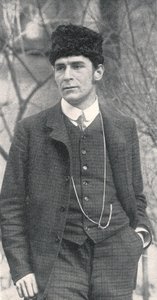
      Franz Marc

      Franz Marc

      1880 - 1916 , Niemcy

      Najważniejsze informacje

      • Artistic Movement Or Style: Ekspresjonizm
      • Artists Or Movements Influenced By This Artist: ['Der Blaue Reiter']
      • Artists Who Influenced This Artist:
        • Van Gogh
        • Delaunay
      • Date Of Birth: 8 lutego 1880
      • Date Of Death: 4 marca 1916
      • Full Name: Franz Moritz Wilhelm Marc
      • Nationality: Niemiec
      • Notable Artworks:
        • Kruk
        • Jeździec
        • Koń
      • Place Of Birth: Monachium, Niemcy
      Odkryj dzieła sztuki uporządkowane według tematów, stylów i cech charakterystycznych.