


 Podgląd w skali 1:1
 Wyślij jako kartkę
 Udostępnij
 Szczegóły dzieła
 Przewodnik

 Pobierz obraz
 Podobne obiekty
 RTG
RTG Pokaz slajdów
 Q&A
Q&A Statystyki
untitled (9075)


 Rozwiń treść
Giclée / Wydruk artystyczny
Wydruki giclée lub płótna o jakości muzealnej, szybka realizacja i szeroki wybór opcji wykończenia. ( Zamów ręcznie malowaną reprodukcję Przejdź do wersji cyfrowej)




P118B zł10

P118H zł10

P118W zł10

P438Z zł10

P508JH zł12

P508YH zł12

P805H zł10

P805Z zł10

P919BZ zł10

P919G zł10

P919XJ zł10

P959ZH zł10

P968JZ zł12

W106C zł8

W218G zł10

W218JH zł8

W218Y zł10

W307PJ zł10

W316G zł10

W316PJ zł8

W316Y zł10

W398PJ zł8

W4111J zł10

W500HY zł15

W500JH zł15

W692G zł12

W849H zł8

W940BG zł15

W953PJ zł8




Wybierz spośród naszych standardowych rozmiarów, które zachowują oryginalne proporcje dzieła sztuki.

Wpisz wymaganą szerokość i wysokość, aby dopasować grafikę do ramy lub ściany. Wydruk można jedynie przyciąć, nigdy nie powiększając go poza oryginalny obraz, dlatego format o innych proporcjach spowoduje utratę części kompozycji. Przed rozpoczęciem druku prześlemy Ci cyfrowy podgląd do zatwierdzenia. Obraz wyświetlany na tej stronie nie pokazuje rzeczywistego przycięcia — jedynie podgląd oddaje ten efekt.
Dostawa na cały świat () w ciągu 2 tygodni zamiast standardowych 4/5 tygodni. (30 Październik)

Bezpłatna ekspresowa wysyłka na cały świat

Wysokiej jakości płótno lniane

Pełne ubezpieczenie przesyłki

Gwarancja zwrotu należności celnych i podatków importowych

Gwarancja wiernego odwzorowania kolorów

100-dniowa polityka zwrotów (tylko w przypadku wad)

Gwarancja 100% zwrotu pieniędzy

Zniżka przy zakupie wielu sztuk
 Opcja ze szkłem jest dostępna wyłącznie w rozmiarach poniżej 110 cm

untitled (9075)
Giclée / Wydruk artystyczny
Wymiary reprodukcji
-


Cena całkowita
zł 246
Franz Marc’s ‘Untitled (9075)’ – A Symphony of Spirit
This captivating artwork, tentatively titled ‘Untitled (9075)’, offers a profound glimpse into the artistic soul of Franz Marc, one of the most significant figures in early 20th-century German Expressionism. Painted during a period of intense spiritual searching and burgeoning artistic innovation, the piece embodies Marc’s core philosophy: to capture not merely the outward appearance of nature, but its very essence – its spirit. The scene unfolds with a remarkable immediacy, presenting a tableau of human interaction interwoven with the silent wisdom of the animal kingdom. A kneeling man, rendered in bold, earthy tones, engages with a majestic horse, while a watchful cow stands nearby, creating a dynamic composition that speaks to themes of companionship, respect for nature, and perhaps even a yearning for connection beyond the purely rational.
A Palette of Symbolism
Marc’s masterful use of color is central to understanding this work. He eschews naturalistic representation in favor of symbolic hues, reflecting his belief that colors possessed inherent spiritual qualities. The dominant blues and greens evoke a sense of tranquility and connection to the earth – mirroring his deep reverence for the natural world. The warm tones applied to the animal figures suggest vitality, strength, and an almost otherworldly presence. The inclusion of birds and sheep further amplifies this symbolism; these creatures have long been associated with innocence, freedom, and spiritual guidance in Western art and mythology. The two chairs, strategically placed within the composition, introduce a subtle element of human intervention and contemplation, prompting the viewer to consider their own relationship with the natural world.
Expressionist Roots & Technical Mastery
Born in Munich in 1880, Franz Marc’s artistic journey was profoundly shaped by his early exposure to theological thought and his deep connection to the landscapes of Bavaria. He honed his skills at the Academy of Fine Arts in Munich, absorbing influences from Impressionism and Post-Impressionism before ultimately forging his own distinct path within Expressionism. ‘Untitled (9075)’ demonstrates Marc’s technical prowess – a confident brushstroke, a deliberate layering of color, and an intuitive understanding of form. The painting's textured surface adds to its tactile quality, inviting the viewer to engage with the artwork on a visceral level. His technique reflects his desire to convey not just what he *saw*, but what he *felt* – a profound emotional response to the beauty and mystery of life.
Emotional Resonance & Artistic Legacy
‘Untitled (9075)’ transcends mere representation; it’s an evocative meditation on the interconnectedness of all living things. The scene's quiet dignity and palpable sense of harmony resonate with a timeless quality, inviting contemplation and offering a moment of respite from the complexities of modern life. Franz Marc’s work continues to captivate audiences today, solidifying his place as a pivotal figure in art history. A hand-painted reproduction of this artwork offers an unparalleled opportunity to experience the power and beauty of Marc's vision – a testament to his unwavering belief that art could be a pathway to spiritual understanding.
Pytania i odpowiedzi
Czy dzieło "untitled (9075)" jest dostępne jako wysokiej jakości wydruk artystyczny?
Odbitkę dzieła „untitled (9075)” – Franz Marc można zamówić bezpośrednio na stronie Wydruk artystyczny premium: szlachetna odbitka na płótnie bawełnianym lub archiwalnym papierze o strukturze płótna.
W jaki sposób „untitled (9075)” – Franz Marc łączy German Expressionism z krajem pochodzenia artysty?
"untitled (9075)" łączy nurt German Expressionism z Niemcy poprzez miejsce urodzenia jego twórcy.
Jaki poziom luminancji ma „untitled (9075)” – Franz Marc?
Jasność zarejestrowana dla „untitled (9075)” – Franz Marc wynosi Soft Shadow.
Podobne dzieła


Biografia artysty
A Life Immersed in Color and Spirit
Franz Moritz Wilhelm Marc, born in Munich in 1880, was a painter whose brief but intensely focused career irrevocably altered the course of German Expressionism. His story is one of profound spiritual seeking translated into a vibrant visual language, a quest to understand the essence of life through the purity he found in the natural world—particularly within the animal kingdom. Initially influenced by his father, Wilhelm Marc, a landscape painter, young Franz’s artistic path wasn't immediately certain. He briefly considered theology, grappling with questions of faith and existence before ultimately dedicating himself to art at the Academy of Fine Arts in Munich. These early explorations into religious thought would remain deeply embedded within his work, shaping his belief that art could be a conduit for spiritual experience. His academic training provided him with technical foundations, but it was encounters with the works of Vincent van Gogh during visits to Paris that truly ignited his artistic vision. Van Gogh’s emotive use of color and raw expression resonated profoundly with Marc, liberating him from conventional techniques and setting him on a path toward a more subjective and emotionally charged style.The Blue Rider and a New Artistic Vision
Marc's artistic development wasn’t solitary; it flourished within the dynamic context of early 20th-century Munich. He experimented with various artist groups, including the Neue Künstlervereinigung München, before co-founding *Der Blaue Reiter* (The Blue Rider) in 1911 alongside Wassily Kandinsky. This wasn’t merely a group or an exhibition series; it was a philosophical and artistic revolution. *Der Blaue Reiter* sought to move beyond mere representation, aiming instead to express inner spiritual truths through abstraction and symbolic color. The journal of the same name became a platform for disseminating these ideas, showcasing not only their own work but also that of other forward-thinking artists and exploring diverse cultural influences from folk art to primitive sculpture. Marc’s contributions during this period were pivotal. He moved away from depicting landscapes as static scenes, instead focusing on animals—horses, deer, foxes—as vessels of spiritual energy. These weren’t simply animal portraits; they were symbolic representations of innocence, harmony, and a connection to the natural world that he believed humanity had lost. The influence of Robert Delaunay’s exploration of abstract forms and vibrant colors further propelled Marc toward simplification and heightened emotional expression in his work. Paintings like *The Tiger* (1912) and *Red Deer* (1912) exemplify this shift, showcasing bold color choices and a growing focus on the inherent qualities of his subjects rather than realistic depiction.Symbolism, Color, and the Essence of Being
Marc’s artistic style is immediately recognizable for its distinctive use of color and form. He didn't employ color descriptively; instead, he imbued it with symbolic meaning. Blue represented spirituality and masculinity, yellow signified joy and femininity, and red embodied violence and materiality. These weren’t arbitrary choices but a carefully constructed system designed to convey specific emotional and philosophical ideas. His animals aren’t merely subjects; they are embodiments of these concepts. The simplification of forms—reducing figures to their essential shapes—further emphasized the underlying spiritual essence he sought to capture. *The Tower of Blue Horses* (1913), sadly lost during World War II, is perhaps the most iconic example of this approach, a powerful and evocative composition that encapsulates his artistic vision. He believed animals possessed an inherent purity and connection to nature that humans had forfeited through societal constraints and intellectualization. By portraying them with such reverence and symbolic weight, Marc sought to remind viewers of this lost harmony and inspire a deeper appreciation for the natural world. His work wasn’t about depicting *what* he saw but rather *how* he felt—a deeply personal and spiritual response to his surroundings.Influences and Development
Marc's artistic journey was shaped by a confluence of influences. Initially, his father’s landscape paintings instilled in him an appreciation for the beauty of nature. However, it was his exposure to Impressionism during his time in Paris that fundamentally altered his approach. The vibrant colors and fleeting moments captured by artists like Monet ignited within him a desire to express emotion through color rather than simply replicating reality. Van Gogh’s raw emotionality and expressive brushstrokes proved particularly transformative, liberating Marc from the constraints of academic tradition. He also drew inspiration from Symbolist art, which emphasized subjective experience and spiritual symbolism. The writings of Nietzsche and Schopenhauer, exploring themes of spirituality and existentialism, further informed his artistic vision. The encounter with Kandinsky within *Der Blaue Reiter* was crucial; their shared interest in abstraction and the exploration of inner states led to a collaborative dialogue that pushed both artists toward new creative horizons. Marc’s early works, characterized by meticulous detail and realistic depictions, gradually gave way to a more expressive style marked by simplified forms, bold colors, and symbolic imagery.A Tragic End and Lasting Legacy
The outbreak of World War I in 1914 dramatically altered Marc's life and artistic trajectory. Despite seeking exemption due to his status as an artist, he was drafted into the German army, serving as a cavalryman. The horrors of war deeply affected him, yet even amidst the chaos, he continued to paint, finding solace and meaning in his art. Tragically, Franz Marc died on March 4, 1916, at the Battle of Verdun, a devastating loss for the art world. His untimely death cut short a career brimming with potential, but it also cemented his place as a pivotal figure in modern art history. His work continues to resonate today, influencing generations of artists and captivating audiences with its emotional depth and spiritual resonance. Marc’s paintings are exhibited in major museums worldwide, including the Lenbachhaus in Munich, which holds an extensive collection of his work. He is remembered not only as a pioneer of German Expressionism but also as a visionary artist who dared to explore the profound connection between art, spirituality, and the natural world—a legacy that continues to inspire awe and contemplation. His artistic vision remains a testament to the power of art to transcend the material realm and touch upon something deeper within the human spirit.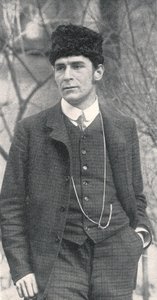
Franz Marc
1880 - 1916 , Niemcy
Krótka nota
- Artistic Movement Or Style: Ekspresjonizm
- Artists Or Movements Influenced By This Artist: ['Der Blaue Reiter']
- Artists Who Influenced This Artist:
- Van Gogh
- Delaunay
- Date Of Birth: 8 lutego 1880
- Date Of Death: 4 marca 1916
- Full Name: Franz Moritz Wilhelm Marc
- Nationality: Niemiec
- Notable Artworks:
- Kruk
- Jeździec
- Koń
- Place Of Birth: Monachium, Niemcy
Powiązane artykuły

Digital Metamorphosis: Transforming Personal Photos into Stunning AI-Driven Anime Masterpieces
Transform your photos into breathtaking anime masterpieces with AllPaintingsStore.com. Our advanced AI reconstructs reality through the lens of legendary animation, offering everything from digital magic to hand-painted oil canvases. Elevate your personal story and become an anime star!


