


 Podgląd w skali 1:1
 Wyślij jako kartkę
 Udostępnij
 Szczegóły dzieła
 Przewodnik

 Pobierz obraz
 Podobne obiekty
 RTG
RTG Pokaz slajdów
 Statystyki
Oreste


 Rozwiń treść
Giclée / Wydruk artystyczny
Wydruki giclée lub płótna o jakości muzealnej, szybka realizacja i szeroki wybór opcji wykończenia. ( Zamów ręcznie malowaną reprodukcję Przejdź do wersji cyfrowej)




P118B zł10

P118H zł10

P118W zł10

P438Z zł10

P508JH zł12

P508YH zł12

P805H zł10

P805Z zł10

P919BZ zł10

P919G zł10

P919XJ zł10

P959ZH zł10

P968JZ zł12

W106C zł8

W218G zł10

W218JH zł8

W218Y zł10

W307PJ zł10

W316G zł10

W316PJ zł8

W316Y zł10

W398PJ zł8

W4111J zł10

W500HY zł15

W500JH zł15

W692G zł12

W849H zł8

W940BG zł15

W953PJ zł8




Wybierz spośród naszych standardowych rozmiarów, które zachowują oryginalne proporcje dzieła sztuki.

Wpisz wymaganą szerokość i wysokość, aby dopasować grafikę do ramy lub ściany. Wydruk można jedynie przyciąć, nigdy nie powiększając go poza oryginalny obraz, dlatego format o innych proporcjach spowoduje utratę części kompozycji. Przed rozpoczęciem druku prześlemy Ci cyfrowy podgląd do zatwierdzenia. Obraz wyświetlany na tej stronie nie pokazuje rzeczywistego przycięcia — jedynie podgląd oddaje ten efekt.
Dostawa na cały świat () w ciągu 2 tygodni zamiast standardowych 4/5 tygodni. (25 Październik)

Bezpłatna ekspresowa wysyłka na cały świat

Wysokiej jakości płótno lniane

Pełne ubezpieczenie przesyłki

Gwarancja zwrotu należności celnych i podatków importowych

Gwarancja wiernego odwzorowania kolorów

100-dniowa polityka zwrotów (tylko w przypadku wad)

Gwarancja 100% zwrotu pieniędzy

Zniżka przy zakupie wielu sztuk
 Opcja ze szkłem jest dostępna wyłącznie w rozmiarach poniżej 110 cm

Oreste
Giclée / Wydruk artystyczny
Wymiary reprodukcji
-


Cena całkowita
zł 246
A Dreamscape of Mythic Tension
In the quiet, shadowed corridors of late 19th-century Symbolism, few works command the room with as much psychological gravity as Gustave Moreau’s Oreste. Painted around 1895, this masterpiece serves as a profound invitation into a meticulously crafted dreamscape, designed to provoke deep contemplation and resonate with the unspoken tensions of the human soul. The scene captures a solemn gathering around a dining table, bathed in a subdued, ethereal light that instantly establishes an atmosphere of hushed reverence. It is not merely a depiction of figures in a room; it is a window into a world where the boundaries between reality and myth are perpetually blurred.
The composition draws the viewer into a moment of heavy deliberation. A group of individuals sits at the table, their postures conveying a weight of seriousness that transcends the physical setting. As one gazes upon the scene, the presence of a simple bowl resting upon the tabletop hints at something far deeper than mere sustenance; it acts as a symbolic anchor for the complexities of life and ritual. The room itself, dimly lit and shrouded in mystery, creates an intimate yet hauntingly vast space where every shadow seems to hold a secret, making it an extraordinary focal point for any collection seeking to evoke intrigue and intellectual depth.
The Alchemy of Technique and Symbolism
Moreau’s mastery is most evident in his signature use of technique, specifically his employment of tempera on canvas. This method allowed him to achieve a remarkable luminosity and subtle tonal gradations that are essential for conveying the ethereal quality demanded by the Symbolist movement. His brushwork, though contributing to an overall impression of stillness, is punctuated by expressive gestures and an opulent ornamentation that defines his unique aesthetic. Every detail, from the texture of the garments to the play of light on the tabletop, is rendered with a meticulousness that rewards prolonged observation.
Beyond the surface beauty lies a dense web of symbolism rooted in the intellectual ferment of Paris. During a period when thinkers like Nietzsche and Freud were beginning to reshape our understanding of the psyche, Moreau drew heavily from the ancient echoes of Homer’s Iliad. The figures within the composition, reminiscent of deities such as Zeus and Hera, are not presented as benevolent rulers but as embodiments of primal, often unsettling, forces. The bowl on the table serves as a potent symbol of sacrifice and ritual, reflecting Moreau's preoccupation with the spiritual and the cyclical nature of mythic tragedy. For the discerning collector or interior designer, this painting offers more than decoration; it provides a narrative layer of profound spiritual and psychological complexity.
An Eternal Presence for the Modern Interior
For those looking to curate an environment of sophistication and thought-provoking beauty, Oreste offers an unparalleled emotional impact. The painting’s ability to anchor a room with its dark, moody palette and dramatic composition makes it a versatile choice for high-end residential or gallery settings. It possesses a timeless quality that bridges the gap between the classical past and the modern fascination with the subconscious.
Whether displayed in a quiet study, a formal dining area, or a contemporary living space, a high-quality reproduction of this work brings with it the prestige of art history. It invites guests to linger, to wonder, and to engage with the shadows. To possess such a piece is to hold a fragment of Moreau’s "dream weaver" legacy, allowing the haunting beauty of Symbolism to breathe life into the modern architectural landscape.
Pytania i odpowiedzi
W jaki sposób nurt i epoka przenikają się w „Oreste” – Gustaw Moreau?
"Oreste" należy do nurtu Symbolist Painting, a jego twórca tworzył w epoce – Wiek XIX.
Do czego zaleca się wykorzystanie wydruku "Oreste"?
Zalecanym zastosowaniem wydruku "Oreste" jest Mood.
Czy dzieło "Oreste" znajduje się w domenie publicznej?
„Oreste” – Gustaw Moreau znajduje się w domenie publicznej (należy do domeny publicznej – autorskie prawa majątkowe wygasły). Status ten określa zasady reprodukcji obrazu tego dzieła.
Podobne dzieła


Biografia artysty
A Dream Weaver of Symbolism: The Life and Art of Gustave Moreau
Gustave Moreau, a name inextricably linked to the ethereal beauty and profound mysteries of Symbolist painting, emerged from 19th-century Paris as an artist utterly distinct in his vision. Born in 1826 into a comfortable bourgeois family—his father an architect and archivist—Moreau’s early life was steeped in intellectual curiosity and a deep appreciation for aesthetics. From a remarkably young age, he displayed a prodigious talent for drawing, nurtured through the rigorous training of the École des Beaux-Arts under esteemed figures like François-Édouard Picot. However, Moreau's artistic trajectory swiftly diverged from the prevailing Realist and Impressionist currents dominating his time. He wasn’t driven by a desire to capture fleeting moments or represent objective reality; instead, he sought to unlock the hidden realms of myth, religion, and the intricate workings of the human psyche through a deeply personal and symbolic visual language. His artistic journey became an inward exploration, translating subjective emotions and spiritual yearnings onto canvas with meticulous detail and a palette often rich in vibrant, almost opulent hues.The Forge of Imagination: Influences and Artistic Development
Moreau’s artistic development wasn't forged in isolation. While rejecting the dominant trends of his era, he drew inspiration from a remarkably diverse range of sources. The dramatic use of color and exotic subject matter found in the works of Eugène Delacroix ignited within him a passionate interest in narrative painting imbued with intense emotionality. He held Renaissance masters—Michelangelo and Leonardo da Vinci, in particular—in the highest esteem, deeply admiring their mastery of composition, anatomical precision, and their remarkable ability to penetrate the complexities of human psychology. Yet, Moreau wasn’t merely imitating these giants; he was synthesizing their influences into something entirely new, a distinctly personal style. His pivotal journey to Italy during the 1850s proved transformative, immersing him in the art of antiquity and the Renaissance. This experience provided an unparalleled wealth of motifs and stylistic cues that would subsequently populate his future works. He meticulously copied Old Master paintings—not as mere reproductions, but as a means of absorbing their techniques and unlocking their secrets—carefully studying brushstrokes, color palettes, and compositional strategies. This dedication to craft, combined with his burgeoning fascination with mythology and literature, formed the bedrock of his unique artistic vision.A World of Symbols: Themes and Techniques
Moreau’s paintings are not simply illustrations of myths or biblical stories; they are complex allegories designed to provoke contemplation and interpretation. He didn't aim to retell these narratives literally but rather to explore their underlying psychological and spiritual truths. His canvases are populated with a rich tapestry of symbolic imagery—serpents representing temptation, jewels signifying earthly desires, and figures embodying abstract concepts such as grief, loss, or redemption. He masterfully created an atmosphere of dreaminess through intricate detail, shimmering textures, and often unsettling juxtapositions of light and shadow. Moreau’s technique was characterized by a painstaking layering of paint—a deliberate process that resulted in surfaces brimming with iridescent colors and evoking a sense of otherworldly beauty. His skillful use of gold leaf further enhanced this effect, lending his works a Byzantine quality that underscored their spiritual dimension. He prioritized the expressive power of color and form over strict adherence to realistic representation, focusing on conveying mood and meaning rather than photographic accuracy.Notable Works and Legacy
Throughout his career, Moreau produced an astonishing body of work, including iconic paintings such as *Salomé tańcząca przed Herodem* (Salome Dancing before Herod), *Jupiter i Semele*, *Orfeusz*, *Widzenie*, and *Święta Elżbieta z Anglii lub Cud róż*. These works demonstrate his extraordinary skill in depicting mythological scenes, biblical narratives, and allegorical themes. Moreau’s influence extended far beyond the Symbolist movement itself. He mentored numerous artists at the École des Beaux-Arts, encouraging them to embrace imagination, symbolism, and individual expression—a radical departure from the prevailing academic norms of the time. Though initially met with mixed reactions, Moreau's work gained recognition in the late 19th and early 20th centuries, solidifying his place as a pivotal figure in modern art. Today, the Musée Gustave Moreau in Paris stands as a testament to his enduring legacy—a sanctuary where visitors can immerse themselves in the captivating world of this extraordinary artist, experiencing firsthand the power and beauty of his symbolic vision.Key Characteristics
- Symbolic Imagery: Moreau’s paintings are replete with symbols representing complex ideas and emotions.
- Dreamlike Atmosphere: He skillfully created an ethereal and otherworldly atmosphere through meticulous detail and color manipulation.
- Rich Palette: His use of vibrant, often opulent colors contributed to the overall sense of mystery and beauty.
- Influence of Renaissance Masters: Moreau drew inspiration from the techniques and philosophies of Michelangelo and Leonardo da Vinci.
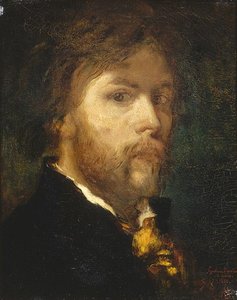
Gustaw Moreau
1826 - 1898 , Francja
Krótka nota
- Artistic Movement Or Style: Symbolizm
- Artists Or Movements Influenced By This Artist:
- Matisse
- Rouault
- Artists Who Influenced This Artist:
- Delacroix
- Michelangelo
- Date Of Birth: 6 kwietnia 1826
- Date Of Death: 18 kwietnia 1898
- Full Name: Gustave Moreau
- Nationality: Francuz
- Notable Artworks:
- Salome tańcząca
- Prometeusz
- Święta Elżbieta
- Place Of Birth: Paryż, Francja
Powiązane artykuły

Białe arcydzieła: Top 10 słynnych obrazów pełnych światła i emocji | AllPaintingsStore.pl
Odkryj 10 najsłynniejszych obrazów, w których biel dominuje i tworzy wyjątkową atmosferę. Poznaj historie Moneta, Van Gogha i innych mistrzów! Reprodukcje najwyższej jakości na AllPaintingsStore.com – inspiracje wnętrzarskie i kolekcjonerstwo sztuki online.

Kulturowy Nastrój w Jadalni: Wybór Reprodukcji Sztuki dla Eleganckiego Wnętrza
Odkryj historię i symbolikę martwej natury w jadalni! Inspiracje od mistrzów, porady aranżacyjne i wysokiej jakości reprodukcje obrazów z AllPaintingsStore.com. Stwórz eleganckie wnętrze pełne kultury.

Subtelności cieni: Eksploracja czarno-białych abstrakcji we współczesnym projektowaniu wnętrz
Odkryj subtelności czarno-białych abstrakcji we wnętrzach! Eksperckie porady dotyczące historii, psychologii i zastosowania w projektach hotelowych. Znajdź idealną reprodukcję z AllPaintingsStore.

Dining Room Elegance: Transforming Your Space with Impressionist Masterpieces
Elevate your dining room with the luminous beauty of Impressionist masterpieces. Discover how hand-painted Claude Monet and Renoir reproductions can transform your space into a sanctuary of light, color, and timeless elegance for your home.

Czarne arcydzieła: Top 10 słynnych obrazów pełnych mroku i ekspresji | AllPaintingsStore.com
Odkryj 10 słynnych obrazów, w których czerń króluje! Poznaj historie artystów, ekspresjonizm i mroczną paletę barw. Reprodukcje dzieł sztuki najwyższej jakości na AllPaintingsStore.com – inspiracje do wnętrz i kolekcjonerstwo.


