early life and training
pierre-henri de valenciennes, a french painter, was born on december 6, 1750. his birthplace is not specified in available records, but his contributions to the art world are well-documented. de valenciennes' early training and education are not extensively recorded, but it is known that he worked in rome from 1778 to 1782, where he made a number of landscape studies directly from nature.contributions to en plein air painting
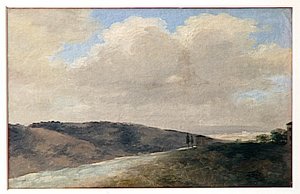
de valenciennes was influential in elevating the status of en plein air (open-air painting). his work in rome led to the development of his theory, which he outlined in his 1800 treatise reflections and advice to a student on painting, particularly on landscape. this concept introduced the idea of a 'landscape portrait,' where an artist paints a landscape directly while looking upon it, capturing its particular details. this approach allowed de valenciennes to capture the fleeting changes of a landscape due to light and weather.notable students and influence
among his notable students were jean-victor bertin, achille etna michallon, louis étienne watelet, louis-françois lejeune, and the first french panorama painter pierre prévost. de valenciennes' influence on these artists and his contributions to the development of en plein air painting have left a lasting impact on the art world.later life and death
de valenciennes passed away in paris on february 16, 1819. he is buried in the père lachaise cemetery, a famous cemetery in paris known for its notable residents.- view pierre-henri de valenciennes's artwork on AllPaintingsStore.com
- explore the musée des beaux-arts valence, a museum featuring european paintings and sculptures, on AllPaintingsStore.com
- discover more about french art and its history on wikipedia
legacy
pierre-henri de valenciennes's legacy in the art world is undeniable. his pioneering work in en plein air painting has inspired generations of artists, and his influence can still be seen today. through his treatise and his students, de valenciennes has left an indelible mark on the world of art.Questions & Answers
What are the birthplace and birth year of Pierre-Henri de Valenciennes?
Pierre-Henri de Valenciennes was born in Toulouse in 1750.
Where are Pierre-Henri de Valenciennes's artworks grouped by palette?
To find works by Pierre-Henri de Valenciennes in a specific palette, use the artist's By Palettes page.
Is there a complete list of Pierre-Henri de Valenciennes's artworks?
Every work by Pierre-Henri de Valenciennes on this website can be browsed from the artist's All Artworks page.