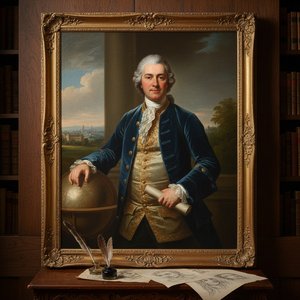
1787. Oil On Canvas. Roy Miles gallery.

§ 1Catalogue data


§ 2Abstract
Collectible Description
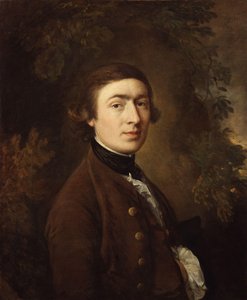
Experience the brilliance of Thomas Gainsborough's "Self-Portrait." This iconic 1787 masterpiece captures the artist’s spirit & skill with masterful brushstrokes and a captivating gaze.
 Read More
Artist Biography
Thomas Gainsborough (1727-1788): Explore the elegant portraits & landscapes of this British master, Royal Academy founder & influence on Constable.
§ 3Commentary
A Window into the Soul: Examining Thomas Gainsborough’s “Self-Portrait”
Thomas Gainsborough's 1787 “Self-Portrait” isn’t merely a depiction of an artist; it’s a profound meditation on identity, ambition, and the very nature of artistic creation. Painted during a pivotal period in his career – a time when he was grappling with the constraints of portraiture and yearning for the freedom to explore landscape – this oil on canvas offers a remarkably intimate glimpse into the mind of one of Britain's most celebrated painters. The painting transcends the conventional formality of the genre, revealing a man wrestling with his own artistic vision and the expectations placed upon him.
The composition itself is subtly revolutionary for its time. Gainsborough presents himself in a three-quarter view, his gaze directed slightly to his left – a deliberate choice that injects a sense of dynamism into the otherwise static pose. He’s not offering a studied, idealized image; instead, he appears thoughtful, almost contemplative, as if caught mid-sentence or lost in thought. The lighting is masterful, utilizing soft, diffused light that sculpts his features and creates a gentle interplay of shadows, lending depth and volume to the portrait.
The Language of Brushstrokes: Technique and Style
Gainsborough’s distinctive style is immediately apparent in the loose, feathery brushstrokes that define the painting. Unlike the precise, meticulously detailed work of his contemporary, Sir Joshua Reynolds, Gainsborough favored a more expressive approach, prioritizing capturing the essence of his subjects over photographic accuracy. Notice how he builds up layers of paint with rapid, confident strokes, particularly around the face and hands – areas where subtle nuances of expression are crucial. The use of color is equally noteworthy; Gainsborough employs a muted palette dominated by browns, greys, and blues, creating a sense of understated elegance and reflecting the artist’s preference for atmospheric effects over bold hues.
- Oil on Canvas: The choice of medium allowed Gainsborough to achieve rich textures and subtle gradations of tone.
- Loose Brushwork: A hallmark of his style, conveying a sense of immediacy and spontaneity.
- Soft Lighting: Creates depth and emphasizes the contours of the face.
A Portrait of an Artist – Context and Symbolism
Painted in 1787, “Self-Portrait” reflects a period of significant change for Gainsborough. He was increasingly frustrated with the demands of portraiture, which he felt stifled his artistic ambitions. The painting can be interpreted as a subtle assertion of independence – a declaration that he would not be confined to simply fulfilling the expectations of wealthy patrons. The artist’s attire—a dark coat and cravat—suggests a gentlemanly bearing, while his slightly rumpled appearance hints at a man preoccupied with his work. The inclusion of his palette and brushes further emphasizes his identity as an artist, solidifying the painting's central theme.
Furthermore, the background – a simple, dark blue wall – serves to draw attention to Gainsborough himself, highlighting his presence and emphasizing the intimacy of the portrait. It’s a deliberate choice that underscores the artist’s desire to connect with the viewer on a personal level.
A Timeless Masterpiece: Reproduction and Legacy
The “Self-Portrait” by Thomas Gainsborough remains one of the most iconic images in British art history. Its enduring appeal lies not only in its technical brilliance but also in its profound psychological depth. Today, high-quality reproductions offer a remarkable opportunity to experience this masterpiece firsthand. Hand-painted oil painting reproductions of Gainsborough’s “Self-Portrait” capture the essence of the original, faithfully recreating its atmospheric qualities and emotional resonance. Whether displayed in a grand salon or a cozy study, this portrait continues to captivate viewers with its timeless beauty and insightful portrayal of an artist at work.
Questions & Answers
How does the subject of "Self-Portrait" relate to Thomas Gainsborough's usual themes?
"Self-Portrait" depicts portraiture, english painting, gainsborough, 18th century, self-reflection, british art, formal attire, while Thomas Gainsborough's recorded themes are van dyck influence, social portraiture, british identity, self-image exploration, royal academy style. Comparing the two shows how the work relates to the artist's usual subjects.
What emotion does "Self-Portrait" by Thomas Gainsborough convey?
"Self-Portrait" is associated with a reflective feeling. The emotional tone describes the impression the work gives.
Who is "Self-Portrait" suggested for as a present, and for what use?
The gift recommendation for "Self-Portrait" by Thomas Gainsborough combines wedding with statement.


 Switch to Print


 For artworks or reproductions larger than 105 cm (approximately 41 inches) on any side, the frame will be shipped as a kit, disassembled. This method ensures safe delivery and prevents damage during transport.