

Nothing
Rueda luminosa (Max Ernst)
Rueda luminosa is a work of Max Ernst (1891–1976). It belongs to the Nothing movement. It is made in acrylic on canvas.
- Acrylic On Canvas

 Preview

 Print
 Send
 Share
 Fact sheet


 Download
 Similars
 X-Ray
 Diaporama
 Q&A

 Stats
Rueda luminosa: key details
What does Rueda luminosa show?
Captivating Subject and Symbolism
This exquisite monochromatic pencil drawing centers on a human eye, often regarded as the window to the soul. The artist masterfully captures the intricate details of the eye’s anatomy, emphasizing the iris, pupil, eyelashes, and surrounding skin. Beyond its realistic portrayal, the eye symbolizes perception, awareness, and introspection, inviting viewers to contemplate themes of insight, vigilance, and human emotion. Its intense gaze evokes a sense of connection, making it a powerful focal point in any space.Impeccable Style and Technique
Rendered with meticulous precision, this artwork exemplifies hyper-realism through traditional graphite pencil techniques. The artist employs fine line work, cross-hatching, and smooth shading to create a lifelike texture and depth. The detailed rendering of the iris, with its delicate lines and reflective highlights, showcases exceptional skill and patience. The subtle gradations of tone bring volume and realism, making the eye appear almost tangible. The monochromatic palette enhances the focus on form, light, and shadow, emphasizing the artist’s mastery of tonal variation.Historical and Artistic Context
This piece belongs to the tradition of hyper-realistic portraiture, a style that seeks to elevate realism to an art form that rivals photography. The focus on detailed anatomy and texture reflects a broader artistic movement emphasizing technical skill and meticulous observation. While the exact date of creation remains unknown, the work resonates with contemporary explorations of human perception and emotion, bridging classical realism with modern artistic sensibilities.Symbolism and Emotional Impact
The eye’s intense gaze invites viewers into a moment of quiet reflection, evoking feelings of curiosity, empathy, and introspection. It symbolizes perception—how we see and interpret the world—and can serve as a metaphor for insight and understanding. The monochromatic execution strips away distractions, allowing the viewer to focus on the emotional depth conveyed through subtle shading and detail. This artwork’s realism fosters a profound connection, making it a compelling addition to personal collections or sophisticated interiors.A Timeless Addition to Any Space
Perfect for art lovers, collectors, and interior designers, this detailed pencil drawing offers a timeless aesthetic that complements both modern and classic decor. Its striking realism and emotional resonance make it an ideal centerpiece for living rooms, offices, or galleries. Whether displayed as a standalone statement or part of a curated collection, this piece promises to inspire and captivate, transforming any environment with its profound sense of human connection and artistic excellence.Rueda luminosa: image files
Protected by copyright: these files are for personal reference, not a licence to republish.
Max Ernst, Rueda luminosa.
Colours checked against the original, file retouched by a digital expert.
Buy the high-resolution imageQuestions about Rueda luminosa
What medium is "Rueda luminosa" by Max Ernst executed in?
Max Ernst used the acrylic on canvas technique for "Rueda luminosa". The technique defines the material nature of the original work.
What subjects appear in "Rueda luminosa" by Max Ernst?
The subjects of "Rueda luminosa" are human eye, realism, monochrome, detailed shading, portrait element, anatomical accuracy, lifelike textures, emotional depth.
Can the image of "Rueda luminosa" by Max Ernst be freely reproduced?
The copyright answer for "Rueda luminosa" by Max Ernst: the work is still protected by copyright. This determines whether reproductions of the image may be freely made.
Who is the artist behind "Rueda luminosa"?
The artist behind "Rueda luminosa" is Max Ernst. The work is catalogued under Max Ernst's name.
What style does "Rueda luminosa" belong to?
The movement associated with "Rueda luminosa" by Max Ernst is Nothing. This classification situates the work among related artists and artworks.
What stage of Max Ernst's development does "Rueda luminosa" represent?
"Rueda luminosa" represents the Nothing of Max Ernst.
Why is the copyright status of "Rueda luminosa" what it is?
"Rueda luminosa" by Max Ernst is still protected by copyright. Copyright terms are measured from the artist's death, and Max Ernst died in 1976.
Where does "Rueda luminosa" sit within Max Ernst's body of work?
"Rueda luminosa" belongs to Max Ernst's Nothing work, whose recorded themes include realistic portrait drawing, focus on human anatomy, exploration of emotional depth.
Is "Rueda luminosa" typical of what Max Ernst usually created?
"Rueda luminosa" depicts human eye, realism, monochrome, detailed shading, portrait element, anatomical accuracy, lifelike textures, emotional depth, while Max Ernst's recorded themes are realistic portrait drawing, focus on human anatomy, exploration of emotional depth. Comparing the two shows how the work relates to the artist's usual subjects.
About Max Ernst
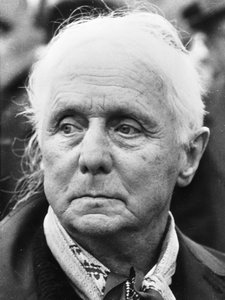
1891–1976, Germany
Max Ernst
The Life and Origins of Max Ernst Max Ernst entered the world on April 2, 1891, in Brühl, Germany. He grew up in a middle-class Catholic family as the third of nine children. His upbringing was shaped by the quiet, disciplined atmosphere of his home, where his father, Philipp, worked as a teacher of the deaf. Philipp was also an amateur painter, and it was through him that the boy first encountered the tools and the practice of making art.
Other works by Max Ernst
 Célèbes or Elephant Célèbes1921
 The Elephant Celebes1921
 Europe after the Rain II1942
 Of This Men Shall Know Nothing1923
Articles on Rueda luminosa
 Unlocking the Unconscious: The Top 25 Masterpieces by Max ErnstStep into the dreamscapes of Max Ernst. Explore 25 iconic Surrealist masterpieces, from pioneering collage to haunting landscapes. Find ins…
 25 Must-See Masterpieces by German Expressionist Ernst Ludwig KirchnerImmerse yourself in the raw emotion of German Expressionism with our curated guide to the top 25 Ernst Ludwig Kirchner masterpieces. Explor…
 The Allure of Verisimilitude: Exploring Detailed Realism in Painting Across Historical MovementsExplore the captivating world of detailed realism in painting! Discover historical movements, key artists & collecting insights for discern…