Money-Back Guarantee · 100 days Free Worldwide Delivery
637,378artworks 50,751artists 4,658museums 32languages
Catalogue entry

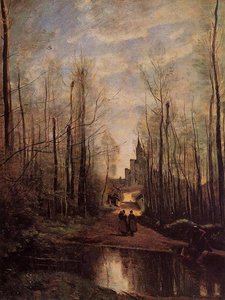
Wheat Field in the Morvan Region

1842. Acrylic On Canvas. Museum of Fine Arts.

Fig. 1. Jean-Baptiste-Camille Corot, Wheat Field in the Morvan Region, 1842. Shown as the reproduction you are specifying: , .

§ 1Catalogue data

§ 2Abstract

Collectible Description

Discover 'Wheat Field in the Morvan Region' by Corot – a serene landscape capturing rural France’s beauty with subtle colors and atmospheric light. A masterpiece of 19th-century realism.

Artist Biography

A master of atmospheric landscapes like Agostina, Corot bridged Neoclassicism and Impressionism. Explore his serene works today.

§ 3Commentary

A Moment of Rural Tranquility: Exploring Corot’s “Wheat Field in the Morvan Region”

Jean-Baptiste-Camille Corot’s “Wheat Field in the Morvan Region,” painted in 1842, isn't merely a depiction of a landscape; it’s an immersion into a specific time and place – a fleeting moment captured with remarkable sensitivity. Nestled within the rolling hills of the Morvan region of France, this painting transcends simple representation, offering instead a profound meditation on light, atmosphere, and the quiet dignity of rural life. Corot, a pivotal figure bridging the Neoclassical and Impressionist movements, possessed an unparalleled ability to evoke the ephemeral qualities of nature, and this work exemplifies his unique approach.

The scene itself is deceptively simple: a vast expanse of golden wheat fields stretching towards a hazy horizon. Two farmworkers, rendered with subtle detail, are engaged in the laborious task of stacking sheaves – their presence grounding the composition while simultaneously emphasizing the solitude and timelessness of the landscape. Corot deliberately avoids dramatic lighting or heroic figures; instead, he focuses on the interplay of light and shadow, creating an atmosphere of serene contemplation. The muted palette—a symphony of greens, greys, and ochres—is remarkably restrained, yet incredibly rich in texture and nuance. It’s a testament to Corot's mastery of color that such subtle tones can convey so much depth and emotion.

The Painterly Process: A Bridge Between Tradition and Innovation

Corot’s technique is characterized by its remarkable freedom and spontaneity. He employed a loose, broken brushstroke—a hallmark of his style—that allows the canvas to ‘breathe,’ mimicking the irregularity of nature itself. Unlike the meticulously detailed landscapes favored by some of his contemporaries, Corot prioritized capturing the *impression* of light and atmosphere over precise representation. This approach was revolutionary for its time, moving away from the rigid conventions of academic painting and paving the way for Impressionism. He often worked directly ‘en plein air’ – outdoors—allowing him to observe and translate the ever-changing qualities of natural light with unparalleled immediacy.

The painting's construction reveals a layered approach. Corot began with preliminary sketches, meticulously studying the landscape before committing it to canvas. These studies, often executed in charcoal or pastel, served as guides for his larger paintings, allowing him to capture the essential forms and values of the scene. He built up the composition gradually, applying thin washes of color that blended seamlessly together, creating a sense of atmospheric depth and luminosity. The use of glazes—thin layers of translucent paint—further enhanced this effect, adding subtle shifts in tone and hue.

Symbolism and Emotional Resonance

Beyond its purely visual qualities, “Wheat Field in the Morvan Region” is imbued with a quiet sense of melancholy and nostalgia. The vastness of the landscape evokes a feeling of solitude and isolation, while the simple labor of the farmworkers suggests a connection to the rhythms of rural life—a life rooted in tradition and intimately connected to the land. The hazy horizon hints at an uncertain future, yet the painting’s overall mood is one of peaceful acceptance. Corot wasn't simply depicting a field; he was capturing a feeling – a sense of belonging, of connection to something larger than oneself.

Furthermore, the Morvan region itself held personal significance for Corot, as his family originated from this area. This familial connection undoubtedly informed his artistic vision, imbuing the painting with a deep sense of affection and respect for the landscape. The subtle details—the texture of the wheat stalks, the worn clothing of the farmworkers—speak to a profound understanding of rural life and its inherent beauty.

A Legacy of Atmospheric Impressionism

“Wheat Field in the Morvan Region” stands as a testament to Corot’s enduring legacy. It exemplifies his pioneering approach to landscape painting, bridging the gap between tradition and innovation and profoundly influencing generations of artists who followed. His focus on capturing the fleeting qualities of light and atmosphere—his willingness to embrace spontaneity and imperfection—laid the foundation for Impressionism, solidifying his place as one of the most important figures in French art history. Reproductions of this work continue to resonate with viewers today, offering a glimpse into a world of quiet beauty and timeless contemplation.

Questions & Answers

How do I discover artworks close to "Wheat Field in the Morvan Region" by Jean-Baptiste-Camille Corot?

The Similars page of "Wheat Field in the Morvan Region" by Jean-Baptiste-Camille Corot presents related artworks.

Where does "Wheat Field in the Morvan Region" stand among Jean-Baptiste-Camille Corot's recurring subjects?

Jean-Baptiste-Camille Corot's recurring themes include neo-classicism, plein-air, impressionism, french landscape, nature’s light; "Wheat Field in the Morvan Region" focuses on wheat field, morvan region, landscape, rural life, camille corot, 1842, french countryside.

What size should I print "Wheat Field in the Morvan Region" for my room?

The recommended pairing for "Wheat Field in the Morvan Region" by Jean-Baptiste-Camille Corot: a large print in a living room.
§ 4The artist

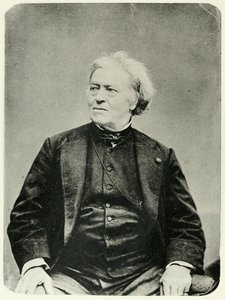
Jean-Baptiste-Camille Corot

Jean-Baptiste-Camille Corot

1796 - 1875, France

Quick facts about Jean-Baptiste-Camille Corot

  • Artistic Movement Or Style: Neoclassicism, Realism, Impressionism
  • Artists Or Movements Influenced By This Artist:
    • Impressionism
    • Monet
    • Pissarro
    • Sisley
  • Artists Who Influenced This Artist:
    • Achille Etna Michallon
    • Jean-Victor Bertin
    • John Constable
    • J. M. W. Turner
  • Full Name: Jean-Baptiste-Camille Corot
  • Nationality: French
  • Notable Artworks:
    • Self-portrait
    • Waterfall at Terni
    • The Destruction of Sodom
    • Agostina
    • The Knight
  • Place Of Birth: Paris, France
  • Date Of Birth: 1796
  • Date Of Death: 1875

Artist Biography

Early Life, Family and Training

Jean-Baptiste-Camille Corot was born in Paris in 1796. He grew up in a household defined by practical crafts, the second of three children. His father worked as a wig maker, and his mother, Marie-Françoise Corot, was a milliner. These early years in a Parisian family provided a steady, if modest, foundation before he turned toward the study of light and form.

His formal training began in the studios of established painters. Between 1821 and 1822, he studied under Achille Etna Michallon. This period of instruction provided the technical grounding necessary for his later explorations. He also spent time studying with Jean-Victor Bertin, absorbing the methods of the landscape tradition that would inform his approach to the natural world.

Technique and Artistic Style

His process began outdoors. He spent time sketching and making preliminary paintings directly in the landscape to capture the immediate light. Once the initial observations were gathered, he moved to his studio to perform the finishing work indoors. This method allowed him to build up his compositions through a specific layering of thin washes of oil paint onto the canvas. He favored a smooth and thin technique, often using lightly and loosely dabbed strokes to build texture. This approach helped him render vegetation in its fresh beginnings, capturing the specific look of new growth.

His style leaned toward Realism, focusing on the way light and atmosphere interact with the physical world. Rather than relying on heavy, thick applications of paint, he used tonal gradations to create a sense of depth and dimensionality. This careful handling of color and composition allowed him to depict the play of light across a scene without the need for excessive detail. His later works often took the form of landscape souvenirs, which were dreamy, imagined paintings based on the locations he had previously visited.

Legacy and Influence on Art

By the time he reached his final decade, he was known in Parisian circles as "Père Corot." This title reflected more than just his age; it spoke to his position as a central figure for those navigating the shift from academic traditions toward new ways of seeing. His work began to move toward an increasingly impressionistic style by the mid-1850s. He moved away from the rigid structures of the past, favoring a way of painting that anticipated the plein-air innovations of the Impressionist movement. He found a way to capture the way light settles on leaves and the way atmosphere softens a distant horizon.

His influence was felt in the way he handled the brush, using lightly and loosely dabbed strokes to render the fresh beginnings of vegetation. This approach helped pave the way for later artists who sought to capture the fleeting qualities of the natural world directly from the source. He was recognized as one of the greatest landscape painters the world had seen, a status built through a vast output of over 3,000 paintings. His ability to balance the precision of organic forms with a sense of mood left a mark on the history of landscape painting.

  • Agostina
  • The Studio
  • A Woman Reading

Where to See His Works Today

To find his traces, one often looks to Paris. The Louvre holds a large presence of his output, with 35 works kept within its walls. Nearby, the Musée d'Orsay preserves 6 of his paintings. These collections allow for a close look at how he handled light and the way he rendered vegetation in its fresh beginnings. In Reims, the Musée des Beaux-Arts holds an exceptional collection of 27 canvases, a group second only to the Louvre in its holdings of his work.

Across the Atlantic, his presence is felt in several major institutions. The Metropolitan Museum of Art in New York maintains 26 of his works, including pieces like Agostina, which was painted in 1866. The National Gallery of Art in Washington holds 6 works, while the Philadelphia Museum of Art keeps 4. These pieces offer a way to see his transition from more structured compositions toward the looser, more atmospheric style he developed later in life.

§ 5Comparanda

§ 6Questions

Quick Facts

  • Dimensions: 39 x 75 cm
  • Movement: Barbizon School
  • Medium: Oil on canvas
  • Subject or theme: Rural landscape
  • Title: Wheat Field in Morvan
  • Artist: Jean-Baptiste Corot

Art Quiz

There is only one correct answer for each question.

Question 1:
What is the primary subject of Jean-Baptiste-Camille Corot’s ‘Wheat Field in the Morvan Region’?
Question 2:
The painting ‘Wheat Field in the Morvan Region’ is considered significant because it:
Question 3:
What artistic movement did Corot's work bridge?
Question 4:
The painting’s subtle palette primarily evokes:
Question 5:
Which of the following best describes Corot’s technique in ‘Wheat Field in the Morvan Region’?

§ 7Cite this entry

AllPaintingsStore.com, “Jean-Baptiste-Camille Corot, Wheat Field in the Morvan Region (1842)”, https://allpaintingsstore.com/en/art/jean-baptiste-camille-corot-wheat-field-in-the-morvan-region-D4FSX2-en/ (accessed 18 October 2026).

§ 8The reproduction

Hand Made Oil Reproduction

Hand-painted oil on canvas in your size and frame, made to order by our artists. ( Switch to Print Switch to Digital Image)

It is specified on the order sheet in the margin; the present state of that sheet reads as follows.

Wheat Field in the Morvan Region

Reproduction Medium

Reproduction Size

-

Elite Senior Artist

More detail, finesse, and extra production time

-

Reproduction Frame

-

-

For artworks or reproductions larger than 105 cm (approximately 41 inches) on any side, the frame will be shipped as a kit, disassembled. This method ensures safe delivery and prevents damage during transport.

Professional assembly required - this is not a DIY product.
The kit must be assembled and the canvas stretched by an experienced professional framer, using wood glue (not supplied), a canvas stretching plier and clamps to hold the bars square while the glue dries. Incorrect assembly or uneven canvas tension can permanently damage the artwork and is not covered by our warranty.

  • All solid wood bars are included, precisely cut to size.

  • Assembled with the screws provided, plus wood glue for the corner joints, which is not supplied and must be sourced by your framer.

  • Professional tools are required and not included: a canvas stretching plier (tensioner) and clamps to hold the bars square while the glue dries.

Important:
The corner joints require wood glue, the bars must be held with clamps until the glue is fully dry, and tightening the canvas on the assembled frame requires a canvas stretching plier. None of these are included in the kit. Please arrange an experienced professional framer before ordering this size.

Nameplate

-

-

Protective Varnish

Glossy Varnish (enhances colors, protects against light/moisture)

-

Customize My Artwork

Examples of what can be changed: Replace face with customer photo; Add pet (e.g., replace cat with dog); Include hidden message in background; Change background landscape or elements.

-

Urgent

Worldwide Delivery () in 3/4 weeks instead of standard 5 weeks. (15 November). No compromise on quality.

-

Express Shipping

Worldwide Delivery () in 5 weeks. (22 November).

Included

Total Price

$ 258

Included with every order

  • Free Worldwide Express Shipping
  • High-Quality Linen Canvas
  • Full Shipping Insurance
  • Customs Tax Refund Guarantee
  • True Color Matching Guarantee
  • 100-Day Return Policy (Defects Only)
  • 100% Money-Back Guarantee
  • Bulk Discount Offer
Order sheet