

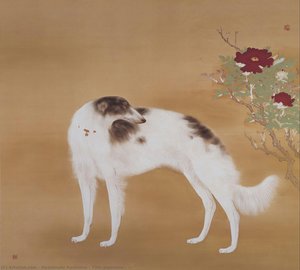
601. Pigment, 29.0cm x 32.0cm. Metropolitan Museum of Art.

§ 1Catalogue data

- 29.0cm x 32.0cm


§ 2Abstract
Collectible Description
A masterpiece of Nihonga art featuring the elegant poet Mibu no Tadamine by Araki Katsumochi, showcasing exquisite mineral pigments and traditional Japanese style that invites you to bring history into your home.
 Read More
Artist Biography
Araki Katsumochi (1578-1650) was a pivotal Japanese artist of the early Tokugawa period, famed for genre scenes, historical illustrations & portraits. His unique blend of Tosa & Kanō styles influenced early ukiyo-e. Explore his masterpieces!
§ 3Commentary
Introduction to Nihonga Art Movement and Iwasa Matabei
The Nihonga art movement emerged during the Meiji period (1868-1912) as a response to the rise of Western-style painting known as Yōga. The term "Nihonga" literally translates to "pictures of Japan," emphasizing its connection to traditional Japanese art forms. Iwasa Matabei, an artist from this movement, is renowned for his unique style and contribution to Nihonga.The Poet Mibu no Tadamine: A Masterpiece by Iwasa Matabei
The Poet Mibu no Tadamine, from a Set of Album Leaves Illustrating the Thirty-six Poetic Immortals is an exquisite example of Nihonga. This painting showcases Iwasa Matabei's mastery of mineral pigments and organic materials on silk or paper. The subject matter, Mibu no Tadamine, is one of the Thirty-six Poetic Immortals, a group of esteemed poets from Japan's classical past.The Significance of Poetry in Japanese Art
For the Japanese elite, poetry was the quintessential literary experience. Idealized and deeply admired, poets were often commemorated in portraiture. In the early eleventh century, Fujiwara Kintō (966–1041) selected thirty-six 'immortal' poets from the past, and their images became a popular theme in the yamato-e painting tradition. Iwasa Matabei's work is a testament to this enduring appreciation for poetry in Japanese art.The Art of Nihonga: A Lasting Legacy
Nihonga has influenced artists around the world, and its legacy continues to inspire contemporary artists today. At AllPaintingsStore.com, we offer high-quality reproductions of Nihonga paintings, allowing art enthusiasts to appreciate and enjoy these masterpieces in their homes or offices.Conclusion
Iwasa Matabei's The Poet Mibu no Tadamine, from a Set of Album Leaves Illustrating the Thirty-six Poetic Immortals is a remarkable piece that highlights the beauty and significance of Nihonga. As we continue to appreciate and study this art form, its influence on contemporary artists and global audiences remains an essential aspect of its lasting legacy. Explore our collection of Nihonga paintings at AllPaintingsStore.com and experience the richness of Japanese art history in your own space.Questions & Answers
Is "The Poet Mibu no Tadamine, from a set of album leaves illustrating The Thirty-six Poetic Immortals" by Iwasa Matabē in the public domain, and why?
"The Poet Mibu no Tadamine, from a set of album leaves illustrating The Thirty-six Poetic Immortals" by Iwasa Matabē is in the public domain - its copyright has expired. Copyright duration runs from the artist's death, which occurred in 1650.
How much light do the colors of "The Poet Mibu no Tadamine, from a set of album leaves illustrating The Thirty-six Poetic Immortals" appear to reflect?
The colors of "The Poet Mibu no Tadamine, from a set of album leaves illustrating The Thirty-six Poetic Immortals" show a bright balance luminance.
What mood does "The Poet Mibu no Tadamine, from a set of album leaves illustrating The Thirty-six Poetic Immortals" by Iwasa Matabē express within Nihonga?
The reflective emotion of "The Poet Mibu no Tadamine, from a set of album leaves illustrating The Thirty-six Poetic Immortals" accompanies its Nihonga style.




 Switch to Print


 For artworks or reproductions larger than 105 cm (approximately 41 inches) on any side, the frame will be shipped as a kit, disassembled. This method ensures safe delivery and prevents damage during transport.


