Send
Send Share
Share
 Details
 Guide
Guide

 Download
 Similars
 Diaporama
 Q&A
Q&A Stats
StatsLazarus


 Read More
Giclée / Art Print
Museum-quality giclée or canvas print with fast production and flexible finish options. ( Buy Hand Made Painting Switch to Digital Image)




































Pick from our preset sizes that match the artwork's original proportions.

Type the width and the height you need, to fit your frame or your wall. A print can only be cut, never made bigger than the picture, so a size with a different shape loses a part of the image. We send you a digital mockup to approve before we print anything. The picture shown on this page does not show the real cut — only the mockup does.
Worldwide Delivery () in 2 weeks instead of standard 4/5 weeks. (31 October)

Free Worldwide Express Shipping

High-Quality Linen Canvas

Full Shipping Insurance

Customs Tax Refund Guarantee

True Color Matching Guarantee

100-Day Return Policy (Defects Only)

100% Money-Back Guarantee

Bulk Discount Offer
 Glass option is only available in size under 110 CM

Lazarus
Giclée / Art Print
Reproduction Size
-


Total Price
$ 65
A Study in Resurrection and Resolve: Examining Adriaen de Vries’s Lazarus Sculpture
Lorenzo Lotto's legacy remains a fascinating paradox—a master craftsman whose output defied easy categorization, leaving scholars wrestling with the complexities of his artistic vision. While overshadowed by contemporaries like Titian and Veronese, Lotto carved out a distinctive niche within Venetian art, prioritizing psychological depth over flamboyant spectacle. This dedication to portraying human emotion is powerfully evident in sculptures such as “Lazarus,” a bronze masterpiece that embodies both physical strength and spiritual contemplation.Subject Matter and Narrative
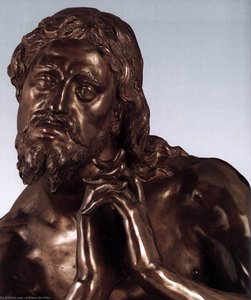
The sculpture depicts a figure caught in the throes of resurrection—a dramatic portrayal inspired by biblical scripture. Lotto’s meticulous attention to anatomical detail captures the muscular physique of Lazarus, conveying an impression of vitality and defiance. The pose itself is significant: the outstretched arm symbolizes aspiration and upward movement, mirroring the biblical narrative of Lazarus rising from death. Simultaneously, the bent elbow resting on the thigh speaks to a groundedness, a steadfast determination amidst profound transformation. Facial expression—a subtle grimace hinting at exertion or perhaps even pain—adds another layer of psychological nuance, inviting viewers to consider not merely what is seen but what is felt.Style and Technique: Venetian Bronze Casting
Lotto’s sculptural style aligns closely with the prevailing trends of Venetian bronze casting during his lifetime. The artist skillfully utilized a technique known for its ability to achieve remarkable textural fidelity—a hallmark of Lotto's oeuvre. The sculpture’s surface possesses a rich, dark patina that accentuates the contours of muscle fibers and highlights the subtle variations in metal coloration. This patina isn’t merely decorative; it serves as evidence of the casting process itself, demonstrating Lotto’s mastery of material manipulation and his commitment to capturing the essence of form through texture. The sculptor's careful consideration for detail—evident in the depiction of veins and sinews—underscores Lotto’s belief that art should strive to represent reality with uncompromising accuracy.Historical Context: Renaissance Spirituality
Created during the High Renaissance, “Lazarus” reflects the broader artistic preoccupation with themes of faith, mortality, and divine redemption prevalent at the time. Lotto's work engages directly with biblical narratives—particularly Lazarus’s miraculous resurrection—demonstrating a humanist interest in exploring profound spiritual questions. The sculpture stands as a testament to the Renaissance conviction that art could serve as a vehicle for conveying moral and philosophical truths. It aligns with the artistic currents of Venice, where artists sought to elevate religious imagery through meticulous craftsmanship and psychological realism.Symbolism: Strength and Transformation
Beyond its literal depiction of resurrection, “Lazarus” operates on multiple symbolic levels. The figure’s muscular form represents physical resilience—a symbol of overcoming adversity and maintaining inner fortitude. However, the sculpture's central gesture—the upward reach of the arm—also embodies spiritual aspiration, mirroring the biblical promise of eternal life. Lotto skillfully utilizes visual language to communicate complex ideas about faith and transformation, inviting viewers to contemplate the enduring power of hope amidst suffering.Emotional Impact: Contemplative Resonance
Ultimately, Lotto’s “Lazarus” transcends mere representation; it evokes a powerful emotional response. The sculpture's solemn posture and expressive face compel contemplation—encouraging viewers to confront questions about life, death, and rebirth. Its enduring appeal lies in its ability to capture the visceral experience of spiritual struggle and triumph—a testament to Lotto’s profound understanding of human psychology and his unwavering dedication to artistic excellence. Reproductions of this sculpture offer a captivating glimpse into the artistic spirit of the Renaissance and invite collectors and interior designers alike to appreciate the beauty of understated power and contemplative resonance.Questions & Answers
What colors dominate "Lazarus" by Adriaen De Vries?
"Lazarus" by Adriaen De Vries uses an earthy palette, with rosy brown (#c39689) as the dominant color.
How can I get a print of "Lazarus" by Adriaen De Vries?
A print of "Lazarus" by Adriaen De Vries can be ordered directly on its Fine Art Print page: a fine art print on cotton canvas or archival canvas paper.
Does "Lazarus" show strong light-dark contrasts?
The contrast level of "Lazarus" by Adriaen De Vries is bold.
Related Artworks


Artist Biography
The Master of Bronze and Motion
In the grand tapestry of European art history, few names resonate with the fluid elegance and technical virtuosity of Adriaen de Vries. A preeminent sculptor of the Northern Mannerist tradition, de Vries possessed a rare ability to breathe life into cold metal, transforming bronze into a medium of profound emotional intensity and kinetic energy. Born in The Hague, Netherlands, his early years were shaped by a lineage of craftsmanship, with whispers of an apprenticeship under masters like Willem Danielsz. van Tetrode or perhaps within the meticulous world of goldsmithing. This foundation in fine detail would later become the hallmark of his mature style, allowing him to manipulate patina and refined modeling with an unparalleled delicacy that bridged the gap between the intricate Mannerist aesthetic and the burgeoning drama of the Baroque.
His journey was one of constant movement across the great courts of Europe, a nomadic brilliance that saw him leave the Netherlands to seek glory in the heart of the continent. The influence of Giambologna, the legendary master he encountered in Florence, remains etched in the very sinews of his work. From this encounter, de Vries inherited a fascination with the figura serpentinata—the spiraling, twisting form that invites the viewer to circulate around the sculpture, discovering new perspectives and tensions with every step. As he moved through Milan and eventually into the service of powerful patrons like the Duke of Savoy and Emperor Rudolf II in Prague, his work became an international language of prestige, characterized by a sophisticated interplay of light and shadow across polished bronze surfaces.
A Legacy Cast in Metal
The true genius of de Vries lies in his ability to capture the ephemeral—a fleeting glance, a sudden muscular tension, or the divine transition of a soul. His sculptures are not merely static objects but frozen moments of profound narrative weight. Whether depicting the biblical tragedy of Cain killing Abel or the celestial grace of Mercury and Psyche, his work explores the depths of human impulse and mythological grandeur. In his hands, the bronze does not feel heavy; instead, it achieves an ethereal lightness, where limbs seem to float and drapery flows with a liquid grace that defies the medium's inherent rigidity.
Beyond his technical mastery of casting and modeling, de Vries holds a significant place in art history as a transitional figure. His international style served as a vital link, carrying the refined complexities of Northern Mannerism into the more emotive and expansive era of the Baroque. Although the turbulent shifts of the Thirty Years' War and changing artistic tastes meant he left no direct followers to carry his specific flame, his impact remains indelible. Today, his masterpieces reside in the world's most prestigious collections, serving as enduring testaments to a sculptor who could command the very essence of motion through the permanence of bronze.

Adriaen De Vries
1556 - 1626 , Netherlands
Quick Facts
- Artistic Movement Or Style: Northern Mannerism, Baroque
- Artists Who Influenced This Artist:
- Giambologna
- Willem Danielsz. van Tetrode
- Full Name: Adriaen de Vries
- Nationality: Dutch
- Notable Artworks:
- Herzog Heinrich Julius
- Cain killing Abel
- Lazarus
- Mercury and Psyche
- Place Of Birth: The Hague, Netherlands
- Date Of Birth: 1556
- Date Of Death: 1626
Related Articles

Bronze Sculpture Guide for Large-Scale Projects: Durability, Value, and Selection for Hospitality Designers
A professional guide for hotel designers and procurement managers on selecting large-scale bronze sculptures. Learn about durability, lost-wax casting, material value, and strategic integration for high-traffic hospitality and corporate environments.

Bronze Sculpture Guide: Durability, Value, and Selection for Large-Scale Hospitality Projects
A professional procurement guide for hotel designers on selecting large-scale bronze sculptures. Learn about durability, lost-wax casting, and strategic integration of high-value metal art into commercial hospitality projects.