- Home

- Print on canvas
- Adriaen van Ostade
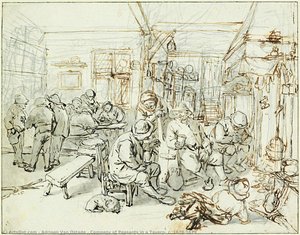
- The Drinker

 Preview
 Send
Send Share
Share
 Details

 Download
 Similars
 X-Ray
X-Ray Diaporama
The Drinker

 Read More
Giclée / Art Print
Museum-quality giclée or canvas print with fast production and flexible finish options. ( Switch to hand made Painting Switch to Image)




































Pick from our preset sizes that match the artwork's original proportions.

You may enter your own dimensions to fit a specific frame or space. If your selected size does not match the original image's proportions, we will either crop the artwork or extend the image with a mirrored or solid-fill edge. A digital mockup will be sent for your approval before production begins.
Please note that the on-screen preview does not reflect the actual cropping or extension. Only the mockup will accurately show the final composition.
While custom sizes are available, we recommend selecting a dimension from the predefined list to preserve the original proportions.
Worldwide Delivery () in 2 weeks instead of standard 4/5 weeks. (29 July)

Free Worldwide Express Shipping

High-Quality Linen Canvas

Full Shipping Insurance

Customs Tax Refund Guarantee

True Color Matching Guarantee

60-Day Return Policy (Defects Only)

100% Money-Back Guarantee

Bulk Discount Offer
 Glass option is only available in size under 110 CM

The Drinker
Giclée / Art Print
Reproduction Size
-


Total Price
$ 65
Related Artworks




Artist Biography
Adriaen van Ostade: A Life in Dutch Genre Painting
Early Life and Training
- Born: 1610 in Haarlem, Netherlands.
- Van Ostade came from a family of artists; his father, Jan van Ostade, was a tapestry weaver. This artistic environment likely fostered his early interest in visual arts.
- Initial Training: He and his brother, Isaack Jansz van Ostade, were initially pupils of Frans Hals, a celebrated Dutch Golden Age painter known for his lively portraits and genre scenes.
- However, their time with Hals was relatively brief. They soon diverged from Hals’s style, developing their own distinct approaches to painting.
Artistic Development and Style
- Early Works (1630s): Van Ostade's early paintings often imitated Hals’s loose brushwork, but he gradually refined his technique.
- He began to focus on genre scenes – depictions of everyday life, particularly those involving peasants and working-class individuals.
- Distinctive Style: His style is characterized by meticulous detail, a subtle use of light and shadow (chiaroscuro), and an emphasis on realistic portrayals of his subjects.
- He skillfully captured the textures of clothing, objects, and environments, creating a sense of authenticity in his work.
- Subject Matter: Common themes included tavern scenes, village fairs, peasant interiors, and depictions of rural life.
Major Works and Achievements
- Saying Grace (c. 1660): This painting, housed at the Cleveland Museum of Art, is considered one of his masterpieces. It exemplifies his ability to imbue even humble subjects with dignity and poetic beauty.
- A Laughing Peasant (1634): A small but captivating work in the Kremer Collection, Amsterdam, showcasing his skill in capturing expressive faces and gestures.
- Tavern Scenes: Van Ostade produced numerous tavern scenes, offering glimpses into the social lives of 17th-century Dutch people. These paintings often depict lively gatherings with drinking, smoking, and music.
- Landscape Paintings: While primarily known for his genre works, he also created landscapes, often featuring rustic settings and figures engaged in everyday activities.
Influences and Legacy
- Frans Hals’s Influence: His initial training under Frans Hals provided a foundation in Dutch painting techniques and genre subject matter.
- Comparison with David Teniers the Younger: Art historians often compare Van Ostade's work to that of David Teniers the Younger, another prominent genre painter. However, their paintings reflect different regional characteristics – Van Ostade focused on Holland, while Teniers depicted Brabant.
- Impact on Later Artists: Van Ostade’s emphasis on naturalism and everyday life paved the way for later artistic movements like Impressionism and Realism. His attention to light and shadow also influenced Baroque painting.
- Historical Significance: He is considered a key figure in Dutch Golden Age painting, providing valuable insights into the lives and customs of 17th-century Dutch society.
Later Life and Death
- Guild Membership: Van Ostade became a member of the Haarlem Guild of St. Luke in 1634, signifying his recognition as a professional artist.
- Continued Success: He enjoyed continued success throughout his career, receiving commissions from wealthy patrons and establishing himself as a respected painter.
- Death: Adriaen van Ostade died in Haarlem in 1685. His works continue to be admired for their realism, charm, and historical significance.

Adriaen van Ostade
1610 - 1685 , Netherlands
Quick Facts
- Birth_Date: 1610
- Birth_Place: Haarlem, Netherlands
- Death_Date: 1685
- Influenced_By: Frans Hals
- Movement: Dutch Golden Age painting
- Name: Adriaen van Ostade
- Nationality: Dutch
- Notable_Works:
- Saying Grace
- A Laughing Peasant