Preview
 Send
Send Share
Share
 Details
 Guide
Guide

 Download
 Similars
 X-Ray
X-Ray Diaporama
 Stats
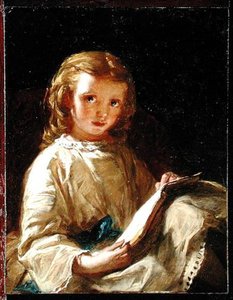
StatsLucy

 Read More
The artwork displayed on this page is protected by copyright law, which means we cannot legally create or sell an identical reproduction. This protection is enforced under international agreements such as the Berne Convention and by national laws, including those outlined by the U.S. Copyright Law - Title 17.
This method fully complies with copyright regulations because it does not involve copying or duplicating the protected artwork. Instead, it is a creative reinterpretation - a new painting that is influenced by the original but not identical to it.
Giclée / Art Print
Museum-quality giclée or canvas print with fast production and flexible finish options. ( Buy Hand Made Painting Switch to Digital Image)




































Pick from our preset sizes that match the artwork's original proportions.

Type the width and the height you need, to fit your frame or your wall. A print can only be cut, never made bigger than the picture, so a size with a different shape loses a part of the image. We send you a digital mockup to approve before we print anything. The picture shown on this page does not show the real cut — only the mockup does.
Worldwide Delivery () in 2 weeks instead of standard 4/5 weeks. (26 October)

Free Worldwide Express Shipping

High-Quality Linen Canvas

Full Shipping Insurance

Customs Tax Refund Guarantee

True Color Matching Guarantee

100-Day Return Policy (Defects Only)

100% Money-Back Guarantee

Bulk Discount Offer
 Glass option is only available in size under 110 CM

Lucy
Giclée / Art Print
Reproduction Size
-


Total Price
$ 65
Related Artworks


Artist Biography
The Disciplined Vision of Alexander Johnston
Born in the historic heart of Edinburgh in 1816, Alexander Johnston emerged as a vital bridge between the sweeping emotionalism of Romanticism and the structured elegance of the Victorian era. As the son of an architect, his early life was steeped in a sense of proportion and structural integrity, a foundation that would later manifest in the meticulous precision of his brushwork. Before he ever took up the painter's palette for large-scale canvases, Johnston’s artistic sensibilities were honed through the delicate art of seal-engraving. This early apprenticeship provided him with an unparalleled command over fine detail and line, technical skills that would become the hallmark of his later contributions to both painting and printmaking.
His formal education at the Trustees' Academy between 1831 and 1834 served as a crucible for his developing style. Under the guidance of William Hilton, Johnston was introduced to the revival of academic art principles, learning to balance narrative depth with classical rigor. This period of intense study prepared him for his momentous entry into the Royal Academy in 1836, an achievement that thrust him into the center of London’s prestigious artistic circles. It was during these formative years that he encountered the influence of Sir David Wilkie, a master of genre painting whose ability to breathe life into everyday scenes encouraged Johnston to pursue ambitious, emotionally resonant subject matter.
Narrative Mastery and the Art of the Genre
Johnston’s oeuvre is celebrated for its profound ability to capture the human condition through both intimate portraiture and sweeping historical narratives. His early successes were rooted in his sensitive rendering of likeness, notably seen in his portraits of Dr. Morison's family, which earned him immediate recognition from the Royal Academy. However, it was in the realm of genre painting that he truly found his voice, weaving stories of social interaction, piety, and domestic life into his compositions. Works such as “The Mother’s Prayer” and “Scotch Lovers” showcased a remarkable ability to use light and atmosphere to evoke a sense of nostalgia and moral weight.
As his career progressed, Johnston demonstrated a versatile mastery over different mediums, moving seamlessly between the soft, evocative tones of oil painting and the sharp, dramatic clarity of engraving. His graphic works, such as “The Press Gang Seizing A Waterman On Tower Hill,” reveal a darker, more dynamic side of his talent, capturing the social unrest and gritty reality of 19th-century London with a sense of Baroque realism. Whether depicting the quiet sanctity of a “Sunday Morning” or the tension of a historical confrontation, his work remains characterized by a disciplined aesthetic that never sacrifices emotional impact for technical perfection.
Legacy of a Scottish Master
The significance of Alexander Johnston lies in his role as a custodian of classical ideals during a period of rapid artistic transition. While many of his contemporaries were drifting toward the more experimental fringes of art, Johnston remained a steadfast defender of narrative clarity and anatomical precision. His ability to synthesize the atmospheric qualities of the Romantic movement with the formal discipline of the Victorian tradition allowed him to create works that felt both timeless and deeply rooted in their historical moment.
Today, his contributions are remembered through several key artistic pillars:
- Technical Versatility: His unique ability to bridge the gap between the fine detail of printmaking and the expansive textures of oil painting.
- Cultural Documentation: His role in capturing the social fabric of 19th-century Britain, from domestic Scottish life to the urban struggles of London.
- Academic Influence: His connection to the Royal Academy and his ability to uphold the standards of academic art during a transformative era in art history.
Through his meticulous compositions and evocative storytelling, Alexander Johnston left an indelible mark on the landscape of British art, ensuring that the dignity of the classical tradition would endure well into the Victorian age.

Alexander Johnston
1882 - 1974
Quick Facts
- Full Name: Alexander Johnston
- Nationality: Scottish
- Date Of Birth: 1882
- Date Of Death: 1974
- Place Of Birth: Edinburgh, Scotland
- Notable Artworks:
- The Mother's Prayer
- Sunday Morning
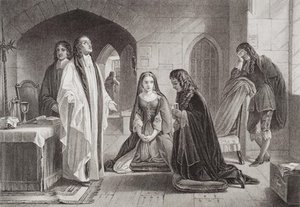
- Covenanter's Marriage
- A Scene From The Lady Of The Lake
- Prince Charles's Introduction To Flora Macdonald
- Artistic Movement Or Style: Romanticism
- Artists Who Influenced This Artist:
- William Hilton
- Sir David Wilkie
Related Articles

Romantic Era Masterpieces: A Procurement Guide to Large-Scale Oil Reproductions for Hospitality Design
Streamline your hospitality design projects with premium Romantic Era oil reproductions. AllPaintingsStore.com offers scalable, handmade masterpieces, custom multi-panel layouts, and efficient bulk procurement for hotels and corporate spaces worldwide.

Oil on Canvas: The Professional Guide to Durable, High-Quality Art Reproductions for Hospitality and Large-Scale Interior Projects
A professional guide for hotel designers and procurement managers on selecting durable, high-quality oil on canvas reproductions. Learn about material longevity, custom multi-panel layouts, and efficient bulk ordering solutions for large-scale hospitality projects.