


 Preview
 Send
Send Share
Share
 Details
 Guide
Guide

 Download
 Similars
 X-Ray
X-Ray Diaporama
 Stats
StatsLandscape


 Read More
Giclée / Art Print
Museum-quality giclée or canvas print with fast production and flexible finish options. ( Buy Hand Made Painting Switch to Digital Image)




P118B $10

P118H $10

P118W $10

P438Z $10

P508JH $12

P508YH $12

P805H $10

P805Z $10

P919BZ $10

P919G $10

P919XJ $10

P959ZH $10

P968JZ $12

W106C $8

W218G $10

W218JH $8

W218Y $10

W307PJ $10

W316G $10

W316PJ $8

W316Y $10

W398PJ $8

W4111J $10

W500HY $15

W500JH $15

W692G $12

W849H $8

W940BG $15

W953PJ $8




Pick from our preset sizes that match the artwork's original proportions.

Type the width and the height you need, to fit your frame or your wall. A print can only be cut, never made bigger than the picture, so a size with a different shape loses a part of the image. We send you a digital mockup to approve before we print anything. The picture shown on this page does not show the real cut — only the mockup does.
Worldwide Delivery () in 2 weeks instead of standard 4/5 weeks. (25 October)

Free Worldwide Express Shipping

High-Quality Linen Canvas

Full Shipping Insurance

Customs Tax Refund Guarantee

True Color Matching Guarantee

100-Day Return Policy (Defects Only)

100% Money-Back Guarantee

Bulk Discount Offer
 Glass option is only available in size under 110 CM

Landscape
Giclée / Art Print
Reproduction Size
-


Total Price
$ 65
A Symphony of Stillness: The Soul of Modigliani’s Landscape
The canvas breathes with a quiet sorrow—a palpable stillness that speaks volumes about the artist's profound understanding of human emotion and the elusive beauty found in moments of solitude. In this 1919 masterpiece, Amedeo Clemente Modigliani invites us into a meditation on tranquility, where the landscape transcends mere topographical representation to become an invitation to contemplate the complexities of existence. The scene unfolds with a serene, almost dreamlike quality, presenting a classic Italian landscape featuring a gently sloping hillside punctuated by modest dwellings. There is a certain melancholy that clings to the composition, a soft, lyrical sadness that feels as much like a memory as it does a painting, capturing a fleeting moment where nature and architecture coexist in perfect, quiet harmony.
The artist’s technique is a masterful display of Expressionism, eschewing meticulous realism to prioritize emotional intensity. Through the use of bold color palettes and thick impasto brushstrokes, Modigliani lends a physical weight to the depicted scene. A vibrant color scheme, dominated by striking reds and deep blues, is juxtaposed against muted greens and whites, creating a visual tension that mirrors an underlying sense of melancholy. The heavy application of paint creates textural surfaces that capture the dynamism of light and shadow, particularly around the trees and buildings, lending a tactile richness to the work. This deliberate distortion of perspective and the use of flattened planes allow the landscape to move beyond the photographic, reaching instead for a subjective, spiritual truth.
Symbolism and the Echoes of History
Every element within this canvas is steeped in symbolic resonance, designed to heighten the viewer's awareness of feeling. The composition is deliberately asymmetrical, drawing the eye toward a striking red element—perhaps a bench or a low wall—which anchors the lower portion of the canvas. This bold hue serves as a powerful counterpoint to the cooler tones of the sky and buildings, acting as a focal point of warmth amidst a sea of contemplation. The towering trees, rendered with slender trunks and lush green foliage, represent resilience and an enduring beauty that persists even amidst decay, mirroring the artist's own struggles for personal fulfillment and recognition.
Created during the turbulent years following World War I, this landscape embodies a profound yearning for peace. It serves as a reaction to the devastation of the era and an affirmation of the human spirit's capacity for serenity. The clear blue sky, devoid of clouds and featuring a subtle hint of a crescent moon in the top left corner, suggests the quiet transition of dawn or dusk, adding an element of temporal depth to the scene. For the discerning collector or interior designer, this piece offers more than just aesthetic beauty; it is a distillation of emotion—a poignant reminder that true beauty resides in accepting the inherent fragility and bittersweetness of life itself. It is a work designed to linger in the mind, prompting reflection on themes of solitude, longing, and the enduring power of art to illuminate the human condition.
Questions & Answers
What mood and emotion does "Landscape" by Amedeo Clemente Modigliani express?
The recorded mood of "Landscape" by Amedeo Clemente Modigliani is romantic, and its emotional tone is melancholic.
How strong is the contrast in "Landscape" by Amedeo Clemente Modigliani?
The light-dark contrast of "Landscape" is recorded as statement. Contrast describes how strongly light and dark areas differ.
What is the color identity of "Landscape" by Amedeo Clemente Modigliani?
"Landscape" by Amedeo Clemente Modigliani uses a dark palette, with black (#121005) as the dominant color.
Related Artworks


Artist Biography
A Life Etched in Longing: The World of Amedeo Modigliani
Amedeo Clemente Modigliani, a name synonymous with haunting beauty and melancholic grace, remains one of the most beloved and tragically romantic figures of early 20th-century art. Born in Livorno, Italy, in 1884 into a family steeped in Sephardic Jewish heritage, his life was marked by both profound artistic vision and persistent hardship. Frequent illness shadowed his youth – pleurisy and typhoid fever became unwelcome companions – perhaps instilling within him a sensitivity to fragility that would permeate his work. Though born into relative comfort, the family’s financial fortunes waned, adding another layer of complexity to the young Modigliani's formative years. It was a childhood punctuated by intellectual stimulation, thanks to his mother and grandfather who introduced him to the works of Nietzsche, Baudelaire, and Lautréamont, laying the groundwork for an artistic sensibility that would reject conventional norms.
The pull of Paris proved irresistible, and in 1906, Modigliani embarked on a journey that would define his career. The city was then a crucible of artistic innovation, teeming with revolutionary ideas and challenging conventions. He immersed himself in the vibrant art scene, encountering giants like Pablo Picasso and Constantin Brâncuși, figures who profoundly shaped his aesthetic trajectory. Initially drawn to the burgeoning Cubist movement, Modigliani quickly found its rigid geometry too constricting for his expressive needs. His artistic spirit yearned for something more lyrical, more deeply rooted in human emotion. He began a period of intense experimentation, absorbing influences from African sculpture – particularly its elongated forms and simplified features – and the archaic grace of Italian Renaissance art.
The Sculpted Soul: Style and Innovation
Modigliani’s signature style emerged as a unique synthesis of these diverse inspirations. His portraits, arguably his most celebrated works, are instantly recognizable for their elongated faces and necks, almond-shaped eyes devoid of pupils, and an overall sense of serene melancholy. These were not merely likenesses; they were explorations of the inner life, capturing a profound psychological depth in each subject. He stripped away extraneous detail, focusing on essential forms to convey emotion with remarkable economy. His nudes, often controversial during his lifetime, possess a similar quality – a quiet dignity and vulnerability that transcends mere physical representation. The figures are not overtly sensual but rather imbued with a sense of timeless beauty and existential longing.
Beyond painting, Modigliani also dedicated himself to sculpture, creating a series of highly stylized heads and torsos. These sculptures, influenced by African art and Brâncuși’s reductive forms, further demonstrate his commitment to simplifying form and emphasizing essential qualities. Though he exhibited these works briefly with the Section d'Or group in 1912, they were met with harsh criticism and largely withdrawn from public view. This rejection deeply affected Modigliani, contributing to a period of artistic self-doubt and financial hardship.
A Life Marked by Shadows
Modigliani’s personal life was as turbulent as his artistic journey. He struggled with poverty and addiction throughout much of his career, often relying on the generosity of friends and patrons. His relationship with Jeanne Hébuterne, a young artist herself, became the central emotional anchor in his life. They shared a deep love and mutual artistic understanding, but their happiness was tragically short-lived. The pressures of poverty, Modigliani’s declining health, and Jeanne's pregnancy created an unbearable strain. In 1920, devastated by the birth of their daughter and overwhelmed by despair, Jeanne took her own life. Just days later, Modigliani succumbed to tubercular meningitis at the age of only 35.
Legacy of a Lost Generation
Despite facing little recognition during his lifetime, Amedeo Modigliani’s work experienced a dramatic surge in popularity after his death. His paintings and sculptures began to command increasingly high prices, and his distinctive style exerted a profound influence on subsequent generations of artists. He became an icon of the bohemian spirit, embodying the struggles and triumphs of a lost generation grappling with modernity and existential questions.
Today, Modigliani’s works are held in prestigious museums around the world, including the Osaka City Museum of Modern Art, the Musée d'Art Moderne de la Ville de Paris, and numerous private collections. His portraits continue to captivate viewers with their haunting beauty and emotional resonance, serving as a poignant reminder of a life lived on the edge – a life etched in longing, passion, and an unwavering commitment to artistic truth.
Notable Works
- Nude Bust (35 x 26 cm): A quintessential example of Modigliani’s elongated forms and expressive style, showcasing his mastery of the human figure.
- Reclining Nude with Loose Hair: Demonstrates his ability to capture the essence of femininity with a delicate balance of sensuality and vulnerability.
- Seated Female Nude (92 x 60 cm): A powerful depiction of the female form, characterized by its simplified shapes and serene composure.
- Portrait of Jeanne Hebuterne: Numerous portraits capturing his lover and muse, revealing a poignant emotional depth and intimate connection.
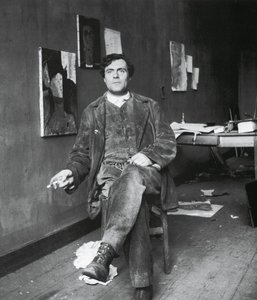
Amedeo Clemente Modigliani
1884 - 1920 , Italy
Quick Facts
- Artistic Movement Or Style: Expressionism
- Artists Or Movements Influenced By This Artist: ['Subsequent generations of artists']
- Artists Who Influenced This Artist:
- Pablo Picasso
- Constantin Brâncuși
- Full Name: Amedeo Clemente Modigliani
- Nationality: Italian
- Notable Artworks:
- Nude Bust
- Reclining Nude with Loose Hair
- Seated Female Nude
- Portrait of Jeanne Hebuterne
- Place Of Birth: Livorno, Italy
- Date Of Birth: 1884
- Date Of Death: 1920
Related Articles

Romantic Landscapes: 10 Masterpieces for Your Home | AllPaintingsStore
Journey through 10 Romantic landscape masterpieces by Friedrich, Turner & Cole. Explore emotional art, sublime nature scenes & iconic 19th-century paintings. Find museum-quality reproductions for your home at AllPaintingsStore.com – discover the full collection online!

Modigliani's Masterpieces: 25 Iconic Paintings & Sculptures | AllPaintingsStore
Explore 25 iconic artworks by Amedeo Modigliani, from his haunting portraits to captivating sculptures. Discover the stories behind these masterpieces of early 20th-century art & find museum-quality reproductions at AllPaintingsStore.com.

Bold Strokes & Powerful Visions: 10 Artworks That Command Attention | AllPaintingsStore
Experience art's raw power! Explore 10 iconic paintings – Van Gogh, Kahlo & more – that define 'bold'. Discover the stories behind these expressive masterpieces and find museum-quality reproductions for your home at AllPaintingsStore.com.

German Expressionism's 10 Defining Masterpieces | Art for Your Home
Explore 10 defining German Expressionism masterpieces – from Munch's 'The Scream' to Kandinsky’s abstracts. Discover the artists, stories & bold colors behind this powerful art movement. Find museum-quality reproductions at AllPaintingsStore.com.

Evocations of Place: A Historical Journey Through Landscape Art
Explore the rich history of landscape art with AllPaintingsStore. Discover renowned artists, movements like Impressionism & Romanticism, and expert guidance for collecting timeless pieces. Find your perfect serene escape today!


