


 Preview
 Send
Send Share
Share
 Details
 Guide
Guide

 Download
 Similars
 X-Ray
X-Ray Diaporama
 Stats
StatsOld Fashioned Vegetable


 Read More
Purchase a high-resolution, enhanced digital image, far superior to the online preview.
Each file is meticulously prepared by our in-house specialists using advanced tools and expert manual retouching. We ensure every image has exceptional clarity, precise color accuracy, and fine detail.
The final file is delivered via email within 72 hours, optimized for immediate use in professional, editorial, and print environments. This is the same quality trusted by top-tier design studios, publishers, and galleries.
Digital Image
Download a high-resolution file for personal display, printing, and creative projects. ( Switch to Print Buy Hand Made Painting)
Included in Every Digital Image Order
Expert Digital Delivery, Guaranteed
When you choose AllPaintingsStore.com, you're not just getting an image - you're receiving a professionally enhanced digital artwork, crafted with precision and backed by a satisfaction guarantee. Here's everything that comes with your order, automatically:

Fast Email Delivery
Your high-resolution digital image file will be emailed to you within 72 hours of ordering - ready for immediate use.

AI-Enhanced Digital File
Your artwork is professionally optimized using advanced AI tools and manual editing, ensuring maximum detail, clarity, and color accuracy.

Free Lifetime Re-Delivery
Accidentally deleted or lost your file? No worries - we'll resend it to you anytime, free of charge.

No Import Fees - Ever
Enjoy your artwork instantly with zero customs, duties, or delivery fees - digital downloads are always tax-free.

Color Accuracy Guarantee
We ensure your digital image reflects the original colors as closely as possible using professional tools and color management.

100-Day Satisfaction Guarantee
If you're not satisfied with your digital image, we'll revise it or refund 100% within 100 days - no questions asked.

100% Money-Back Guarantee
Not satisfied? Get a full refund within 100 days of receiving your digital file - no questions asked.

Bulk Order Discounts
Buy 3 images, save 10% - Buy 5, save 15% - Buy 10+, save 20%. Great for creative projects, galleries, and agencies.
The Pop Art Echo of Everyday Life
To gaze upon this vibrant depiction of an "Old Fashioned Vegetable" can is not merely to look at soup; it is to encounter a cultural artifact elevated to the status of high art. This piece channels the electrifying spirit of Pop Art, a movement that dared to pluck the mundane—the supermarket aisle, the commercial advertisement—and place it squarely within the gallery space. The subject matter itself, a recognizable brand item rendered with such bold saturation, speaks volumes about our modern relationship with mass production and consumer culture. It forces a delightful confrontation between the ephemeral nature of advertising and the permanence of artistic contemplation.
Warhol's Vision: Elevating the Commodity
The unmistakable hand of Andy Warhol permeates this work. As an artist who chronicled the American image, Warhol understood that celebrity, soup cans, and comic book panels shared a common visual language. His technique here is one of brilliant appropriation; he takes the glossy sheen of commercial packaging—the red can, the stylized vegetable illustration—and filters it through his signature pop lens. The resulting effect is both celebratory and subtly critical. It possesses an almost mechanical perfection in its vibrancy, yet it vibrates with a human energy that only Warhol could capture. For collectors and designers alike, this piece offers a conversation starter unlike any traditional portrait or landscape.
Symbolism of the Everyday Object
What does a soup can symbolize when painted by a master like Warhol? It is a meditation on ubiquity. The "Old Fashioned Vegetable" becomes an icon, much like Marilyn Monroe or Campbell's Soup itself in his oeuvre. Symbolically, it speaks to the American dream filtered through industrial packaging—a promise of sustenance and comfort rendered in bright, reproducible colors. The pop aesthetic strips away pretense; there is nothing hidden here, only a dazzling surface that invites closer inspection. It suggests that beauty, art, and meaning can be found not just in grand historical narratives, but right on the shelf.
Integrating Pop Vibrancy into Modern Spaces
For interior design enthusiasts, this reproduction offers an unparalleled injection of joyful, graphic energy. Its bold color palette—that striking red against whatever backdrop it inhabits—acts as a perfect focal point. It works beautifully in spaces aiming for a mid-century modern flair or a contemporary gallery aesthetic. Because the piece is so inherently playful yet technically sophisticated, it bridges the gap between kitsch and connoisseurship. Owning this work means embracing a spirit of joyful irreverence, allowing the vibrant echo of pop culture to illuminate your most curated corners.
CLASSIFICATION: Pop ArtQuestions & Answers
How do contrast and harmony combine in "Old Fashioned Vegetable"?
The color composition of "Old Fashioned Vegetable" by Andy Warhol combines a statement contrast with a strong color unity harmony.
How is the palette of "Old Fashioned Vegetable" by Andy Warhol described?
"Old Fashioned Vegetable" by Andy Warhol uses a neutrals color palette. The palette summarizes the work's overall color character.
What space is suggested for "Old Fashioned Vegetable" by Andy Warhol?
The recommended space for "Old Fashioned Vegetable" by Andy Warhol is a living room. The suggestion can of course be adapted to your interior.
Related Artworks


Artist Biography
The Industrial Roots of a Visual Language
Born Andrew Warhola Jr. in 1928 within the industrial landscape of Pittsburgh, Pennsylvania, the man who would become Andy Warhol spent much of his early years shaped by confinement and quiet observation. A childhood bout with Sydenham's chorea, or St. Vitus’ Dance, kept him indoors for long stretches. During these periods, he turned to the imagery provided by his mother: comic books and movie magazines. These were the first seeds of a visual vocabulary that would later embrace the mass-produced. He eventually moved toward formal training at the Carnegie Institute of Technology, earning a degree in Pictorial Design in 1949.
His arrival in New York City marked a transition from the private world of sketches to the public sphere of commercial illustration. Working for names such as Tiffany & Co., Vogue, and Harper's Bazaar, he mastered the precision required by advertising. This period of professional service instilled in him an understanding of how images are manufactured and distributed. He learned the mechanics of the brand before he ever attempted to deconstruct it.
The Factory and the Mechanics of Fame
By the 1960s, his focus shifted from illustrating products to treating the products themselves as subjects. Through the adoption of the silkscreen printing process, he introduced a method that mirrored the repetitive nature of consumer culture. This technique allowed for a detachment from the hand of the artist, favoring a flattened, mechanical aesthetic. His studio, known as The Factory, became a central point for a specific New York social circle. It was a space where musicians, poets, and film personalities gathered, often blurring the lines between their private lives and their public personas.
His work during these years explored several distinct themes:
- The commodification of everyday objects, such as his 1962 depictions of Campbell’s Soup Cans.
- The construction of celebrity through portraits of figures like Marilyn Monroe and Elizabeth Taylor.
- The darker side of the American experience, including his series on car crashes and electric chairs.
This era was not without physical consequence. In 1968, a radical feminist writer named Valerie Solanas entered his Manhattan studio and shot him, leaving him with lasting injuries. This event altered the trajectory of his studio life, moving it toward a more business-oriented enterprise.
Cinema and the Expanded Image
Beyond the canvas, Warhol was an active filmmaker who produced over 600 films between 1963 and 1968. Many of these were experimental or static in nature. He utilized long, unblinking takes in works like Sleep and Empire to challenge how an audience consumes moving images. His filmic output often featured his "superstars," a group of personalities from the Factory scene who became part of the cultural fabric of the time.
His influence reached into the music industry through his management of The Velvet Underground. He even designed the famous banana cover for their debut album, further merging the boundaries between fine art and popular media. By the time of his death in 1987, he had moved through various media—photography, publishing, and television—leaving behind a body of work that interrogated the very nature of what it means to be seen in a media-saturated age.
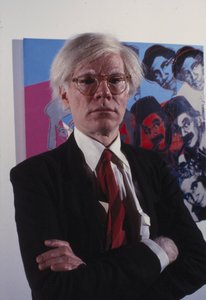
Andy Warhol
1928 - 1987 , United States of America
Quick Facts
- Artistic Movement Or Style: Pop Art
- Artists Or Movements Influenced By This Artist:
- Conceptualism
- Performance Art
- Full Name: Andrew Warhola Jr.
- Notable Artworks:
- Campbell's Soup Cans
- Marilyn Diptych
- Coca-Cola (3)
- Gold Marilyn
- Brillo Box sculptures
- Place Of Birth: Pittsburgh, United States of America
- Date Of Birth: 1928
- Date Of Death: 1987

