- Home

- Oil Painting Reproduction
- Antoni Gaudí
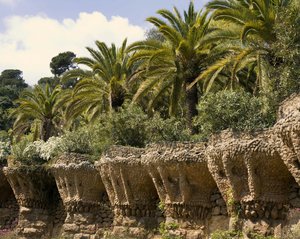
- Park Guell, Barcelona: the flower tub pinnacles of the promenade

 Buy print
 Send
Send Share
Share
 Details

 Download
 Similars
 X-Ray
X-Ray Diaporama
Park Guell, Barcelona: the flower tub pinnacles of the promenade


 Read More
Hand Made Oil Reproduction
Hand-painted oil on canvas in your size and frame, made to order by our artists.




P118B $10

P118H $10

P118W $10

P438Z $10

P508JH $12

P508YH $12

P805H $10

P805Z $10

P919BZ $10

P919G $10

P919XJ $10

P959ZH $10

P968JZ $12

W106C $8

W218G $10

W218JH $8

W218Y $10

W307PJ $10

W316G $10

W316PJ $8

W316Y $10

W398PJ $8

W4111J $10

W500HY $15

W500JH $15

W692G $12

W849H $8

W940BG $15

W953PJ $8




Pick from our preset sizes that match the artwork's original proportions.

You may enter your own dimensions to fit a specific frame or space. If your selected size does not match the original image's proportions, we will either crop the artwork or extend the painting with additional hand-painted elements. A digital mockup will be sent for your approval before production begins.
Please note that the on-screen preview does not reflect the actual cropping or extension. Only the mockup will accurately show the final composition.
While custom sizes are available, we recommend selecting a dimension from the predefined list to preserve the original proportions.
After order, AllPaintingsStore.com team will email client for instructions and provide a mockup preview
Worldwide Delivery () in 3/4 weeks instead of standard 5 weeks. (16 July). No compromise on quality.

Free Worldwide Express Shipping

High-Quality Linen Canvas

Full Shipping Insurance

Customs Tax Refund Guarantee

True Color Matching Guarantee

60-Day Return Policy (Defects Only)

100% Money-Back Guarantee

Bulk Discount Offer
 Glass option is only available in size under 110 CM

Park Guell, Barcelona: the flower tub pinnacles of the promenade
Reproduction Medium
Reproduction Size
-


Total Price
-
Artwork Description
Park Guell, Barcelona: The Flower Tub Pinnacles of the Promenade
The artwork "Park Guell, Barcelona: The Flower Tub Pinnacles of the Promenade" by Antoni Gaudí I Cornet is more than just a depiction of a beautiful garden; it’s a testament to Catalan Modernisme and Gaudí's singular vision for harmonizing art, nature, and spirituality. Completed in 2009, this digital painting captures the essence of Gaudí’s masterpiece – a UNESCO World Heritage Site – offering viewers an immersive experience of Barcelona’s iconic park.- Subject Matter: The scene portrays Park Güell's undulating promenade, dominated by towering stone pillars adorned with intricate geometric patterns and culminating in the mesmerizing flower tub pinnacles. These structures are not merely decorative; they represent Gaudí’s revolutionary approach to structural engineering, utilizing Catalan limestone to create a dynamic interplay of curves and angles.
- Style: Gaudí's distinctive style—Catalan Modernisme—is immediately recognizable through its fusion of Gothic Revival influences with Art Nouveau aesthetics. The painting skillfully blends organic forms inspired by nature – specifically the flowing lines of palm trees – with geometric precision, reflecting Gaudí’s belief in the interconnectedness of all things.
- Technique: Created digitally, the artwork leverages advanced rendering techniques to faithfully reproduce the vibrant colors and textures of the original garden setting. The artist meticulously captures the dappled sunlight filtering through the foliage, enhancing the sense of tranquility and wonder that characterizes Park Güell.
- Historical Context: Constructed between 1906 and 1914, Park Guell was conceived as a utopian experiment in urban planning—a bold assertion of Catalan identity during a period of political upheaval. Gaudí envisioned it as a space for contemplation and artistic inspiration, embodying the spirit of Modernisme’s rejection of academic conventions.
- Symbolism: The flower tub pinnacles themselves hold profound symbolic significance, representing Gaudí's fascination with geological formations and his desire to emulate the natural world’s structural stability. They symbolize resilience, growth, and the transformative power of creativity—themes that resonate throughout Gaudí’s oeuvre.
About Antoni Gaudí I Cornet
Antoni Gaudí i Cornet (1852-1926) was born in Reus, Catalonia, Spain—a region steeped in artistic tradition yet fiercely independent. His formative years were marked by a profound connection to the Catalan landscape and a deep appreciation for craftsmanship instilled by his father, a coppersmith. These experiences profoundly shaped Gaudí’s artistic sensibility, propelling him toward a revolutionary architectural style that would redefine European design. His formal education at Reus Cathedral provided him with foundational knowledge in Gothic architecture—a stylistic influence he skillfully incorporated into his early works. However, Gaudí quickly surpassed conventional norms, embracing organic forms and experimenting with innovative structural techniques—a hallmark of his distinctive Modernisme aesthetic. He was profoundly impacted by Oriental art and craftsmanship, particularly Islamic geometric patterns, which informed his designs and contributed to their mesmerizing complexity.Notable Artworks
Gaudí’s architectural achievements are unparalleled in scope and ambition: Sagrada Família (ongoing), Casa Batlló, Casa Milà (La Pedrera), Parc Güell, Palau Güell, Casa Vicens—each building embodies Gaudí's unwavering commitment to artistic vision and structural ingenuity. His creations stand as enduring monuments to Catalan culture and architectural innovation, captivating visitors with their breathtaking beauty and symbolic depth.Where It’s Displayed
“Park Guell, Barcelona: The Flower Tub Pinnacles of the Promenade” is currently exhibited at RIBA in London, United Kingdom—a testament to Gaudí's enduring influence on architectural thought and artistic expression. Viewing this artwork offers a unique opportunity to immerse oneself in the splendor of Catalan Modernisme and contemplate the transformative power of art. ### Additional Links:Related Artworks


Artist Biography
A Life Forged in Stone and Faith: The World of Antoni Gaudí
Antoni Gaudí i Cornet, born on June 25, 1852, in the Catalan town of Reus, Spain, was not merely an architect; he was a visionary who sculpted dreams into reality. His life story is as captivating and unconventional as the buildings that bear his indelible mark. Growing up amidst the rolling hills and rugged landscapes of Catalonia profoundly shaped Gaudí’s artistic sensibility. Even as a child, he displayed a keen observational skill, meticulously studying the forms and textures of nature – an influence that would become the cornerstone of his unique architectural language. Family life was marked by both comfort and constraint; his father, a coppersmith, instilled in him a respect for craftsmanship, while his mother’s devout Catholicism fostered a deep spiritual connection that permeated his later work. These early experiences laid the foundation for a career dedicated to harmonizing art, nature, and faith. His formal education began at the Piarist school in Reus, followed by studies at the University of Barcelona before ultimately enrolling in the Provincial School of Architecture, where he graduated in 1878. Even during his academic years, Gaudí’s talent was evident, though perhaps not conventionally recognized; his professors acknowledged his skill but often struggled to reconcile it with established norms. He supplemented his education by working as a draughtsman for architect Josep Fontserè i Mestres, contributing to projects like Ciutadella Park in Barcelona – an early glimpse of the urban landscapes he would soon transform.
The Blossoming of a Unique Vision
Gaudí’s initial commissions showcased a developing style that skillfully blended historical influences—Neo-Gothic, Orientalism—but it was his innate ability to transcend imitation and forge something entirely new that set him apart. The Casa Vicens (1883-1888) stands as an early testament to this burgeoning originality, its Moorish and Gothic Revival elements interwoven with a vibrant palette and intricate detailing. However, it was the undertaking of the Sagrada Família basilica in 1883 that truly defined his life’s work. What began as a relatively conventional neo-Gothic project quickly evolved under Gaudí's direction into an audacious, organic masterpiece—a testament to his unwavering vision and innovative structural techniques. He envisioned not just a building but a “stone bible,” each element imbued with religious symbolism. Simultaneously, Gaudí was crafting residential marvels like Casa Batlló and Casa Milà (La Pedrera), completed between 1904 and 1910. These structures defied architectural convention with their undulating facades, skeletal forms, and rejection of rigid symmetry. They were not merely buildings but living organisms, breathing with a unique energy. Parc Güell, begun in 1900, further exemplified his mastery of integrating architecture with the natural landscape, utilizing colorful mosaics—his signature *trencadís* technique—to create harmonious spaces that felt both whimsical and deeply spiritual. Even earlier works like Palau Güell (1886-1888) demonstrated his experimentation with parabolic arches and innovative material usage, foreshadowing the structural breakthroughs to come.
Nature, Faith, and Innovation: The Pillars of Gaudí’s Genius
At the heart of Gaudí's architectural philosophy lay an unwavering reverence for nature. He believed that natural forms held the key to perfect design, meticulously studying everything from seashells and trees to animal skeletons. This biomimicry wasn’t merely aesthetic; it informed his structural innovations as well. His equilibrated structures—reliant on tilted columns and lightweight tile vaults—were a direct response to observing how natural elements distribute weight efficiently, eliminating the need for traditional buttressing. Beyond nature, Gaudí's deep Catholic faith was an equally potent influence, particularly evident in the Sagrada Família where religious symbolism is woven into every facet of the design. The basilica wasn’t simply a place of worship; it was intended to be a physical manifestation of Christian beliefs. He also pioneered the *trencadís* technique—a mosaic art form utilizing broken ceramic pieces—creating vibrant, textured surfaces that added another layer of organic beauty to his creations. His early exposure to Neo-Gothic and Oriental influences provided a foundation, but he didn’t simply replicate these styles; he absorbed them, transformed them, and ultimately transcended them to create something uniquely his own.
A Lasting Legacy: Gaudí's Impact on the World
Antoni Gaudí is rightfully considered the greatest exponent of Catalan Modernisme (Art Nouveau), a movement that sought to forge a distinct cultural identity for Catalonia through art and architecture. His work wasn’t just about building structures; it was about creating an experience, evoking emotion, and celebrating the spirit of his homeland. Today, seven of Gaudí's masterpieces—the Sagrada Família, Park Güell, Casa Batlló, Casa Milà, Palau Güell, Casa Vicens, and the Crypt in Colonia Güell—are designated UNESCO World Heritage Sites, a testament to their outstanding universal value. His influence on architecture extends far beyond Spain; architects and designers worldwide continue to draw inspiration from his innovative forms, structural techniques, and holistic approach to design. Tragically, Gaudí’s life was cut short on June 10, 1926, when he was struck by a tram in Barcelona. Ironically, his unassuming appearance led many to believe he was simply a beggar, delaying medical attention until it was too late. Despite his death, construction of the Sagrada Família continued based on his meticulously detailed plans and models, and is now slated for completion in 2026—the centenary of his passing. Furthermore, the Catholic Church initiated a process for Gaudí’s canonization in 2003, recognizing both his devout faith and his extraordinary artistic contributions – a fitting tribute to the man who dedicated his life to building monuments that touched the heavens.
Beyond Bricks and Mortar: The Enduring Spirit of Gaudí
- Catalan Identity: Gaudí’s work became synonymous with Catalan culture, embodying a spirit of independence and artistic innovation.
- Architectural Revolution: He challenged conventional architectural norms, pioneering new structural techniques and embracing organic forms.
- Spiritual Resonance: His deep faith infused his creations with religious symbolism and a sense of the sacred.
- Lasting Inspiration: Gaudí continues to inspire architects, artists, and designers around the world, leaving an enduring legacy on the landscape of modern art and architecture.
Antoni Gaudí was more than just an architect; he was a poet in stone, a visionary who transformed Barcelona into a living work of art. His buildings are not merely structures but testaments to the power of imagination, faith, and the enduring beauty of the natural world.

Antoni Gaudí
1852 - 1926 , Spain
Quick Facts
- Artistic Movement Or Style: Catalan Modernisme
- Artists Or Movements Influenced By This Artist:
- Art Nouveau
- Modern Architecture
- Artists Who Influenced This Artist:
- Neo-Gothic art
- Oriental techniques
- Date Of Birth: June 25, 1852
- Date Of Death: 1926
- Full Name: Antoni Gaudí i Cornet
- Nationality: Spanish
- Notable Artworks:
- Sagrada Família
- Casa Batlló
- Casa Milà
- Parc Güell
- Palau Güell
- Casa Vicens
- Place Of Birth: Reus, Spain
Related Articles

Emilio Grau Sala: A Catalan Colorist Between Modernisme & Symbolism
Explore the vibrant world of Emilio Grau Sala, a leading Catalan colorist influenced by Parisian Modernisme & Symbolism. Discover his captivating paintings, artistic techniques, and lasting legacy with AllPaintingsStore.
Joan Miró's Masterpieces: 25 Iconic Paintings for Art Lovers & Home Decor
Explore 25 iconic Joan Miró paintings! Discover the stories behind his Surrealist masterpieces, vibrant colors & unique style. Find museum-quality Miro reproductions and elevate your home decor with AllPaintingsStore.com. Explore the full collection online.

The Flowing Line & Flourishing Form: Exploring Art Nouveau's Aesthetic Legacy
Explore the captivating world of Art Nouveau! Discover its origins, key artists like Horta & Mucha, regional styles, innovative techniques, and lasting influence on architecture & design. A comprehensive guide for art enthusiasts.

Josep Mompou Dencausse: Exploring Intimacy & Catalan Identity Through Minimalist Expression
Explore the captivating world of Josep Mompou Dencausse, a master of Post-Impressionism whose intimate paintings reflect Catalan identity and minimalist beauty. Discover his life, style & legacy.

The Aesthetic Catalyst: Leveraging Art Installations for Guest Engagement & Organic Social Marketing
Discover how strategic art installations elevate hotel experiences & drive organic social visibility. Expert insights on design, ROI, guest engagement, and creating unforgettable spaces for luxury hospitality brands.